
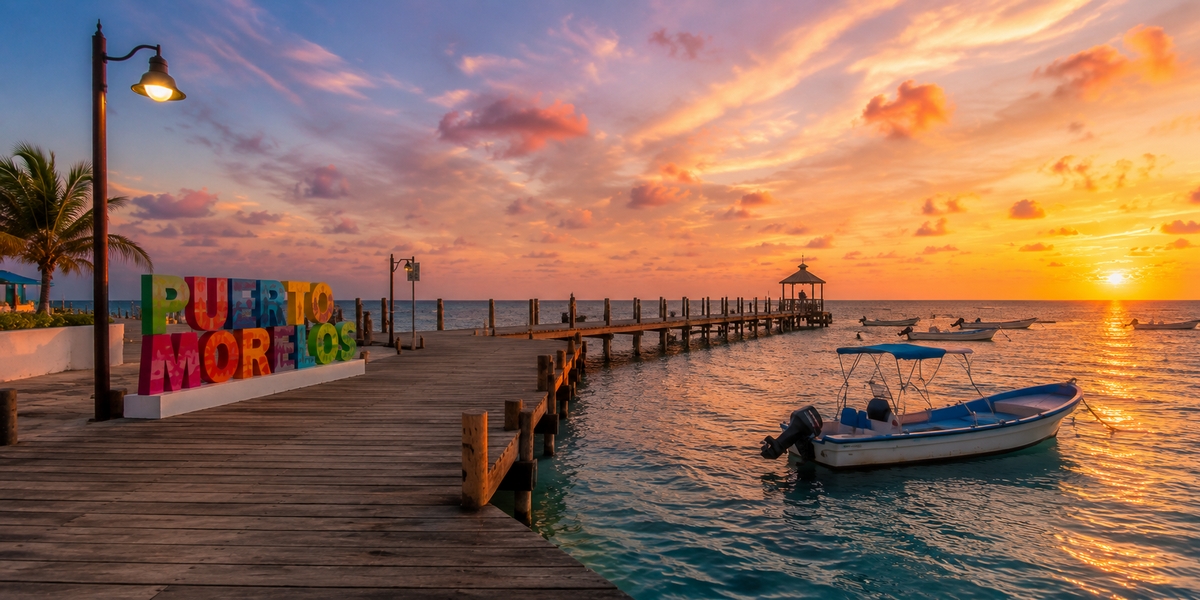
Most people pass Puerto Morelos at 110 kilometers an hour without knowing it. It sits almost exactly halfway between Cancun airport and Playa del Carmen, a turnoff you blow past on the way to somewhere with a bigger name. That anonymity is the whole point. While the coast on either side filled up with resort walls and beach clubs, this old fishing village stayed small, slow, and stubbornly itself.
What makes it unusual isn't the village. It's what's offshore. A protected stretch of the Mesoamerican Reef runs just a few hundred meters from the sand, close enough that the boat ride out is measured in minutes. Very few places on this coast let you reach a living reef that fast, and almost none pair it with a town where dinner is a plastic chair by the square instead of a buffet wristband.
This guide treats Puerto Morelos the way a returning traveler would: not "is it pretty" (it is, modestly), but who actually has a good week here, who leaves restless by day three, and how to slot it into a Riviera Maya trip without overestimating what a sleepy village delivers.
Quick Answer: Is Puerto Morelos Right for You?
The short version: come to Puerto Morelos for a calm, walkable base with reef snorkeling minutes from shore and an easy airport hop — not for nightlife, big-resort amenities, or a packed activity schedule on your doorstep. It works best as a slow anchor, on its own or paired with louder neighbors.
- Reef: protected national park, a few hundred meters offshore — access by licensed boat only.
- Vibe: working fishing village, low-rise, walkable, quiet after dinner.
- Lodging: boutique hotels, B&Bs, rentals — no all-inclusive in the village core.
- Best for: slow-travel couples, families wanting calm water, snorkelers, remote workers.
- Skip if: you want nightlife, waterparks, or everything within walking distance.
Quiet mornings, a reef trip, seafood by the square, and nothing you're obligated to rush to. The pace is the product.
The reef knocks down the waves, so the swimming is gentle and the scale is easy to manage with kids in tow.
One of the few spots where a healthy reef is a short boat hop away, plus cenotes a short drive inland.
If you want clubs, swim-up bars, and a self-contained mega-resort, the village will feel like nothing is happening.
If you're still mapping the wider coast, the Riviera Maya explained guide shows where this village fits among Cancun, Playa, and Tulum, and why each one buys you a different kind of week.
Where Puerto Morelos Sits, and Why That Matters
Geography is the entire reason this place feels different from its neighbors. Puerto Morelos sits about 36 kilometers south of Cancun and a similar distance north of Playa del Carmen, roughly 25 km from Cancun airport — close to the runway, but far enough off the resort corridor to have kept its own pace. The drive from the airport is about 20–25 minutes, short enough that you can be swimming before a Tulum-bound traveler has even cleared the highway traffic. Most visitors stay two to three nights, and the reef itself lies only a few hundred meters offshore.
One detail trips up a surprising number of first-timers: Puerto Morelos is really two places sharing a name. There's the beachside pueblo with the square, the pier, and the sand, and there's the highway-side colonia several kilometers inland, where much of the local life, cheaper lodging, and the big supermarket sit. Book a "Puerto Morelos" rental without checking which side it's on and you can end up a hot, carless walk from the water you came for.
That proximity to the airport is also the village's quiet superpower for short trips. You lose almost no vacation time to transfers, which makes even a two-night stop genuinely worthwhile — something you can't say about destinations two hours down the road.
How Far Is Puerto Morelos From Everything?
Because the village sits dead-center on the corridor, almost every Riviera Maya landmark is an easy drive. These are approximate road distances and typical car times from the beach pueblo — useful for deciding whether Puerto Morelos works as a base or a day trip. Times stretch in peak traffic, so treat them as planning numbers, not guarantees.
| From Puerto Morelos to… | Approx. distance | Typical drive |
|---|---|---|
| Cancun Airport (CUN) | ~25 km | ~20–25 min |
| Cancun Hotel Zone | ~40 km | ~35–45 min |
| Playa del Carmen | ~30 km | ~30–40 min |
| Ruta de los Cenotes (start) | ~2 km behind town | ~5–10 min |
| Tulum | ~95 km | ~90 min+ |
| Cozumel ferry (via Playa) | ~30 km + crossing | ~40 min + ferry |
The takeaway in one line: you can reach the airport, Cancun, Playa, and a cenote within roughly 40 minutes each, while Tulum is the one neighbor that turns into a real day-trip commitment. That central position is exactly why a short Puerto Morelos stay wastes so little time.
The Reef Off the Beach: What's Actually There
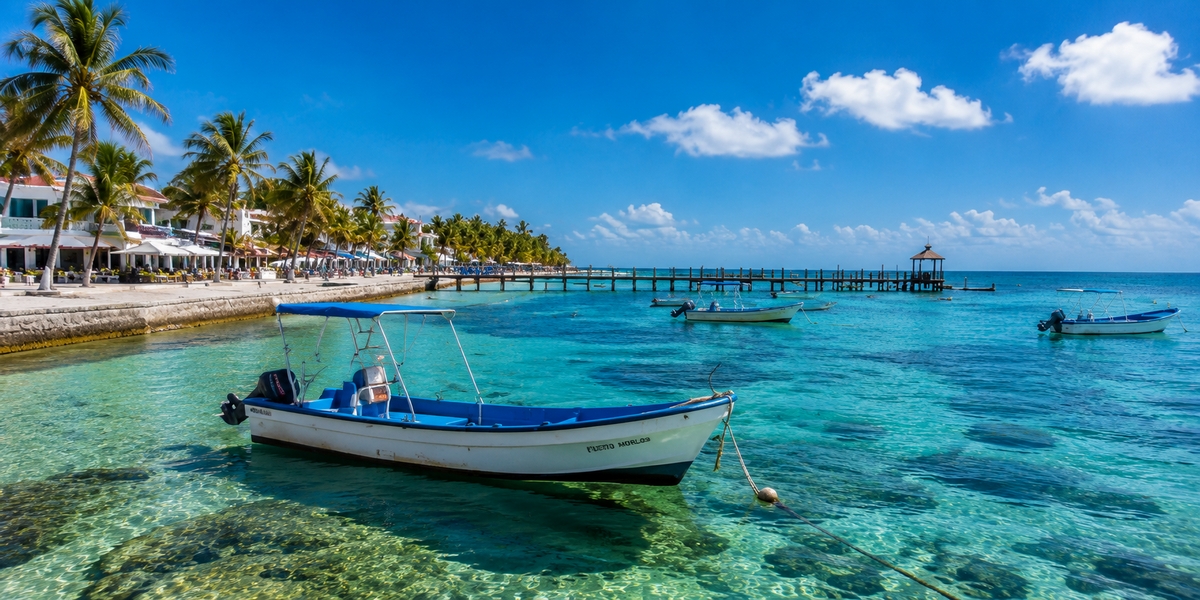
The headline attraction is the Parque Nacional Arrecife de Puerto Morelos, a protected slice of the Mesoamerican Barrier Reef — the second-largest reef system in the world — that runs parallel to the shore just a few hundred meters out. Managed by Mexico's national protected-areas commission (CONANP), it's the kind of close, shallow, healthy reef that explains why the village became a snorkeling and diving base in the first place.
Here's the part travelers get wrong. "Reef off the beach" does not mean you wade in and swim out to it whenever you like. Because it's a national marine park, access is regulated: you go with one of the authorized local cooperatives on a short boat trip from the town pier, typically a two-stop, roughly two-hour outing with gear and a guide. The trade-off is real but mild — you can't snorkel the reef on impulse, but the ride is so short that "guided" never feels like an expedition.
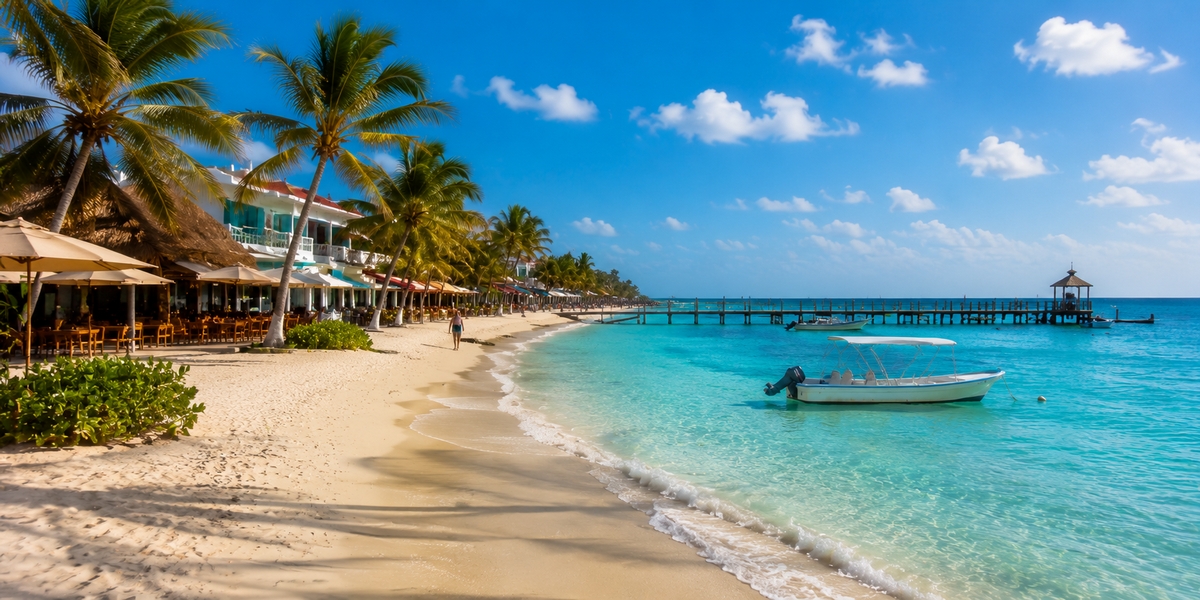
A word of honesty on expectations: the in-front-of-town beach is pleasant and shallow, not a wide, blinding-white postcard strip. Boats use the waterfront, the sand is narrow in places, and like the rest of this coast, Puerto Morelos can get sargassum in the seaweed season — the same Atlantic influx covered in the 2026 sargassum and hotel-geography guide. The reef is the reason to come; the beach is a bonus, not the main event.
If reef quality is the deciding factor for your whole trip, it's worth comparing options before you commit — the snorkeling comparison for Cancun, Isla Mujeres and Cozumel lays out where the water and the marine life genuinely differ, so Puerto Morelos competes on convenience and calm rather than on being the single best reef on the coast.
Puerto Morelos Snorkeling Tours: What They Cost
This is the question most people actually want answered, so here it is plainly, with the caveat that operators reprice constantly — treat these as 2026 reference ranges and confirm at the pier or at booking. There are two honest tiers, and the gap between them is mostly about pickup, lunch, and group size, not reef quality.
The local fishermen's cooperative on the town square is the cheapest direct route to the reef: roughly $25 per person for an outing of about two hours, typically two reef stops with gear and a guide, leaving straight from the beach. Organized small-group tours run about $30–$45 per person for a similar two-hour trip, and many add a ~$12 dock or marine-park tax that isn't always shown in the headline price. Packages with hotel pickup and lunch climb higher again.
Because access is capped and weather-dependent, the practical move is to slot the trip early in your stay so a windy morning still leaves a backup day — not to bank everything on your last afternoon.
Puerto Morelos vs the Big Towns
The clearest way to decide is to put Puerto Morelos next to the three places most travelers weigh it against. None is "better" outright — each buys a different week. Use this as a base-choice matrix, not a ranking.
| What you want | Puerto Morelos | Cancun Hotel Zone | Playa del Carmen | Tulum |
|---|---|---|---|---|
| Overall vibe | Sleepy village | Resort strip | Walkable town | Boho & pricey |
| Reef from base | Minutes offshore | Boat day trip | Ferry to Cozumel | Akumal nearby |
| Nightlife | Very limited | Big & loud | Lively | Scene-y, scattered |
| Big-resort amenities | Few in village | Everywhere | Mixed | Boutique-led |
| Getting around | Walk it all | Bus / taxi | Walkable core | Spread out |
| Best for | Quiet + reef | Beach + everything | Town energy | Aesthetic + cenotes |
Puerto Morelos vs Playa del Carmen
This is the matchup most travelers actually agonize over, because the two sit so close together yet feel nothing alike. Playa del Carmen is a walkable town with a real restaurant and bar scene, Fifth Avenue shopping, and the Cozumel ferry — energy on tap. Puerto Morelos is the opposite trade: less to do, far quieter nights, but a protected reef minutes offshore and a village calm Playa lost years ago. Pick Playa if you want a buzzing base with everything walkable; pick Puerto Morelos if the reef and the quiet are the holiday. Many travelers split the difference and base in Playa del Carmen while taking a half-day reef trip up to Puerto Morelos.
Best Time to Visit Puerto Morelos
The village runs on the same Caribbean calendar as the rest of the coast, so the short answer is the dry season — roughly December through April — for the most reliable sun, comfortable humidity, and the lowest sargassum odds. The catch is the usual one: those months are also the priciest and busiest. November and early May are the quiet sweet spots, with good weather before the holiday surge.
One reassuring number: the water is warm enough to swim every month of the year. Sea temperatures sit at roughly 26°C (79°F) in the cool January–February window and climb to about 29°C (84–85°F) in late summer, so cold water is never the reason to avoid a given month.
What actually moves the decision here is seaweed, not temperature. Like the rest of this east-facing coast, Puerto Morelos can get sargassum in the higher-risk months — broadly April through October, heaviest in summer — though the offshore reef and local cleanup efforts can soften it on the in-town beach. If a clean beach is central to your trip, weight your dates toward the dry season and check current reports, the same logic laid out in the sargassum and hotel-geography guide. Hurricane season runs June through November, with the wettest, least predictable stretch in September and October.
What to Actually Do Here
The activity list is short by Riviera Maya standards, and that's by design. A good Puerto Morelos day has one anchor and a lot of unstructured time around it. These are the four that fill a stay without forcing a schedule.
Reef snorkel or dive trip
A short licensed boat trip from the pier to the marine park. Beginner-friendly, weather-permitting, and the single reason most people come.
The cenote route
The road inland from town strings together jungle cenotes. A natural rain-day or no-reef-day backup that's cool and clear year-round.
The square and the seafood
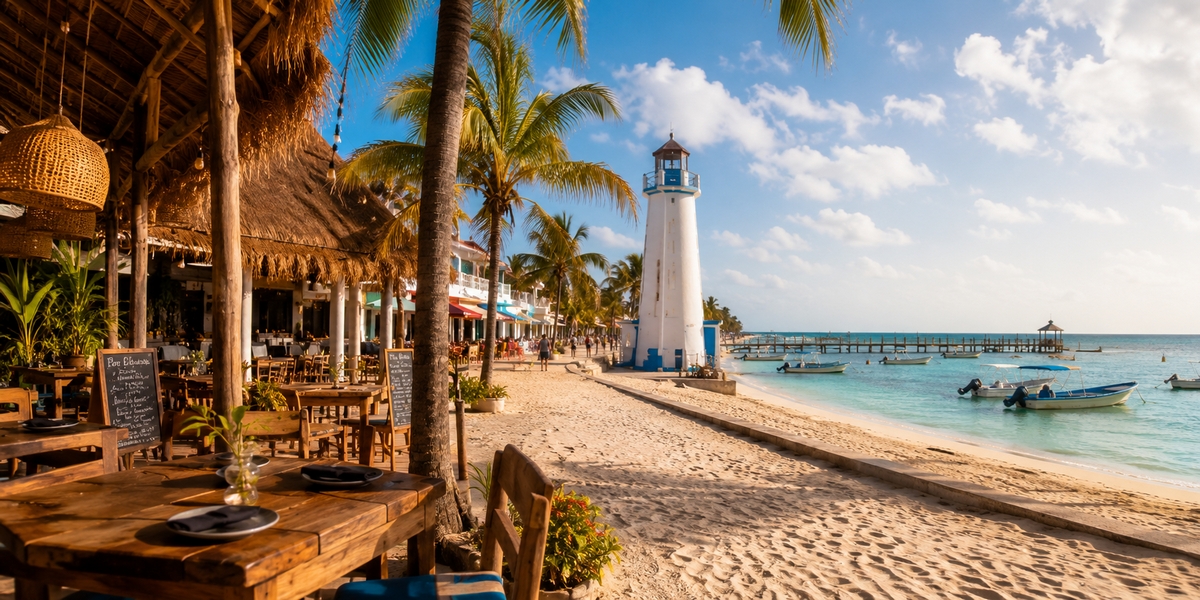
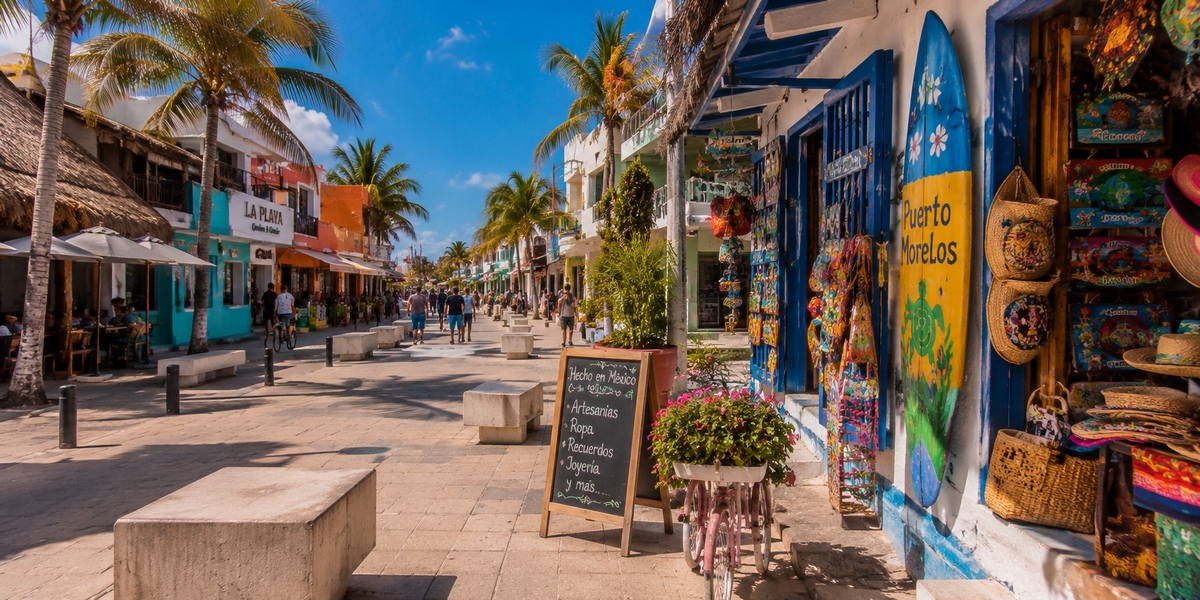
The zócalo is the social center: fish tacos, fresh ceviche, a leaning old lighthouse knocked askew by a hurricane decades ago, and a weekend artisans' market.
Slow beach days
Calm, shallow water for floating and reading. Not a wide resort beach — a working waterfront where the pace, not the sand, is the draw.
For the cenotes specifically, it's worth understanding the difference between open, cavern, and cave types before you pick one — the cenotes guide for Cancun, Playa and Tulum covers which ones suit families versus confident swimmers, and several sit on the road right behind Puerto Morelos.
Who Puerto Morelos Suits
The village rewards a specific kind of traveler and quietly frustrates others. Match yourself honestly to one of these before you book, because the place doesn't bend to fit a mismatched trip.
A quiet base, not a resort
→ Slow-travel couples who'd rather read by the water than queue for a swim-up bar get exactly the trip they pictured here.
Kids who need calm water
→ The reef-sheltered shallows and small scale make daily logistics easier than a sprawling resort with teens or younger kids.
The reef and the cenotes
→ Snorkelers, divers, and nature-first travelers get a close reef plus inland cenotes without long daily transfers.
Remote worker / long-stayer
→ The unhurried pace, walkability, and local-life feel suit a longer, lower-key stay better than a tourist strip.
Real food over buffets
→ Travelers who'd trade an all-inclusive wristband for fresh ceviche by the square are firmly in the right place.
A two-night reef stop
→ Anyone building a coast itinerary can bolt Puerto Morelos onto a louder town for a quiet, reef-focused interlude.
Who Should Skip It (and Be Glad They Did)
The fastest way to a disappointing trip is booking a quiet village while secretly wanting a busy one. Puerto Morelos doesn't try to be everything, so the honest move is to recognize when another base serves you better.
- You want nightlife — clubs, late bars, a scene. Evenings here wind down early.
- You expect big-resort amenities: kids' clubs, multiple pools, shows, swim-up bars.
- You need new organized activities within walking distance every single day.
- You're picturing a wide, brochure-white beach — the waterfront is working and narrow.
- A clean, swimmable beach every day is non-negotiable in peak sargassum months.
If two or more of those are dealbreakers, you'll likely be happier with the energy of Playa del Carmen or the full-service scale of the Riviera Maya resorts, using Puerto Morelos only as a day trip or a short reef detour rather than your home for the week.
Is Puerto Morelos Safe?
By Riviera Maya standards, Puerto Morelos is reassuringly low-drama. It's consistently described as one of the calmer, safer towns on the coast: small, tight-knit, with a visible local police presence and little crime aimed at tourists. The tradeoffs that come with quiet — fewer crowds, sleepy nights — also mean fewer of the friction points you get on a packed tourist strip.
The realistic risks are ordinary, not dramatic. Petty pickpocketing happens occasionally where tourists gather, and travelers do report the usual coast scams — a classic is a bill being swapped during payment at a gas station, so count your change and prefer card or exact cash. The honest framing locals often use is that the bigger hazard here is nature, not people: strong sun, boat traffic at the waterfront, currents beyond the reef, and mosquitoes after rain.
For the official baseline, the U.S. State Department keeps Quintana Roo — the state covering Cancun, Playa, Tulum, and Puerto Morelos — at a Level 2 “exercise increased caution” advisory, the same level as most of Mexico's tourist coast, not a heightened warning specific to this village. Standard precautions cover it: don't flash valuables, use ATMs in daylight, don't leave gear unattended on the beach, and use booked or official transport rather than negotiating with unmarked cars. For the wider picture, our Mexico travel safety guide and the breakdown of common tourist scams on the coast go deeper.
Getting There and Getting Around
Logistics are mercifully simple, which is a big part of the appeal. The village is close to the airport, sits right on the main highway, and is small enough to cross on foot. The main decision is whether you need a car at all.
Put the times in perspective: from baggage claim you can be in the village in under half an hour, while the same arrival pushing on to Tulum is a 90-minute-plus haul. For a short trip, that recovered time is the difference between an extra swim and an extra hour in the car.
Where to Stay: No All-Inclusive, and That's the Point
Lodging here is the clearest signal of what kind of place this is. The village core has no large all-inclusive resorts — those sit along the highway north and south of town, not in the pueblo. Inside the village you choose between three honest formats, each suiting a different traveler. As a rough 2026 guide, simple B&Bs start around $45–$60 a night, mid-range boutique hotels run roughly $60–$200, and the most upscale boutique stays reach $200–$280+ — with peak winter weeks trending higher and late summer noticeably cheaper. Confirm current rates before booking.
Boutique hotels — for comfort without the scale
- Small, design-led places, often steps from the water;
- Personal service and character over resort facilities;
- Roughly $60–$280 a night depending on season and polish.
B&Bs and guesthouses — for local feel and value
The most "village" way to stay, often around $45–$60 a night: family-run, walkable to the square, and friendly to travelers who'll be out exploring more than lounging on-site. The trade-off is fewer amenities and smaller pools, if any.
Vacation rentals — for longer or self-catering stays
The natural pick for remote workers, families, and long-stayers who want a kitchen and space, with weekly rates that often undercut hotels. Just confirm the beachside-versus-highway location and whether the walk to the water matches the listing photos.
If a self-contained all-inclusive is genuinely what you want, treat that as a sign to base elsewhere on the coast and visit Puerto Morelos on a reef day — the broader Riviera Maya resorts guide covers the full-service options the village deliberately doesn't have.
Mistakes Travelers Make in Puerto Morelos
Most disappointment here isn't bad luck — it's an expectation set somewhere else and brought to the wrong town.
Expecting a wide, white-sand resort beach. The waterfront is a working village beach — calm and pleasant, but narrow and boat-lined. Come for the reef and the pace, not a brochure beach.
Booking the wrong "Puerto Morelos." The highway-side colonia is cheaper but several kilometers from the water. Confirm you're in the beach pueblo if the sand is why you're coming.
Assuming you can snorkel the reef anytime. It's a national park reached by licensed boat, and trips are weather-dependent. Build in a flexible day rather than banking on one specific morning.
Staying too long for the wrong reasons. If you need constant activity, the village empties of things to do fast. Match your night count to your appetite for quiet, not to a round number.
Sources Checked
Sources checked on June 16, 2026. Reef-tour rules, transfer fares, hotel rates, and seasonal beach conditions shift over time and by operator, so the figures here are reference ranges, not fixed prices — confirm specifics close to travel, especially marine-park access and current sargassum reports.
How this guide was checked: We cross-referenced the official sources below for the reef park, airport logistics, and intercity transport, and sampled current operator, shuttle, and hotel-booking listings (June 2026) to set the price ranges for snorkeling tours, airport transfers, and lodging.
- CONANP — Mexico's national protected-areas commission, the authority that manages the Parque Nacional Arrecife de Puerto Morelos and its access rules.
- Cancun International Airport (CUN) — official airport site, used for arrival logistics, distance, and ground-transport options.
- ADO — the main intercity bus operator, for budget routes along the Cancun–Playa highway corridor.
- U.S. State Department — Mexico travel advisory, for the current Quintana Roo (Level 2) safety baseline.
Frequently Asked Questions
Is Puerto Morelos worth visiting?
Yes, if you want a slow, walkable fishing village with a protected reef minutes offshore and none of the resort-strip scale of Cancun. It rewards travelers who like quiet mornings, snorkeling, fresh seafood, and easy day trips to cenotes. It will disappoint anyone who wants nightlife, big all-inclusive amenities, or a packed schedule of organized activities within walking distance.
Can you snorkel the reef directly from the beach in Puerto Morelos?
Almost. The reef sits only a few hundred meters offshore, but it is inside a national marine park, so you cannot freely swim or take your own boat out to it. You go on a short licensed boat trip from the town pier with one of the local cooperatives, which is usually a two-stop, roughly two-hour outing. The town cooperative is the cheapest route at around $25 per person, while organized small-group tours run about $30 to $45, often plus a roughly $12 dock tax. The upside is that the reef is so close the ride takes minutes, not the long crossings other reef towns require.
How do you get to Puerto Morelos from Cancun airport?
It is one of the easiest arrivals on the whole coast: the village is only about 25 kilometers, or 20 to 25 minutes, south of Cancun airport. A pre-booked private transfer drops you at your door for roughly $45 to $65 one-way, the ADO bus and colectivos run cheaply along the highway, and a rental car makes sense only if you plan to drive the cenote route or explore widely. Note that the village splits into a beachside half and a highway-side half about three kilometers apart, so confirm which side your stay is on.
Is Puerto Morelos good for families?
It suits families who want calm water and a low-key pace more than constant entertainment. The reef blocks most wave energy, so the swimming is gentle, and the small scale means less to manage with kids. Families chasing waterparks, kids' clubs, and big-resort programming will find more of that in the Cancun Hotel Zone or Riviera Maya resorts instead.
Does Puerto Morelos have all-inclusive resorts and nightlife?
The village core does not. Lodging is mostly small boutique hotels, B&Bs, and vacation rentals, with a few larger resorts spread along the highway north and south of town rather than in the village itself. Nightlife is limited to relaxed restaurants and bars around the square. If a buzzing bar scene or a self-contained all-inclusive is the point of the trip, Puerto Morelos is the wrong base.
How many days do you need in Puerto Morelos?
Two to three nights cover the essentials: a reef snorkel trip, a slow beach day, the square in the evening, and one cenote run. Slow-travel couples and remote workers happily stay longer because the appeal is the unhurried rhythm, not a checklist. If you need a new activity every day within walking distance, you will likely feel done sooner.
Decide on Puerto Morelos in One Minute
The short version, if you don't want to re-read the whole thing.
If you remember one thing: Puerto Morelos is a calm reef village, and it's brilliant at being exactly that. It trades amenities and nightlife for a close, protected reef, a walkable pace, and an airport hop that wastes none of your trip.
Choose it if you're a slow-travel couple, a family wanting gentle water, or a snorkeler who'd rather be five minutes from the reef than five minutes from a nightclub. For most of those travelers, two to three unhurried nights here beat a week of resort sameness.
And if you want noise, big pools, and a packed schedule, don't force it — base in Playa or a Riviera Maya resort, and come to Puerto Morelos for the reef and the seafood, then drive back to the energy you actually wanted.