
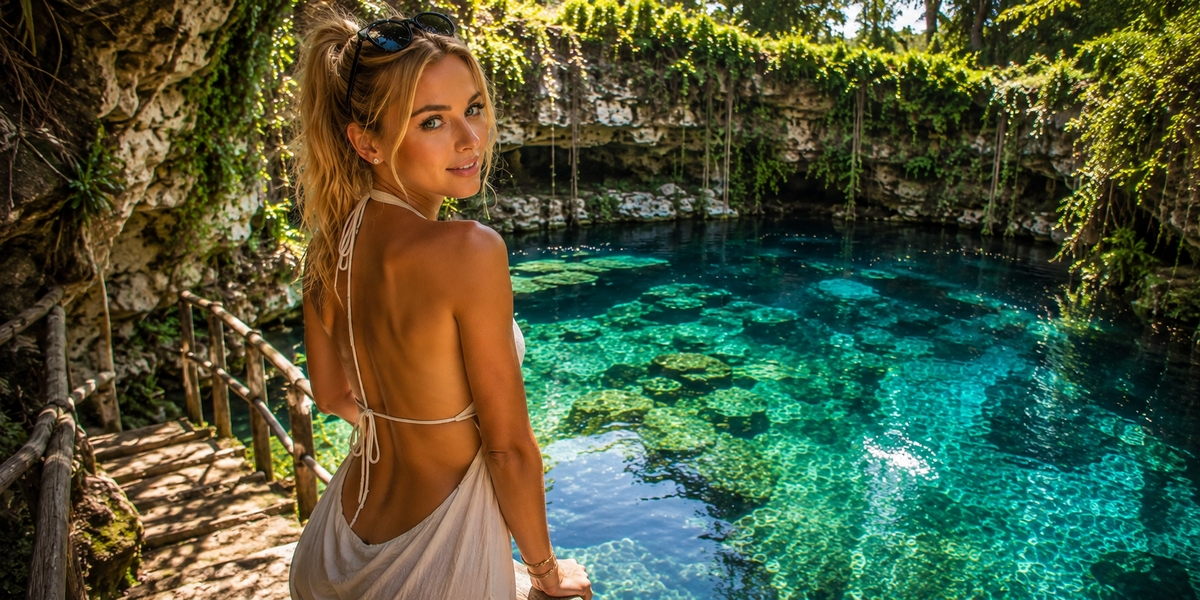
Almost everyone who comes to the Riviera Maya ends up at a cenote, and almost everyone pictures the same thing first: that one drone shot of turquoise water and hanging vines. What the word actually covers is far wider. "Cenote" comes from the Mayan "ts'onot," meaning sacred well: in a peninsula with almost no surface rivers, the ancient Maya leaned on these sinkholes as both their fresh water and their portals to the underworld. The same word still stretches from a bright open pool you can wade into, to a half-collapsed cavern strung with roots, to a cold underground chamber where the only light comes through a crack in the ceiling.
That range is exactly why people get it wrong. A nervous swimmer ends up in a deep cave with no shallow end. A family with toddlers drives an hour to a site built for divers. Someone chasing the famous photo arrives at noon and finds two tour buses and brown water churned up by a hundred swimmers. None of those days are the cenote's fault. They are planning misses.
This guide is built to prevent them. It covers which cenotes make sense from Cancun, Playa del Carmen and Tulum, the three types and who each suits, what you actually need to bring, and whether to drive or take a tour. One rule runs through all of it: bring cash and biodegradable sunscreen, every single time.
Quick Answer: Where Should You Go?
Your base decides most of it. Cancun travelers have to drive a bit; Playa and Tulum sit in the middle of the best cenote country; and anyone doing Chichen Itza can fold in a stunning cenote on the same day.
No cenotes in the Hotel Zone. The closest cluster is the cenote road near Puerto Morelos, 40–60 minutes south, with open and cave options side by side.
Cenote Azul, Cristalino and Chaak Tun are all a short hop, and the Tulum highway adds Dos Ojos. The best mix of easy access and variety.
Tulum is the best cenote base, full stop. Gran Cenote, Calavera and Casa Cenote are minutes away, and Dos Ojos is a short drive north.
Ik Kil, Suytun and Oxman pair perfectly with the ruins. A cool swim after a hot morning is the single best way to plan that long day.
Open, Semi-Open and Cave: The Three Cenotes
Cenotes form as limestone collapses over an underground river, and they are usually sorted by how far that collapse has gone. It reads like geology trivia, yet it is the most useful filter you have: it predicts the water, the light, the temperature and how comfortable a hesitant swimmer will feel. One thing it does not change is the chill. Fed by underground springs, most cenotes sit near 24–25°C (about 75°F) all year, which lands as a real shock straight off a bath-warm Caribbean beach.
Open cenotes
Sunlit pools at ground level, like a natural swimming pool ringed by jungle. Warmest water, easy entry, often shallow edges. The right call for families, first-timers and anyone who wants to relax rather than explore. Ik Kil and Cenote Azul are classic examples.
Semi-open cenotes
Partly collapsed, with rock overhangs, hanging roots and dramatic shafts of light. Cooler, deeper, and the source of most of those iconic photos. Gran Cenote and Cenote Calavera live here. Great for confident swimmers and snorkelers.
Cave cenotes
Underground chambers with stalactites and little daylight, explored by walkway, snorkel or dive. Cold, deep and genuinely cinematic, but intimidating if you are not a strong swimmer. Dos Ojos is the famous one.
None of these is better than the others; they are just different. If you only have time for one and you are traveling with mixed swimming ability, a semi-open cenote is usually the safe middle ground, with sun, shade and a shallow area to retreat to. If you want the full underground spectacle and everyone can swim, a cave cenote is the one you will talk about for years. For more underwater scenery on the coast itself, the snorkeling guide covers how reef trips compare with cenote swims.

Cenotes by Base: Cancun, Playa, Tulum and Valladolid
Where you sleep changes the whole calculation. The cenotes themselves are spread along the highway between Cancun and Tulum, plus a separate cluster inland near Valladolid. Here is how the four common bases actually stack up before you start comparing individual names.
| Base | Access | Signature cenotes | Best for | Watch out |
|---|---|---|---|---|
| Cancun | 40–60 min drive south | Ruta de los Cenotes (Verde Lucero, Siete Bocas, Boca del Puma) | Day trippers | Nothing walkable; you must drive or book a tour |
| Playa del Carmen | 10–40 min drive | Cenote Azul, Cristalino, Chaak Tun, Dos Ojos | Variety and ease | Roadside cenotes get crowded by late morning |
| Tulum | 5–30 min drive | Gran Cenote, Calavera, Casa Cenote, Dos Ojos | Cenote-first trips | The famous ones are the most expensive |
| Valladolid | Pair with Chichen Itza | Ik Kil, Suytun, Oxman, Hubiku | Ruins-day combo | Only practical if you are already inland |
Tulum and Playa del Carmen are cenote country, and a half-day at one from either base is barely a detour. From Cancun it is a genuine outing, which is why so many people there fold a cenote into a Chichen Itza day instead. On a busy morning the bottleneck is rarely the water but the parking lot, which fills well before the cenote does. If that is your plan, the Chichen Itza guide explains how the cenote stop near Valladolid rescues an otherwise long, hot day, and the Riviera Maya map guide shows how these areas connect.
Which Cenote Fits You
Type and base get you most of the way. The last filter is you: who you are traveling with, how you feel about deep or dark water, and what you actually want from the visit. Find yourself below.
Young kids
→ An open cenote with shallow edges and steps, not a cave. Warm water, sun, and a place to stand make the difference between a magical morning and a meltdown.
The iconic photo
→ A semi-open cenote at opening time, before the water gets churned up. Light beams and hanging roots photograph best in the first hour with no crowd.
Snorkeling and fish
→ Gran Cenote or Casa Cenote, where clear water, small fish and turtles make a mask genuinely worth it. Bring your own gear to skip rental lines.
A nervous swimmer
→ An open cenote with a life jacket, which most sites rent cheaply. Skip the deep cave cenotes; the dark water and echo are not relaxing if you are unsure.
Adventure and caves
→ Dos Ojos or a guided cave snorkel. This is the dramatic, underground side of the Yucatan, and it rewards confident swimmers who want more than a dip.
Only one free morning
→ The closest cenote to your base, early. Travel time is the enemy on a short trip, and a quiet 8am swim beats a famous name reached at noon.
What to Bring and the Rules That Catch People Out
Cenotes are protected natural sites, not water parks, and a few rules trip up first-timers in ways that can cost money or cut the visit short. Two matter more than the rest: cash and sunscreen.
Nearly every cenote is cash only, in Mexican pesos, paid at a small booth on arrival. Cards rarely work, ATMs at the site are rare or empty, and you will also want small bills for parking, lockers and a life jacket. The wider question of when to carry pesos versus cards is covered in the Mexico money guide, but for cenotes the answer is simple: always carry more cash than the entry fee alone.
Beyond that, the packing list is short but specific. Water shoes earn their place: the limestone around the entry points is sharp and slippery, and barefoot is a stubbed-toe risk. A dry bag keeps your phone and wallet safe while you swim, since there is often nowhere truly secure to leave them. Add a quick-dry towel, a change of clothes because you will be wet, and your own snorkel gear if you have it. Skip the drone at most sites; they are widely banned and you will be asked to land it.
The etiquette rules are not just bureaucracy. Do not touch the stalactites or formations, which take thousands of years to grow and are protected by law, and do not bring food or bug spray into the water. Shower before you get in. These are living systems feeding the region's groundwater, and they stay swimmable only because visitors mostly behave.
Tour, Rental Car or Colectivo: Getting There
How you reach a cenote shapes the day almost as much as which one you pick. There is no single right answer, only the right one for how comfortable you are driving in Mexico and how much you care about beating the crowd.
Rental car
The freedom option. Leave at dawn, hit two cenotes before the vans arrive, and pick lesser-known spots off the main highway. You handle parking, fuel and small cash tolls, but you own your timing, which is the whole game with cenotes.
Guided tour
Pickup, transport and often a cenote plus ruins or snorkeling bundled together. Ideal if you would rather not drive abroad. Timing is the trade-off: group tours tend to reach cenotes mid-morning, exactly when they fill up.
Colectivo or taxi
For cenotes close to Tulum or along the Playa–Tulum highway, shared colectivo vans are cheap and easy. A taxi works for the nearest sites. Both shine for a single close cenote, less so for chaining several in a day.
If arriving early matters to you, and with cenotes it really does, driving yourself is the only option that guarantees it. A guided tour buys convenience at the cost of timing, which is a fair trade for travelers who want zero logistics. For how self-driving compares with private transfers across the rest of your trip, the Cancun transfer options guide is the companion read.
Compare cenote trips before you book
If you would rather not drive, a tour that bundles a cenote with ruins or a cave snorkel is the easiest way to see one well. Check the start time before booking, since early arrival is what separates a great cenote from a crowded one.
Common Cenote Mistakes
Most disappointing cenote days come down to a handful of avoidable misses. Read these once and you will dodge the ones that catch first-timers out.
Arriving at midday. Between 10am and 2pm the tour vans land and the water clouds up from swimmers. The same cenote at 8am is a completely different, far better place.
Showing up without cash. Cards usually do not work, and there is rarely a working ATM. No pesos can mean no entry, or a scramble to the nearest town and back.
Wearing banned sunscreen. Regular sunscreen is prohibited and staff will ask you to rinse it off. Come with mineral sunscreen or a rash guard so you are not stuck choosing between sunburn and the rules.
Picking the wrong type for your group. A deep cave cenote with nervous swimmers or small kids is a recipe for a tense morning. Match the type to the people before you fall for the photo.
Chasing only the famous names. The Instagram-famous cenotes are also the busiest and priciest. A quieter local cenote nearby is often clearer, cheaper and far more relaxing.
Underestimating the cold and depth. Cave and semi-open water is cooler and often very deep with no shallow end. Grab the cheap life-jacket rental if you are even slightly unsure; it turns nerves into enjoyment.
Sources Checked
Sources checked on May 31, 2026. Cenote entry fees, opening hours, accepted payment and access rules change often and vary site to site, so treat the prices here as planning ranges and confirm the exact details before you go.
How this guide was checked: We compared recent Riviera Maya cenote guides for current fee ranges and hours, and used Quintana Roo's reef-safe sunscreen regulation for the rules, treating individual prices as ranges rather than fixed numbers since they shift by season and site.
Frequently Asked Questions
How much does it cost to visit a cenote?
Entry usually runs from roughly 100 to 500 pesos per person depending on the cenote, with the famous ones near Tulum and Chichen Itza at the higher end and quiet local cenotes much cheaper. Nearly all of them are cash only in Mexican pesos, and you may pay small extra fees for lockers, parking or a life jacket, so bring more cash than you think you need.
Do I need biodegradable sunscreen for cenotes?
Yes. In Quintana Roo, regular chemical sunscreen is banned in cenotes and many sites ask you to rinse off and swim with nothing on your skin at all. Use mineral, biodegradable sunscreen, or skip it entirely and wear a rash guard, which is the easiest way to avoid a fine and to protect the water.
Which cenotes are best from Cancun?
Cancun has no cenotes in the Hotel Zone, so the closest cluster is the Ruta de los Cenotes near Puerto Morelos, about 40 to 60 minutes south, with open and cave cenotes like Verde Lucero, Siete Bocas and Boca del Puma. Many Cancun visitors instead combine a cenote with a Chichen Itza day near Valladolid.
What is the difference between open, semi-open and cave cenotes?
Open cenotes are sunny pools at ground level, the easiest and most family-friendly. Semi-open cenotes are partly collapsed, with rock overhangs, vines and shade. Cave cenotes are underground chambers with stalactites and little or no daylight, which feel dramatic but can be intimidating for nervous swimmers and small children.
Should I visit cenotes on a tour or drive myself?
Driving yourself gives the best experience because you can arrive early, before the tour vans, and choose quieter cenotes. A guided tour is easier if you do not want to drive in Mexico and prefer to bundle a cenote with ruins or snorkeling. Colectivos and taxis work for cenotes close to Tulum or Playa town.
What time should I go to a cenote to avoid crowds?
Arrive at opening, usually around 8 to 9am. The whole Riviera Maya cenote system fills up between 10am and 2pm when tour groups arrive from the coast. The first hour gives you clearer water, better light for photos and, at popular spots like Gran Cenote, a real chance of having it briefly to yourself.
Bottom Line
Use this shortlist if you do not want to overthink it.
The best cenote is rarely the most famous one; it is the one that matches your group, reached early enough to enjoy it. Choose the type before the name, arrive at opening, and carry cash and reef-safe sunscreen. Do those three things and almost any cenote in the region delivers.
If you are based in Tulum or Playa del Carmen, a half-day cenote run is one of the easiest great experiences in Mexico. If you are in Cancun, save the cenote for your Chichen Itza day and let one long drive do double duty.