
Money in Mexico is easy enough once you stop treating it as one rule. A resort check-in, a beach taxi, a taco stand, an ATM screen and a restaurant bill are five different payment moments. The wrong choice is usually not dramatic. It is just a slightly worse exchange rate, a needless fee, a confused tip, or a cash problem at the exact moment you wanted the day to feel simple.
For most travelers in Cancun, Playa del Carmen, Tulum and the Riviera Maya, the best setup is practical: use a credit card for larger, traceable purchases, carry pesos for small daily spending, avoid poor conversion offers, and do not rely on U.S. dollars as your main plan.
This guide focuses on tourist reality, not banking theory. If you are also building a full trip budget, read it together with the Cancun budget guide or the broader Riviera Maya budget guide, because payment choices and total trip cost are connected.
Quick Answer: Use Cards for Big Purchases, Pesos for Daily Friction
Use a no-foreign-transaction-fee card where cards are normal, withdraw or bring enough pesos for small cash moments, and choose pesos when a terminal asks which currency to charge. Dollars can be useful as backup in some tourist situations, but they are not the cleanest everyday currency in Mexico.
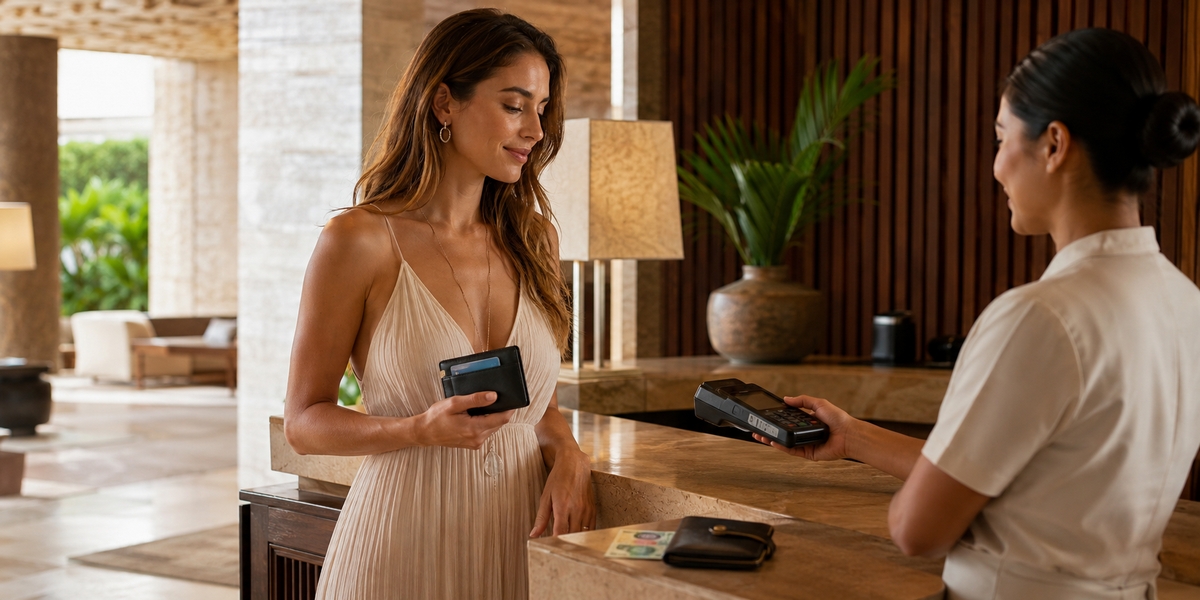
Use your card for hotels, better restaurants, supermarkets, tours and rental deposits. Keep pesos for taxis, tips, snacks and small local places.
If you stay mostly inside an all-inclusive, cash needs are smaller: tips, airport moments, small purchases and excursions.
For taxis, local restaurants, markets, cenotes, beach clubs, colectivos or public beaches, peso cash prevents awkward moments.
Have enough pesos for the first taxi backup, tips, water, snacks or a late-night stop before you start hunting for a better ATM.
Should You Use Pesos, Dollars or a Credit Card?
The cleanest answer is situational. A credit card is often best when the merchant is established and the amount is meaningful. Pesos are best when the purchase is small, local, fast or tip-related. Dollars are a backup in tourist zones, not a universal shortcut.
In Cancun's Hotel Zone, larger resorts and many restaurants are card-friendly. Playa del Carmen is mixed: cards are common in formal businesses, but cash remains useful around beach access, taxis, casual food and small shops. Tulum can make cash more important because transport, parking, beach access and smaller venues may not behave like a polished resort checkout.
| Payment moment | Best default | Why it works | Watch out |
|---|---|---|---|
| Hotel or resort bill | Credit card | Traceable payment, deposit handling, better dispute trail. | Check whether the final charge is in pesos or your home currency. |
| Restaurants | Card or pesos | Cards are common in tourist restaurants; pesos are easier in casual places. | Look for service charge, propina or suggested tip before adding more. |
| Taxis and local rides | Pesos | Cash avoids payment friction and weak dollar math. | Agree price before the ride when no meter or app fare is used. |
| Tips | Small pesos | Useful for hotel staff, drivers, guides, beach service and small favors. | Dollars may be accepted, but small peso bills are cleaner. |
| Large cash amount | Usually avoid | Most travelers do not need to carry large cash in resort areas. | Cross-border declaration rules can apply at high amounts. |
If you are choosing between an all-inclusive and a more independent stay, money behavior changes with the trip style. A resort-heavy trip needs fewer small payments. A walkable Playa or Tulum trip needs more daily payment decisions. That is one reason all-inclusive value should be judged by behavior, not just room rate; the Cancun all-inclusive guide explains that trade-off in more detail.
ATMs and Exchange Rates: Where Travelers Leak Money
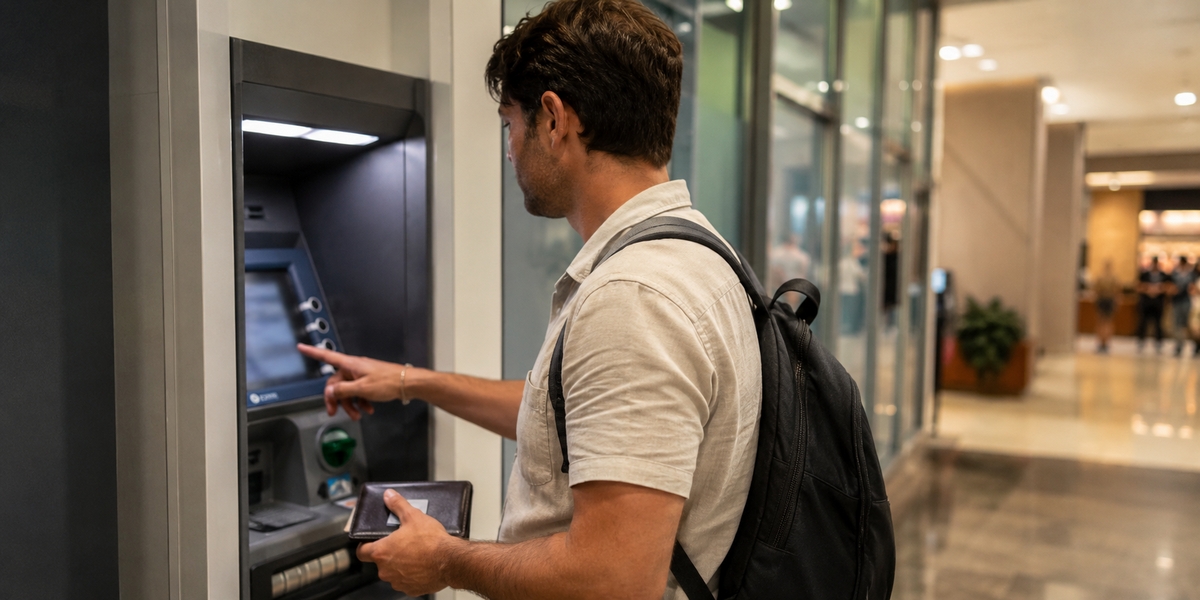
The two big ATM mistakes are using a weak machine and accepting a bad conversion offer. A bank ATM may still charge a local fee, and your own bank may charge fees too, but the bigger hidden problem is often the screen that asks whether you want the ATM to convert the withdrawal into your home currency.
That offer is dynamic currency conversion. Visa explains that merchants and ATMs can offer to convert a transaction into the cardholder's home currency, and that the screen should show both amounts, the exchange rate and any added fees or markup. The practical traveler answer is simple: if the offered conversion looks unnecessary, decline it and let your card network or bank handle the conversion.
Use bank-linked machines when possible
Choose ATMs inside banks, attached to banks, in airports, malls or busy supervised places. Random standalone machines are more likely to have weak fees, poor placement or avoidable stress.
Decline home-currency conversion
If the ATM asks to charge you in USD or CAD instead of pesos, the safer default is to decline the conversion offer and continue in pesos.
Withdraw enough, not too much
One medium withdrawal often beats many tiny withdrawals, but carrying several days of cash is different from carrying your entire vacation budget.
Compare the real rate, not the sign
Airport and tourist-zone exchange counters can be convenient, but convenience may cost more. Compare the rate, commission, location and how much cash you actually need.
For exchange-rate context, Banco de Mexico publishes the official FIX reference rate on banking days. That does not mean every ATM, hotel desk or exchange booth gives you that exact rate; it gives you a sober reference point so you can spot a weak offer before accepting it.
Tipping in Mexico Without Overthinking Every Bill
Tipping is one of the places where travelers waste the most mental energy. In tourist areas, tipping is common in restaurants, hotels, tours, transfers and beach service. The goal is not to calculate one perfect number for every situation. The goal is to know when a tip is expected, when service may already be included, and when a small peso bill solves the moment.
Before adding a restaurant tip, check the bill. You may see a service line, a suggested tip, or the word "propina." If service is not included, a 10-15% restaurant tip is a common tourist-area range, with more for excellent service or higher-touch dining. If service is poor, do not let guilt turn into automatic overpayment.
Check the bill first
Look for service included, suggested gratuity or any automatic charge. Add a tip only after you understand what is already there.
Small pesos are useful
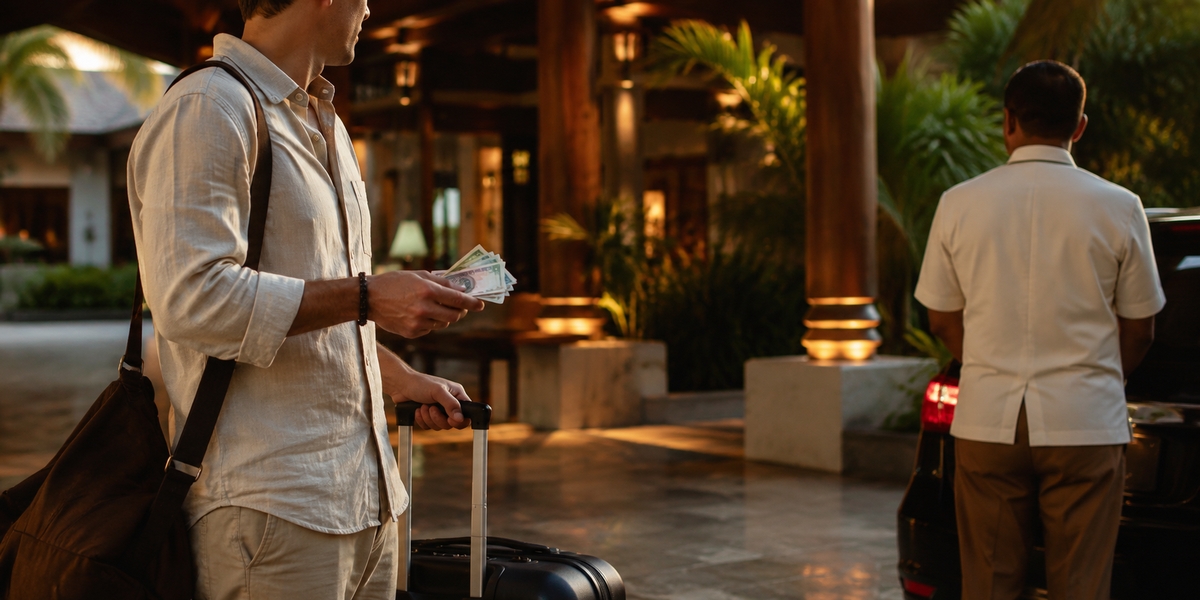
Bell staff, housekeeping, room service and helpful small requests are easier when you have smaller bills ready instead of breaking a large note.
Tip for service, not pressure
Drivers and guides are often tipped when they are helpful, safe and clear. Keep the amount tied to service quality and tour length.
Included does not always mean no tips
Many travelers still tip selectively at all-inclusive resorts for good service, bars, housekeeping, restaurants and drivers.
Round up only when it makes sense
For short rides, the main win is agreeing the fare before you go. Add a small tip when the driver helps with luggage, waits, or gives genuinely useful service.
Tip the person, not the view
Beach clubs, loungers and bar service can already be expensive. Tip for attentive service, clear help and repeated orders, not just because the setting feels premium.
How Much Cash Should You Carry?
Most travelers need less cash than they fear, but more cash than a card-only mindset allows. A good rule is to carry a daily peso buffer for the parts of the trip that become annoying without cash: taxis, tips, small food, public beach costs, parking, bathrooms, markets, water and backup transport.
Do not carry large cash amounts unless you have a real reason. Mexico's customs authority says entering or leaving Mexico with more than USD 10,000 or its equivalent is not itself a crime, but not declaring it is. U.S. and Canadian travelers also have their own outbound and return reporting rules for large currency amounts, so large cash is rarely worth the stress for a normal vacation.
Carry a small tip and backup buffer
Enough for arrival, bell staff, housekeeping, small tips, one taxi mistake and a snack stop is usually more useful than a thick cash envelope.
Plan for walkable local spending
Cards work often, but pesos make casual meals, beach access, taxis, ferry-side purchases and small shops smoother.
Add more cash discipline
Beach access, taxis, parking, cenotes and small vendors can make cash useful, but carrying too much creates its own risk.
Bring pesos before you leave
Do not assume every stop on a cenote, ruins or island day will take cards. Small bills keep the day moving.
If your money plan is tied to airport arrival, transfer timing and your first ATM stop, read the Cancun airport arrival guide before you land. The first hour after arrival is exactly when tired travelers accept the easiest money decision, not always the best one.
Common Money Mistakes That Cost More Than They Look
Most Mexico money mistakes are small enough to ignore once, then annoying after they repeat all week. The cure is not becoming obsessive. It is having defaults before you are standing in front of an ATM, taxi, waiter or airport counter.
Using dollars as the main plan. Dollars may be accepted in tourist zones, but the conversion math can be weak and change by business. Pesos make small spending clearer.
Accepting dynamic currency conversion. Paying in your home currency may feel familiar, but the conversion offer can include a markup. Choose pesos unless you have a specific reason not to.
Arriving with no small bills. Large notes are awkward for tips, taxis, small food and casual purchases. Break cash early in normal businesses, not during a stressful moment.
Ignoring the final card charge. Hotel bills, tour offices and restaurants can involve taxes, service, deposits or currency choices. Read the screen before tapping.
Carrying too much cash. More cash does not make the trip safer. It can increase stress, loss risk and declaration issues if the amount is large enough.
Tipping before checking what is included. Some restaurants, beach clubs and tours may already add service. Read the bill first so generosity does not become double payment.
Sources Checked
Sources checked on May 12, 2026. Money rules, exchange-rate references and card-conversion practices can change, so verify large-cash reporting requirements, card fees and current exchange rates before travel.
How this guide was checked: We compared official Mexican customs guidance, Banco de Mexico exchange-rate references, U.S. and Canadian currency reporting pages, and Visa's dynamic currency conversion guidance. The goal was to separate fixed rules from practical traveler habits that vary by business and trip style.
Frequently Asked Questions
Should I bring pesos or dollars to Mexico?
Bring or withdraw pesos for everyday spending. Dollars can work for some airport transfers, tours or tips in resort areas, but pesos are usually cleaner for taxis, small shops, local restaurants, beach costs and avoiding weak conversion math.
Can I use credit cards in Cancun, Playa del Carmen and Tulum?
Yes, credit cards are widely useful in hotels, resorts, many restaurants, supermarkets, car rentals and tour offices. Still carry pesos because small vendors, taxis, tips, parking, public beach costs and some local places may be cash-first.
Should I pay in pesos or dollars with my card in Mexico?
When a terminal or ATM asks whether to charge you in pesos or your home currency, pesos are usually the better default. Choosing your home currency triggers dynamic currency conversion, where the merchant or ATM sets the conversion offer.
How much cash should I carry in Mexico?
For most resort-area travelers, a small daily cash buffer in pesos is enough: tips, taxis, snacks, beach costs and emergencies. Avoid carrying large amounts unless you have a specific reason, and remember that large cross-border cash amounts may require declaration.
Are ATMs safe to use in Mexico?
Use bank ATMs inside or attached to banks, airports, malls or well-lit public areas, and avoid random standalone machines when possible. Check the fee screen, decline dynamic currency conversion if offered, and keep your card and cash out of sight.
How much should I tip in Mexico?
Tipping depends on service and setting. In tourist areas, restaurant tips around 10-15% are common when service is not already included, while small peso tips are useful for hotel staff, drivers, guides and casual service.
Bottom Line
Use this money setup before you land, then adjust by trip style.
The best Mexico money plan is hybrid: card for structure, pesos for friction, dollars only as backup.
For most first-time travelers, the biggest win is not finding the perfect exchange rate. It is avoiding weak conversion offers, carrying small pesos, and reading the bill before you tap.