
The case for renting a car in Cancun gets made on a booking screen, where a compact at eighteen dollars a day sits next to a hundred-and-thirty-dollar transfer to Tulum and looks like an obvious win. The case against it gets made three days later, when the car has done nothing but move between two parking lots and you are still paying for insurance, fuel, and a deposit you forgot was frozen on your card.
Both versions are real. A rental in the Riviera Maya is one of those decisions that is genuinely great for some trips and quietly wasteful for others, and the difference has almost nothing to do with the headline rate. It comes down to how much you actually intend to drive, and whether the region's best parts are inside your resort or scattered across ninety minutes of highway.
This guide treats the question the way someone on their second trip would: not "is a car nice to have," but "will this car earn back its full cost and hassle, or am I paying for freedom I won't use." We will start with the answer, then the real numbers, then the part rental ads never mention.
Quick Answer: Rent or Skip
Short version: rent a car if your trip is built around independent exploring — cenotes, ruins, beach towns, and stops that don't line up on a single tour. Skip it if you're staying put at a resort, basing yourself on the Tulum beach, or nervous about driving abroad. Here's the fast read by traveler type:
- Resort-only beach week — skip; the car just collects parking fees.
- Cenote, ruins and small-town explorer — rent; this is exactly what it's for.
- One big day trip (Chichen Itza) — lean tour or private driver, not a whole rental.
- Tulum beach base — usually skip; transfers plus the odd taxi cost less.
- Multi-stop road trip down Highway 307 — rent; freedom pays off here.
- First time driving in Mexico, and unsure — skip the first trip; ease in later.
If your days are cenotes, Mayan ruins, Akumal, Valladolid and roadside taco stops, a car turns a logistics headache into a road trip. Nothing else gives you that range cheaply.
If the plan is beach, pool, and the occasional dinner out, a rental sits idle and bleeds money. A pre-booked transfer in and out is cheaper and far less hassle.
Planning a single Chichen Itza run or two cenote days? Run the numbers against a guided tour or a private driver for the day. Often they win on stress, sometimes on price.
Mexican law requires third-party liability insurance on every rental, and it's rarely in the online price. The counter total is frequently two to three times the rate you booked.
What a Rental Actually Costs
The single biggest reason travelers regret a Riviera Maya rental isn't a breakdown or a fender-bender. It's the gap between the price they booked and the price they paid. Here are the numbers that actually matter, in rough 2026 ranges.
That base-to-all-in jump is the whole story. The reason it happens is legal, not shady: under Mexican law every rental must carry third-party liability insurance, and most booking platforms quote a rate that leaves it out. Add the mandatory liability cover, the collision and theft waiver you'll be firmly encouraged to take, fuel, and a parking habit, and the cheap compact quietly becomes a mid-range expense.
A worked example makes the trap obvious. Say you book a compact advertised at $22 a day for five days — $110, and it feels like a steal next to a couple of long transfers. At the counter, mandatory liability adds about $20/day, the collision waiver another $25/day if you take it, and you'll burn maybe $40–60 in fuel over the week. Suddenly the "$110" car is closer to $350–400 all-in, before a single parking fee. That can still be a great deal if you're driving every day. It's a poor one if the car mostly waits for you.

One genuinely useful 2026 note: in April 2025 the Government of Quintana Roo rolled out a free Tourist Mobility Pass for visitors renting from licensed companies, designed to add transparency and reduce shakedowns, and it includes two courtesy exemptions for minor traffic violations. It won't change the insurance math, but it's a small, real protection most first-timers have never heard of.
Is It Worth It for Your Trip?
There's no universal verdict here, only the right call for the trip you're actually taking. Match your trip shape to the row below, and notice that the deciding factor is always the same: how much of your week genuinely needs four wheels.
| Your trip | Rent? | Why | Smarter alternative |
|---|---|---|---|
| Resort-only beach week | Skip | The car sits idle while you pay insurance, deposit, and parking. Pure cost, almost no use. | Pre-booked private transfer in and out. |
| Cenote, ruins & small-town explorer | Rent | Stops are scattered and tour timetables fight your pace. A car is the cheapest real freedom you can buy here. | None better — this is the rental's home turf. |
| One big day trip (Chichen Itza) | Lean tour | A single long drive in heat rarely justifies a multi-day rental, and the return must beat sundown. | Guided tour or a private driver for the day. |
| Tulum beach base | Usually skip | Beach-zone parking is scarce and pricey; you'll leave the car parked most of the time anyway. | Transfer in, taxis or bikes locally, tours for trips out. |
| Multi-stop road trip down Hwy 307 | Rent | Puerto Morelos, Akumal, Playa, Valladolid in one loop is a genuine road trip. Transfers would cost far more. | None better for this itinerary. |
| First time driving in Mexico, unsure | Skip | Topes, full-service fuel stops, and checkpoint etiquette are a lot to learn on a stressful first trip. | Transfers and tours now; rent on a return visit. |
If you're still mapping the week, it helps to know what's actually out there to drive to. The best day trips from Cancun guide shows which stops cluster well for a self-drive day and which are better left to a tour, and the cenotes guide is the clearest case for a car: the good ones rarely sit on a bus route.
The Driving Reality Nobody Books For
Here's the thing the rental ad and the nervous forum threads both get wrong. People fear the dramatic stuff — cartel headlines, fake police, a checkpoint gone bad. In practice, on the tourist corridor, those are rare. What actually catches travelers is mundane: a speed bump they didn't see, a fuel stop they didn't watch, and a long highway leg they started too late in the day.
The good news first. Highway 307, the spine of the Riviera Maya from Cancun through Playa del Carmen to Tulum, is a well-maintained, well-lit divided road with consistent signage. GPS works. The driving itself is easy and, for most of the corridor, genuinely relaxed. Quintana Roo also doesn't require a temporary vehicle import permit, so the paperwork is lighter than mainland road trips.
The friction lives off that spine. Topes — speed bumps, often unmarked and brutally tall — appear at town edges and will punish a car taken at speed; learn the word and the sign before you need them. The last stretch to a good cenote is frequently a dirt track, not a highway, which is why a tank topped up at a Pemex before you leave the main road matters. And at those Pemex stations, which are full-service, it's worth standing by the pump and watching it reset to zero before fueling — travelers commonly report short-change and "the pump wasn't zeroed" moments, the same small-scale stuff covered in the broader tourist scams guide.
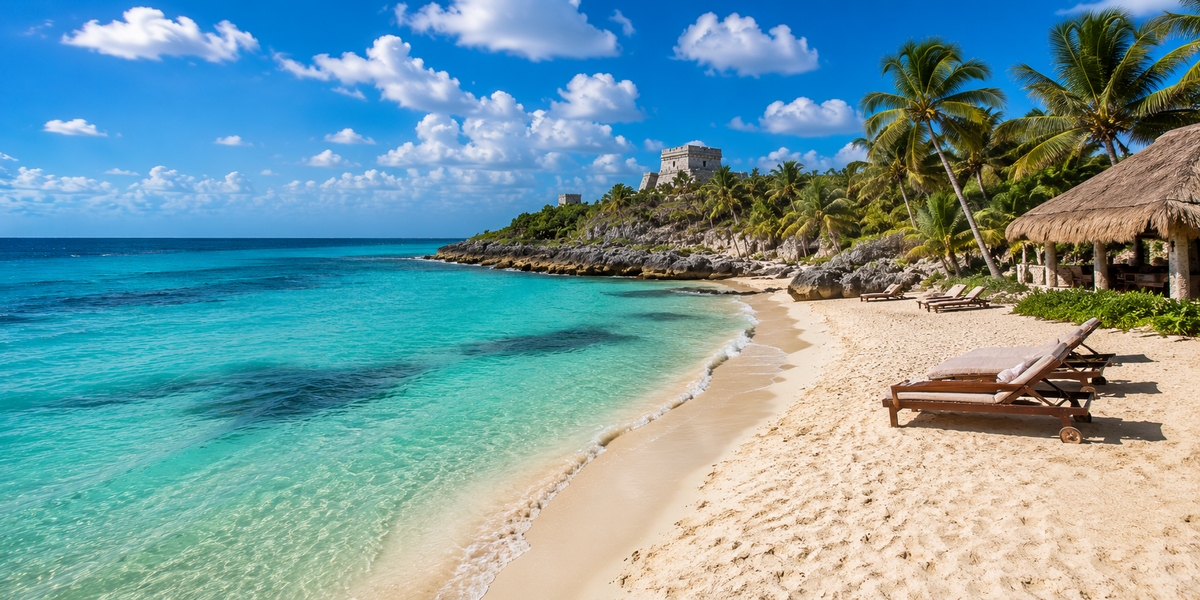
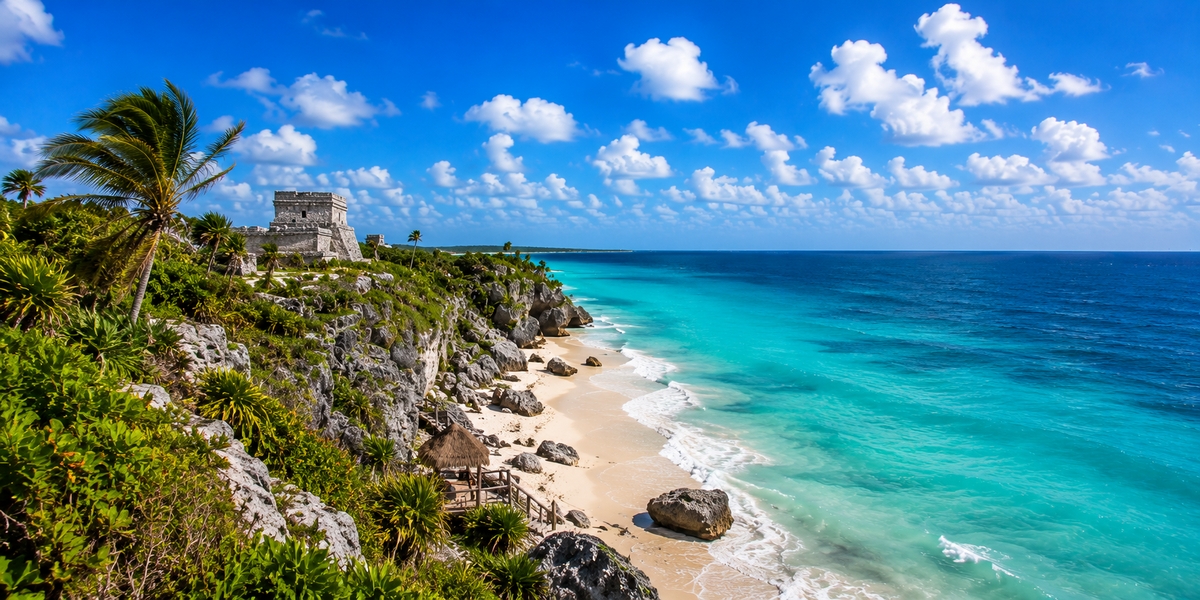
This is also where geography quietly decides the value question. A car doesn't just save you a transfer fee; it changes what your week can include. Inland cenotes, the ruins at Cobá, a lunch in Valladolid, a quiet beach at Xpu-Ha — these stop being "expensive tour days" and become a tank of gas and an early start. If that's the trip you want, the rental earns its keep. If it isn't, all of that range is freedom you're paying for and leaving in the lot.
Mistakes That Quietly Cost Money
Most rental regret in the Riviera Maya isn't bad luck. It's one of these four gaps, each of which a five-minute habit would have closed.
Booking on the base rate alone. The online price often excludes the legally required liability cover. Compare the total out-the-door cost with mandatory insurance, or the counter will do the math for you — at two to three times the quote.
Skipping the walk-around video. Film the car slowly before you drive off, scratches and wheels included. Without it, pre-existing damage can quietly become your damage at drop-off.
Driving the long legs after dark. The State Department advice to move between cities in daylight exists for a reason: animals, unlit shoulders, and topes are far harder to read at night, especially on rural roads.
Assuming your home insurance covers you. U.S. and Canadian policies and credit-card cover are generally not accepted for Mexico's mandatory liability. You'll buy local liability regardless — budget for it, don't be blindsided by it.
If You Decide to Skip the Car
Choosing not to rent doesn't strand you. The Riviera Maya is one of the easier regions in Mexico to explore without your own wheels, precisely because so much of the tourism is built around getting people from A to B. For the airport run, a pre-booked private transfer or the ADO bus handles it cleanly. For a marquee day out, a guided tour or a hired driver covers most of what a rental would — the long Chichen Itza run in particular is one many seasoned travelers happily hand off rather than drive themselves.
One safety note that applies whether you drive or not: in Quintana Roo the State Department specifically advises against hailing taxis on the street, and to use authorized taxi stands, your hotel, or trusted apps instead. That single habit removes most of the friction people associate with getting around carless. Between transfers, ADO, the occasional booked taxi, and a tour or two, a no-car trip in this region is genuinely smooth — which is exactly why the rental has to earn its place rather than be assumed.
Sources Checked
Sources checked on June 11, 2026. Rental pricing, insurance requirements, advisory levels, and local programs change by season, provider, and policy, so confirm the out-the-door price and the current advisory close to travel.
How this guide was checked: We reviewed the U.S. State Department's Mexico travel advisory and its driving guidance for daylight travel, toll roads, and checkpoints, alongside the legal requirement for third-party liability insurance on Mexican rentals and the Quintana Roo tourist-protection measures introduced for renters. The aim is not to quote one company's rate, but to help you judge the all-in cost and the real driving conditions before booking.
Frequently Asked Questions
Is it worth renting a car in Cancun and the Riviera Maya?
It depends entirely on your trip shape. A car is worth it if you plan to chase cenotes, ruins, and small coastal towns on your own schedule, where a rental turns scattered stops into one easy road trip. It is usually not worth it for a resort-only beach week or a Tulum beach base, where the car spends most of the trip in a paid parking lot while you still pay for insurance, fuel, and deposits. Decide by how much you actually plan to drive, not by the cheap base rate.
Is it safe to drive in Cancun and the Riviera Maya?
For most visitors, yes, with normal caution. Quintana Roo sits at Level 2 on the U.S. State Department advisory, and the main Highway 307 corridor between Cancun and Tulum is a well-maintained, well-lit divided road. The State Department advice is simple and worth following: drive between towns in daylight, use toll roads where you can, and comply calmly at any road checkpoint. The bigger everyday hazards are unmarked speed bumps, called topes, and rough side roads to cenotes, not crime on the main routes.
Why is the rental car price at the counter higher than what I booked?
Because Mexican law requires third-party liability insurance on every rental, and most booking platforms show a base rate that does not include it. By the time you add the mandatory liability cover and the collision waiver you will be pushed to take, the daily rate at the counter is often two to three times the online quote. The fix is to compare the total out-the-door price, including mandatory insurance, rather than the headline rate.
Do I need to buy the rental company's insurance in Mexico?
You must carry third-party liability coverage, because it is mandatory under Mexican law, and U.S. or Canadian policies and credit-card coverage are generally not accepted to satisfy it. You can sometimes substitute a valid stand-alone Mexican liability policy bought in advance, but a credit card alone will not clear the counter. The collision and theft waivers are a separate question: those are optional add-ons, so check whether your own travel or card coverage already protects you before paying for them twice.
Can I drive from Cancun to Tulum or Chichen Itza in one day?
Yes, both are doable as day drives. Cancun to Tulum on Highway 307 is roughly two hours each way, and Chichen Itza is about two and a half to three hours each way using the toll road. The catch is the return: the State Department advises driving between cities in daylight, so an early start matters, and a long Chichen Itza day in summer heat is one many travelers prefer to hand to a guided tour or a private driver instead of doing behind the wheel.
Should I rent a car just for the airport pickup?
Usually no. Renting at the airport only for the ride to your hotel means handling insurance, a large deposit hold, and unfamiliar roads right after a long flight, for a trip a pre-booked transfer does more cheaply and calmly. A car makes sense when you will drive often across the whole trip. If the airport ride is the only driving you need, a private transfer or ADO bus is the simpler call.
Before You Book a Rental Car
Five checks that decide whether the car is a bargain or a slow leak.
If you remember one line: rent a car when the region is your trip, and skip it when your resort is. The cheap base rate is a distraction; the real question is how many days you'll use it.
For independent travelers chasing cenotes, ruins, and small towns, a rental is the best-value freedom in the Riviera Maya, as long as you budget the all-in cost and drive the long legs in daylight. For resort and beach-base trips, transfers, taxis, and the odd tour will almost always come out cheaper and calmer.
And if you're a first-timer who's unsure, there's no shame in skipping it this round. The roads aren't going anywhere — rent on the trip when you already know the region, and the whole thing feels easy instead of like a test.