
For years, the advice for a Mexican Caribbean beach trip was simple: find a well-rated resort, read a few reviews, book it. In 2026 that advice quietly stopped working. The single variable most likely to define your week is no longer the hotel at all. It is the direction the beach in front of it happens to face.
This is a sargassum year unlike the usual ones. The brown Atlantic seaweed that drifts ashore, piles up, and rots in the sun is arriving earlier and heavier than the calendar predicts, and monitoring groups have flagged it as one of the largest blooms on record. The result is a strange new reality for travelers: two hotels a short drive apart, both excellent, can deliver completely different beaches on the same morning.
So this is not another "best time to visit" guide. It is a booking lens. The thesis is blunt: in a record sargassum year, geography beats rating. A modest hotel on a protected shore can hand you clear water while a flagship resort on an exposed one smells of sulfur by August.
Quick Answer: Book the Coast First, the Hotel Second
If you remember one rule from this article: pick the coast before you pick the property. Protected and west-facing shores stay cleaner; open, east- and southeast-facing shores catch the current head-on. The star rating tells you nothing about which one you are booking.
Isla Mujeres, the leeward side of Cozumel, and the calmer zones north of Cancun face away from the worst of the current and stay cleaner more reliably.
Tulum's atmosphere is real, but its beach is the most exposed on the coast. Treat clear water as a bonus and build the week on cenotes, ruins and a strong pool.
A 9-plus score measures rooms and service, not seaweed exposure. Open the map and the direction the beach faces before you trust the number.
November through March carries the lowest historical risk. In a record year, pair the season with a protected location rather than relying on dates alone.
If you want the underlying seasonality first, the Cancun seaweed season guide maps which months and coasts tend to stay cleaner, and this article builds the 2026 booking decision on top of it.
What Is Actually Happening in 2026
Sargassum is not new. What changed over the last decade is scale. A recurring belt of the seaweed now stretches across the tropical Atlantic, visible from satellites and measured in millions of tons at its summer peak. Some of it breaks off and rides the currents straight into the Mexican Caribbean.
The University of South Florida's Optical Oceanography Lab, which tracks the belt by satellite, has flagged 2026 as a major and possibly record year, driven by a large carry-over bloom from 2025 and elevated nutrient levels in the Atlantic. The detail that should change how you book is the timing: seaweed reached some Quintana Roo beaches as early as January and March, months that are usually among the safest on the whole calendar.
That early arrival is the real headline. It means the clean-season calendar that travelers have leaned on for years is a weaker promise this year than usual. When the safe months stop being reliably safe, the only lever left that you fully control at booking time is location.
Why Geography Decides It, and a Hotel Cannot
Here is the mechanism, in plain terms. The seaweed travels on ocean currents and wind, then beaches on the shores that face into them. The Mexican Caribbean does not present one uniform coastline to that current. It is a patchwork of orientations, and that patchwork is the whole story.
Open, east- and southeast-facing beaches, the long exposed stretch from the Riviera Maya down through Akumal and Tulum, take the Atlantic current almost head-on. There is nothing between the open sea and the sand to slow the weed down. By contrast, shores that sit behind an island, tuck into a bay, or face north and west get a natural buffer. Isla Mujeres shelters part of the water near Cancun; Cozumel's western, leeward side faces away from the incoming current; the zones north of Cancun sit at a kinder angle than the open coast to the south.
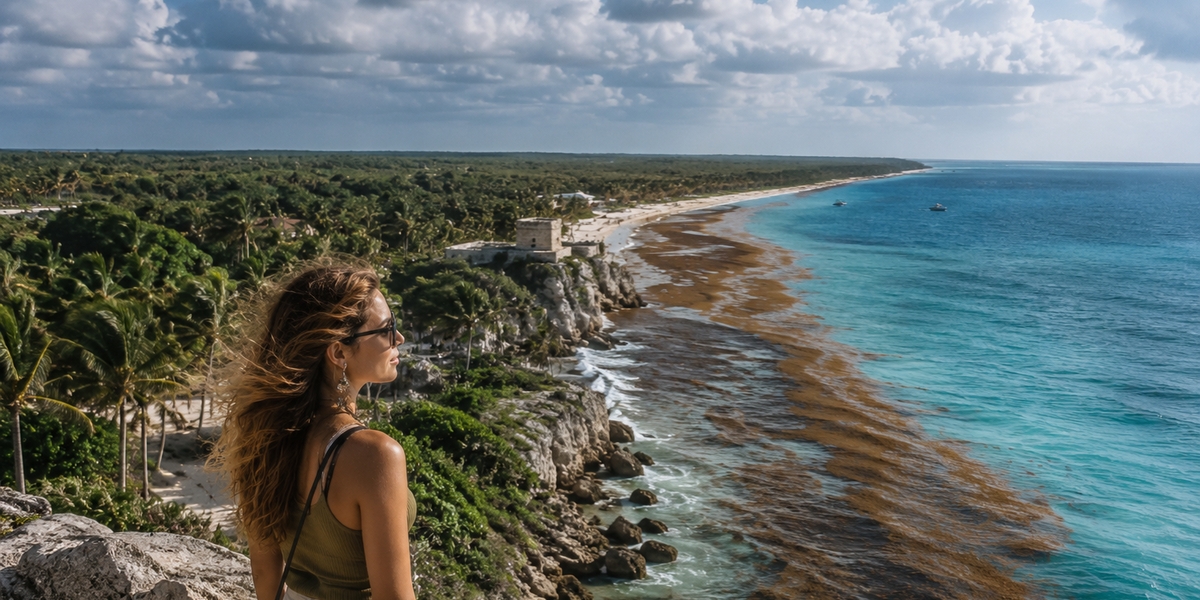
This is why the property itself is almost beside the point. A resort can rake its sand at dawn, run offshore barriers, and reshuffle loungers, but it cannot rotate its coastline away from the current. A five-star beachfront on an exposed shore and a three-star place fifty kilometers north are not competing on service when it comes to seaweed. They are competing on geography, and only one of them was dealt a good hand.
There is a counterintuitive piece worth knowing before you write off a whole region. Sargassum is usually worst at dawn after an overnight arrival, and maintained beaches often look meaningfully better by mid-morning once crews have cleared the fresh weed. If you glance out at sunrise, see brown, and cancel the beach day, you may be quitting too early. The flip side is the smell: once the weed has cooked in the sun for a day or two, the rotten-egg odor carries to the balcony, which is a real argument against a ground-floor room over an exposed beach in August.
Coast-by-Coast: Where the Weed Tends to Land
Use this as a booking map, not a forecast. No coast is immune in a record year, and any beach can have a bad week. But the relative odds are stable enough to steer a decision, because they are set by orientation rather than luck. Read it for the shore you are considering, and pay attention to the right-hand column: it tells you who each area actually suits once you accept its seaweed reality.
| Area | Coast orientation | 2026 sargassum exposure | Summer beach reliability | Better for |
|---|---|---|---|---|
| Tulum & Akumal | Open, east / southeast | Highest | Low | Aesthetic, cenote and ruins trips that do not live or die on the beach |
| Open Riviera Maya Puerto Morelos to Tulum |
Open, east-facing | High | Low to medium | Resorts with strong pools and travelers with flexible plans |
| Playa del Carmen | East-facing, partly built up | Medium | Medium | A walkable town base where the beach is one ingredient, not the whole plan |
| Cancun Hotel Zone | Varies by section, partly north-facing | Medium, varies | Medium | First-timers who want a managed, raked beach and easy logistics |
| Playa Mujeres & Costa Mujeres north of Cancun |
Calmer, better-protected angle | Lower | Medium to high | Couples and families wanting wider, quieter, steadier beaches |
| Isla Mujeres & Cozumel Playa Norte / leeward west |
West-facing / sheltered | Lowest | High | Beach-first summer trips and day trips when clear water is non-negotiable |
The pattern reads cleanly from top to bottom: exposure falls as you move away from the open southeastern coast and toward the sheltered, west-facing islands and the north-of-Cancun zones. If clear water is the point of your trip, you are reading this table from the bottom up. If you are choosing Tulum or Cozumel as day trips from a single base, the Cozumel vs Isla Mujeres comparison goes deeper on what each island delivers.
Why a High Rating Can Mislead You This Year
Hotel ratings are genuinely useful. They just measure the wrong thing for this particular problem. A 9.2 reflects clean rooms, good service, strong food and a smooth check-in. None of those numbers move when a current shifts the seaweed belt a hundred kilometers north, which is exactly the kind of high-rating blind spot that catches careful bookers off guard.
There is also a lag built into reviews. A glowing set of reviews from a clean February tells you almost nothing about the same property in a record August, and a single stunning beach photo could have been taken on a good morning a year ago. In a year where the safe months arrived late and the heavy months may run heavier, last season's five-star beach is this season's open question.
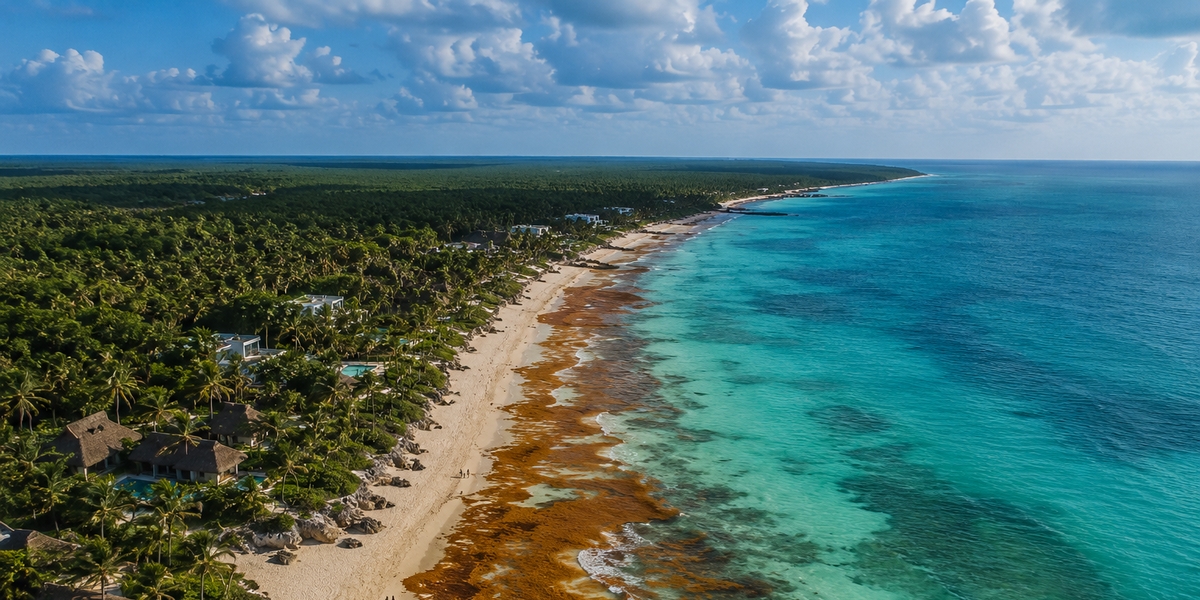
None of this means rating is worthless. It means you should apply it in the right order. First narrow to a shore whose geography you trust for your dates. Then, inside that shortlist, let rating, reviews and price do exactly what they have always done. A strong hotel on a protected coast is the best of both worlds. A strong hotel on an exposed one is a beautiful room with a view you may not want to open the window to.
What to Check Before You Book in 2026
The checks below take ten minutes and change the odds more than any amount of scrolling through ratings. Do them in order, before you put down a deposit.
Before You Reserve a Mexican Caribbean Beach Stay
A short, geography-first checklist for a record sargassum year.
If you are still choosing a base rather than a single hotel, the where to stay in Cancun guide covers how the zones differ on more than seaweed, and the broader best time to visit Cancun and Riviera Maya guide lines up the months.
Booking Mistakes That Cost the Most in a Record Year
The expensive mistakes this year are not about money wasted on a bad hotel. They are about booking a good hotel on the wrong coast.
Choosing the property before the coast. Picking a resort by rating and only later checking the beach orientation reverses the one order that actually protects your trip.
Trusting last year's photos. A flawless beach shot says nothing about a record 2026, when seaweed arrived in months that are normally clean. Dated reports beat any single image.
Booking exposed Tulum for a beach-first summer. The most photogenic stretch is also the most exposed. Expecting guaranteed clear water there in August is the classic mismatch.
Relying on the calendar alone. The clean-month rule is weaker this year. Pair your dates with a protected location instead of treating the season as a guarantee.
Skipping the backup plan. If the beach is the only plan, one bad arrival defines the week. Cenotes, ruins and a good pool are immune to the shoreline.
Taking a ground-floor room over an exposed beach in peak season. When the weed cooks in the sun, the sulfur smell carries. A higher floor, or a more protected shore, spares you the worst of it.
For a destination already shaped by this trade-off, the guide to Tulum's public beaches shows which exact stretches stay more walkable and where the access and seaweed trade-offs land.
In a record sargassum year, the most important booking decision you make is not which hotel, but which coast. Choose a protected or west-facing shore if clear water matters, and only then compare hotels by rating and price inside that shortlist.
If you are set on the open, exposed coast for its atmosphere, book it with open eyes: plan the week around cenotes, ruins and a strong pool, and let a clean beach day be a bonus rather than the plan.
The hotels have not changed. The ocean has. Book the geography first, and a record seaweed year can still hand you a very good trip.
Sources Checked
Sources checked on June 10, 2026. Sargassum forecasts, beach conditions and seasonal patterns shift by week, current and exact location, so verify live conditions close to travel if a clean beach is central to your trip.
How this guide was checked: We reviewed the University of South Florida's Optical Oceanography Lab sargassum outlook and monitoring maps for the 2026 belt and its early arrivals, alongside regional reporting on Quintana Roo beach conditions and the geographic differences between the open southeastern coast and the more sheltered, west-facing shores. The goal is not to predict one beach on one day, but to help you choose a coast and a backup plan with realistic expectations.
Frequently Asked Questions
Is 2026 really a record sargassum year in Mexico?
Monitoring groups, including the University of South Florida's Optical Oceanography Lab, have flagged 2026 as a major and possibly record year for sargassum across the tropical Atlantic and Caribbean, driven by a large carry-over bloom and elevated nutrient levels. Unusually, seaweed reached some Quintana Roo beaches as early as January and March, months that are normally among the cleanest. Treat any clean-month calendar as a guide, not a guarantee, and check live conditions close to travel.
Why does coastal geography matter more than hotel rating for sargassum?
Sargassum drifts in on open-Atlantic currents and piles up on shores that face it directly. A hotel cannot change which way its coast points. So an open, east- or southeast-facing beach catches the weed head-on regardless of how luxurious the property is, while a protected or west-facing shore stays cleaner even at a modest hotel. Star rating measures service and rooms, not which direction the current pushes the seaweed.
Which Mexican Caribbean areas stay cleaner from sargassum?
Generally the more protected and west-facing shores fare best: Isla Mujeres (especially Playa Norte), the leeward west side of Cozumel, and the calmer north-of-Cancun zones such as Playa Mujeres and Costa Mujeres. The Cancun Hotel Zone varies by section. The most exposed stretches are Tulum and Akumal, which face the open Atlantic and are usually hit hardest.
Should I cancel a Tulum trip during peak sargassum season?
Not necessarily. If the beach is the entire point of the trip and your dates land in summer, a more protected area is the safer bet. But Tulum still works if you treat the beach as a bonus and build the week around cenotes, ruins, a strong pool and the town's atmosphere. The mistake is booking Tulum in August expecting flawless sand.
Can hotels remove sargassum from their beaches?
Many resorts rake the beach in the early morning, and some use offshore barriers, so a maintained beach can look much better by mid-morning than at dawn. But cleanup manages symptoms, not the cause. Once the weed sits a day or two in the sun it smells of sulfur, and in a heavy week even diligent crews cannot keep an exposed beach pristine. Geography still sets the baseline.
When is sargassum risk lowest on the Mexican Caribbean?
Historically the cleaner window runs roughly November through March, with the highest risk from April through October and the heaviest landings between June and August. In a record year that calendar is less reliable than usual, so pair the season with a protected location and a backup plan rather than relying on dates alone.