
The photos that sell Cancun and the beach you actually walk onto are not always the same beach. Between roughly late spring and early fall, parts of the Mexican Caribbean receive sargassum: a brown, ropey seaweed that drifts in from the open Atlantic, piles up on the sand, and starts to smell as it breaks down. For first-time visitors it's the single biggest gap between expectation and reality.
Here's the honest part most guides skip. No one can promise you a clean beach on a specific date. Sargassum is seasonal, but it's also driven by wind and current, which means it changes by the day and by the kilometer. Two hotels a short drive apart can have completely different mornings.
What you can do is lower the risk. This guide explains when seaweed season usually peaks, why geography decides who gets hit hardest, and how to pick dates, a coast, and a hotel that give you the best odds, plus a backup plan for the days the ocean doesn't cooperate.
Quick Answer: How to Lower Your Seaweed Risk
If a clean beach is the whole point of the trip, travel in the low-risk months and base yourself on a protected, north- or west-facing beach. If your dates are fixed inside peak season, choose your coast carefully and plan non-beach days so a heavy arrival doesn't sink the week.
The window from roughly November through April is usually the cleanest. If beach quality is non-negotiable, this is the safest bet you can make before anything else.
Playa Norte on Isla Mujeres and the west coast of Cozumel face away from the Atlantic current and stay cleaner. North Cancun and Playa Mujeres are the safer mainland options.
Pool days, cenotes, ruins, and a catamaran trip to an island all work regardless of shoreline conditions. The trip survives a bad beach day if it isn't the only plan.
When Cancun Seaweed Season Actually Happens
The standard answer is that sargassum season runs from about May through October, with the heaviest beach landings most often in June and July, and meaningful improvement by October. November through April is the historically cleaner stretch. That calendar is still a useful starting point, but 2026 is a reminder of why you shouldn't treat it as a contract.
Two things make 2026 unusual. First, the bloom from 2025 didn't fully die off over winter, leaving a historically large "seed" population drifting in the Atlantic. Second, nutrient levels in the tropical Atlantic stayed elevated, which fuels fast growth. On the strength of satellite data, the University of South Florida's Optical Oceanography Lab has flagged 2026 as a potentially record year for sargassum in the region.
The part travelers rarely hear: the season started early. Sargassum was reported on Quintana Roo beaches as far back as January and March 2026, months ahead of the historical average. That's the single most counterintuitive fact about this year. A January beach day, normally one of the safest bets on the calendar, was not automatically clean. If your trip falls in the shoulder months, check current conditions rather than assuming the old calendar holds.
Why Some Beaches Get Hit Harder Than Others
Sargassum doesn't arrive evenly. It rides a current that pushes in from the open Atlantic, so the beaches that face that current directly take the worst of it, while beaches tucked behind a headland or island stay calmer. Once you understand the direction the seaweed comes from, the map starts making decisions for you.
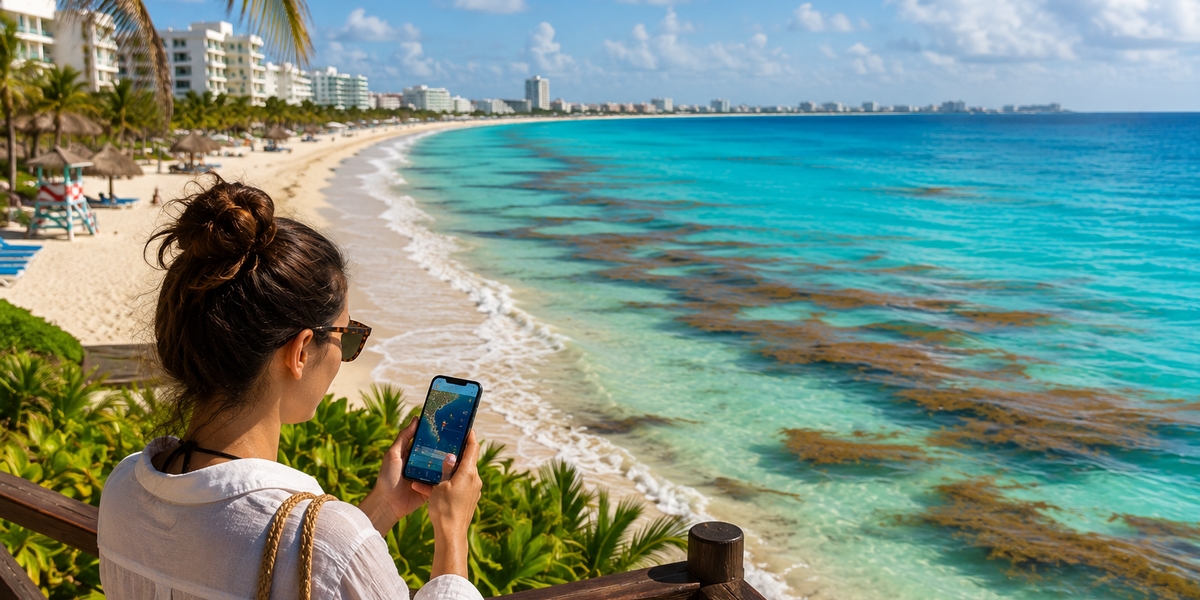
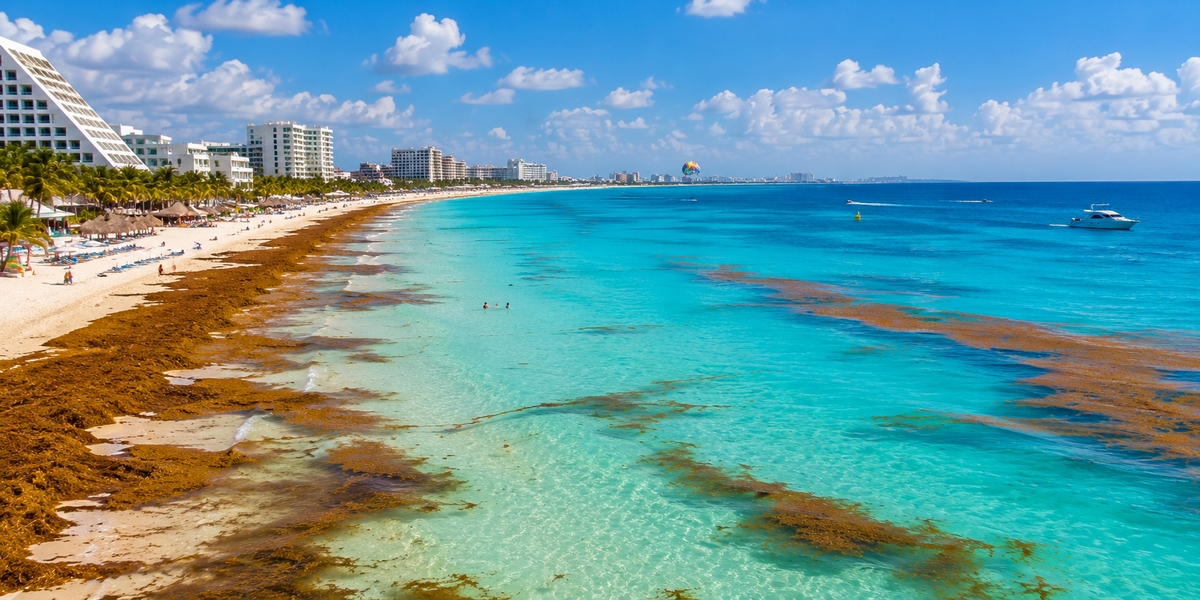
East- and southeast-facing shorelines are the exposed side. Tulum and Playa del Carmen sit directly in the path and routinely collect the heaviest accumulations during peak weeks, with Tulum's hotel zone seeing near-daily arrivals in bad stretches. The southern end of Cancun's Hotel Zone and the coast toward Puerto Morelos also tend to gather more than the north. If you want the full picture of how location changes the swim itself, the Cancun beach guide breaks down the Hotel Zone section by section.
Tulum & Playa del Carmen
Open east- and southeast-facing beaches in the direct path of the current. Beautiful, but the first to collect heavy sargassum in peak weeks.
Southern Cancun Hotel Zone
The long open stretch toward Punta Nizuc and Puerto Morelos catches more than the northern bend. Conditions swing more from week to week.
North Cancun, Isla Mujeres, Cozumel west
Playa Norte and Cozumel's western coast face away from the current and stay cleaner. The northern bend of the Hotel Zone and Playa Mujeres are the safer mainland picks.
This is also why a day trip can rescue a bad beach week. When the mainland shoreline is covered, the protected islands often still have clear water, which is part of why an Isla Mujeres day trip is such a reliable fallback. If you're weighing the two islands, the Cozumel vs Isla Mujeres comparison covers which one fits your trip.
How to Choose a Lower-Risk Beach and Hotel
Once dates and coast are set, the hotel is the last lever. The goal isn't to find a property that promises clean sand, because no honest one can. It's to find a location with better natural odds and a resort that actually does the work when seaweed arrives.
Seaweed Risk Matrix by Area
Use this as a behavior filter before you shortlist hotels. The point isn't which beach looks best in one photo; it's how each area tends to behave across a variable season.
| Area | Seaweed risk (peak) | Why | Best for | Check before booking |
|---|---|---|---|---|
| Isla Mujeres (Playa Norte) | Lower | Faces away from the Atlantic current | Cleanest-water priority, calm swimming | Ferry timing, whether you want to stay overnight vs day-trip |
| North Cancun Hotel Zone / Playa Mujeres | Lower to medium | Sheltered northern bend, less direct exposure | Mainland convenience with better odds | Exact beach section, recent guest photos, cleanup mentions |
| Southern Cancun Hotel Zone | Medium to higher | Long open stretch, more current exposure | Classic wide-beach look, resort scenery | Whether the resort runs daily raking or barriers |
| Playa del Carmen | Higher | East-facing, in the current's path | Town energy, Fifth Avenue, ferry to Cozumel | Recent beach reports; plan a Cozumel backup day |
| Tulum | Highest | Southeast-facing, worst accumulation in Mexico | Aesthetic, ruins, cenotes nearby | Near-daily arrivals possible; weight cenotes over beach |
Notice that a "9.0" rating tells you almost nothing about seaweed. A beautifully reviewed resort on an exposed beach can still hand you a brown shoreline in July. When you compare properties, weigh location and cleanup effort alongside the score, and run the shortlist through a Cancun hotel booking checklist so the seaweed question doesn't get lost behind room photos.
The cleanest water, no compromise
→ Base on Isla Mujeres or Cozumel's west coast, or travel in the low-risk months. Accept higher cost or holiday crowds in exchange for better odds.
Kids who live in the water
→ North Hotel Zone or a protected beach, plus a resort with a strong pool. A good pool turns a bad seaweed morning into a non-event for kids.
All-inclusive, rarely leave the resort
→ Prioritize a property known for daily beach cleanup and offshore barriers in heavy years; conditions on your exact sand matter more than the area average.
Locked into June or July
→ Assume some seaweed and plan around it. Cenotes, Chichen Itza, and an island day keep the week strong regardless of the shoreline.
What to Check Before You Go (and the Morning Of)
Sargassum is one of the few beach variables you can monitor almost in real time. The information is out there; most travelers just don't look until they're standing on the sand. A few minutes the day before and the morning of changes how you plan each day.
Seaweed Check Routine
Do the first three before you book; the last two during the trip.
One underrated detail: sargassum is usually worse in the early morning after an overnight arrival, and cleanup crews often work through the first hours of the day. On a raked resort beach, mid-morning can look meaningfully better than dawn. If you peek out at 6 a.m., see brown, and write off the whole day, you may be quitting too early.
The part the photos never capture is the smell. Fresh sargassum just looks like brown weed, but once it sits in the sun for a day or two and starts to rot, it gives off a sharp sulfur, rotten-egg odor from the hydrogen sulfide it releases. On a heavy stretch you notice it from the balcony before you ever reach the sand. That alone is a reason to skip the cheapest ground-floor room directly over an exposed beach in peak season and pay a little more for a higher floor or a room angled toward the pool.
At the water's edge, two small things trip people up. Decomposing seaweed tends to draw tiny biting sand flies, worst around dawn and dusk, so repellent matters more on a seaweed beach than a clean one. And a thick band of weed at the shoreline hides the sand underneath, where bits of broken shell collect; slip-on water shoes for kids turn a wince-and-tiptoe entry into a non-issue. Neither ruins a day, but both are the kind of detail you only wish you'd known the night before.
Common Sargassum Mistakes Travelers Make
Most seaweed disappointment isn't bad luck. It's a planning gap that was avoidable with one more check.
Trusting old photos. A gorgeous shot from March says nothing about your week in July. Sargassum changes by season and by day, so recent reports beat any single image.
Booking the most exposed coast for a beach-first trip. Choosing Tulum or open Playa del Carmen in peak season and expecting flawless sand is the classic mismatch between aesthetic and odds.
Treating seaweed as all-or-nothing. It's neither guaranteed nor irrelevant. Assuming a ruined trip leads to needless cancellations; assuming none leads to nasty surprises.
No backup plan. If the beach is the only plan, one bad arrival defines the trip. Cenotes, ruins, pools, and island days are immune to shoreline conditions.
If seaweed risk is high on your priority list, it's worth choosing your base around it from the start. The hotel-zone breakdowns in the best all-inclusive resorts guide and the best family resorts guide can help you compare which areas tend to have better conditions before you book.
Sources Checked
Sources checked on June 4, 2026. Sargassum forecasts, beach conditions, and resort cleanup all change by storm, season, and exact location, so verify again close to travel if a clean beach is central to your trip.
How this guide was checked: We compared the University of South Florida's sargassum outlook and monitoring, regional 2026 forecasts and beach reporting, and traveler-facing booking risks. The aim is not to predict any one beach on any one day, but to help you choose dates, a coast, and a hotel with better odds.
Frequently Asked Questions
When is sargassum season in Cancun?
The higher-risk window usually runs from about May through October, with the heaviest landings most often in June and July. The cleanest months are typically November through April. In 2026, some sargassum arrived unusually early, with reports along Quintana Roo beaches as early as January and March, so the calendar should be treated as a guide rather than a guarantee.
Which Cancun beaches have the least seaweed?
Beaches that face away from the open Atlantic current tend to do better. Playa Norte on Isla Mujeres and the west coast of Cozumel are the most consistently protected, and the northern bend of the Cancun Hotel Zone and Playa Mujeres are usually the safer mainland options. Open east-facing and southern beaches, including Tulum and Playa del Carmen, take the heaviest hits in peak weeks.
Will 2026 be a bad sargassum year in Cancun?
Forecasts from the University of South Florida point to 2026 being a major, possibly record year for sargassum in the Mexican Caribbean, driven by a large leftover bloom from 2025 and high nutrient levels in the Atlantic. That raises the odds of heavy beach landings in peak months, but it does not mean every beach is covered every day. Conditions still vary by location and by week.
Can hotels keep their beach clean during seaweed season?
Some can reduce it. Larger resorts often run daily raking and, in heavy years, offshore barriers or collection boats. This helps but does not guarantee a clean shoreline, because a strong arrival can outpace cleanup within hours. Look for recent guest photos and comments about daily cleanup rather than trusting marketing images alone.
Should I cancel my Cancun trip because of sargassum?
Usually not. If your entire trip depends on a flawless beach and you have no tolerance for uncertainty, shift dates toward the cleaner months or base yourself on a protected beach. If you build in a pool, cenotes, ruins, and an Isla Mujeres or Cozumel day, sargassum becomes a manageable variable rather than a ruined vacation.
How fast does sargassum change in Cancun?
Quickly. Wind and currents can shift conditions within 24 to 48 hours, so a beach that looks heavily covered one morning can be noticeably better two days later, and the reverse is also true. This is why checking a live map or beach cam the day before, and again the same morning, beats relying on a single photo someone posted weeks ago.
Bottom Line Before You Book
Use this filter before you compare hotels.
You can't buy a guaranteed clean beach in Cancun, so stop trying to and play the odds instead.
For most travelers, the strongest move is to match dates and coast to your tolerance: cleaner months and a protected beach if perfection matters, or a solid backup plan if your dates land in peak season.
Treat sargassum as a known variable, plan around it, and a "record" forecast year can still deliver a very good trip.