
"Is Mexico safe?" is one of the most searched questions in travel, and it's also one of the most misleading, because the country in the headlines and the country you actually fly into for a beach week are barely the same place. The cartel stories that drive the fear unfold in states most tourists will never set foot in. The Caribbean coast — Cancun, Playa del Carmen, Tulum and the resorts of the Riviera Maya — runs on tourism and is policed accordingly.
That doesn't mean nothing goes wrong. It means the things that go wrong are rarely the things people fear. A first-timer landing at Cancun airport is far more likely to lose money to an overpriced transfer than to encounter any violent crime — and that single sentence captures the whole gap between the reputation and the reality. Most travelers who have a bad experience here weren't caught in violence; they were overcharged by a taxi, skimmed at an ATM, sunburned and dehydrated, sick from the wrong meal, or shaken up on a dark highway. None of that makes headlines, and all of it is avoidable.
This guide treats safety the way a careful returning traveler would: separate the statistically rare from the genuinely common, look at how risk changes by area and by situation, and give you a short list of habits that remove most of the real downside. It covers Cancun, Playa del Carmen and Tulum together because they share a coast, a state, and the same safety logic.
Quick Answer: How Safe Is the Riviera Maya?
The short version: for ordinary tourism in the resort corridor, this is one of the safer parts of Mexico, rated Level 2 — Exercise Increased Caution by the U.S. State Department, the same tier as much of Western Europe. Your attention is better spent on everyday risks — taxis, ATMs, the road, the sun, and the water — than on the violence that dominates the news.
Cancun's Hotel Zone, gated Riviera Maya resorts and the main tourist strips are heavily patrolled and feel calm day and night.
Downtown Cancun, Playa's Quinta Avenida and Tulum's bar scene are fine with normal city-at-night sense.
This is where most travelers actually lose money or get rattled. Boring risks, but the ones that matter.
Heat, currents, and food or water upsets send more tourists to a clinic than crime does.
If your trip involves kids, that lens shifts slightly toward practical logistics and medical access; the dedicated guide to Cancun safety for families goes deeper there. Otherwise, the rest of this article is about turning that mindset into specifics.
What "Is Mexico Safe?" Really Means
The fear gap here is enormous, and it comes from collapsing a huge, varied country into one word. Mexico has 32 states. Travel advisories rate them individually, and the spread is wide: some carry the strongest possible warning while the Caribbean coast sits near the calm end of the scale. Reading "Mexico is dangerous" and applying it to Cancun is like reading a warning about one rough region of a country and cancelling a trip to its quietest beach state.
Quintana Roo — the state holding Cancun, Playa del Carmen and Tulum — is rated Level 2, "Exercise Increased Caution," by the U.S. State Department. That is the same level assigned to France, Spain and Italy, and it sits two full steps below the Level 4 "Do Not Travel" warnings reserved for states like Colima, Guerrero, Michoacán and Sinaloa. The Government of Canada frames it similarly: general caution, not avoidance. The honest takeaway is not "there is no risk" but "the risk in the places you're going is roughly European-city-grade, and it's concentrated in petty crime and the everyday, not in what the country's reputation implies."
Here's the part most fear-driven coverage skips: where serious incidents do touch tourist areas, they are usually targeted — disputes connected to the drug trade that occasionally spill into nightlife zones — not random attacks on visitors. That distinction matters because it tells you what actually lowers your odds: stay out of the late-night drug-adjacent corners of the bar scene, and you've removed most of the already-small violent-crime exposure. The risks left over are the dull, practical ones this guide spends the rest of its time on.
Safety Area by Area: Cancun, Playa and Tulum
Risk here is less about which town and more about which kind of place within it. A gated resort, a walkable tourist avenue, and a quiet residential street at 2 a.m. are three different safety environments even inside the same city. Here is how the main bases actually feel on the ground.
The easiest start
The long beach strip of resorts is the most controlled environment on the coast: private security, tourist police, and constant foot traffic. Most visitors never feel a flicker of concern here, day or night.
Normal city rules
Cheaper, more local, and perfectly walkable by day. Treat it like any mid-size city after dark: stick to busy streets, use a called taxi late, and don't flash valuables.
Lively, pickpocket-aware
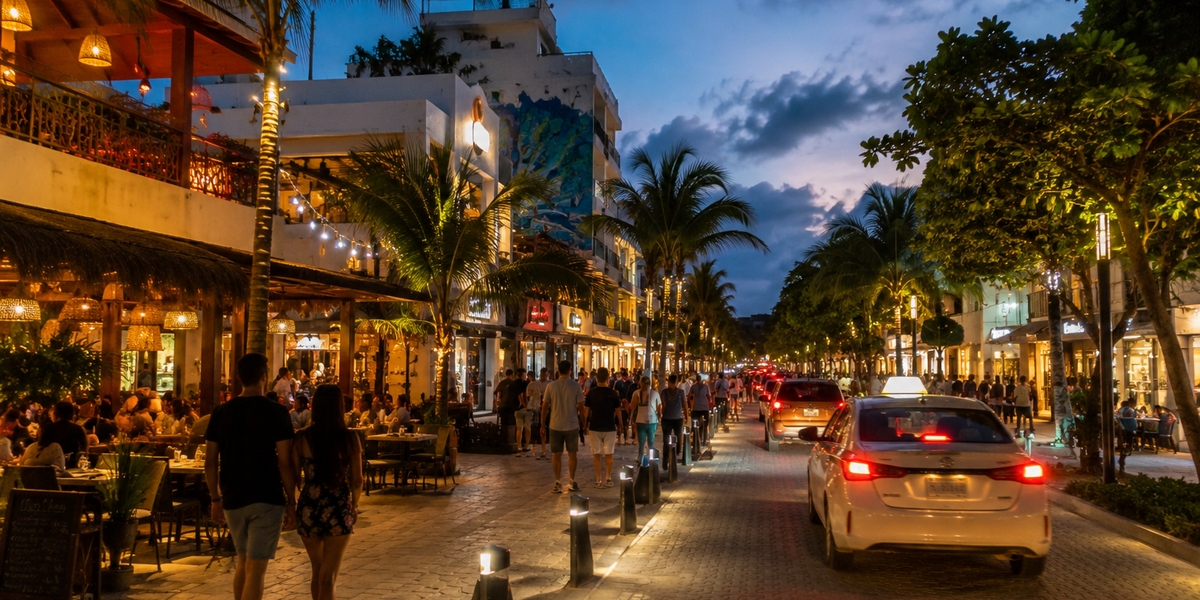
Quinta Avenida is energetic and well-policed; the main caution is petty theft in crowds and overpriced or pushy vendors. The Playa del Carmen guide covers the area in more depth.
Calm by day, sharper at night
The beach and ruins are relaxed; the nightlife scene is where the rare drug-linked incidents and the worst taxi overcharging cluster. Enjoy it, but keep the late-night clubbing sensible.
Quietest of all
The small fishing-town feel of Puerto Morelos and the turtle beaches of Akumal are among the most low-key bases on the coast — less nightlife means fewer of the night-time risks entirely.
Island calm
Reached by ferry from Playa, Cozumel is a relaxed dive island where the main cautions are sea and scooter rather than crime. Sensible water and road habits cover almost everything.
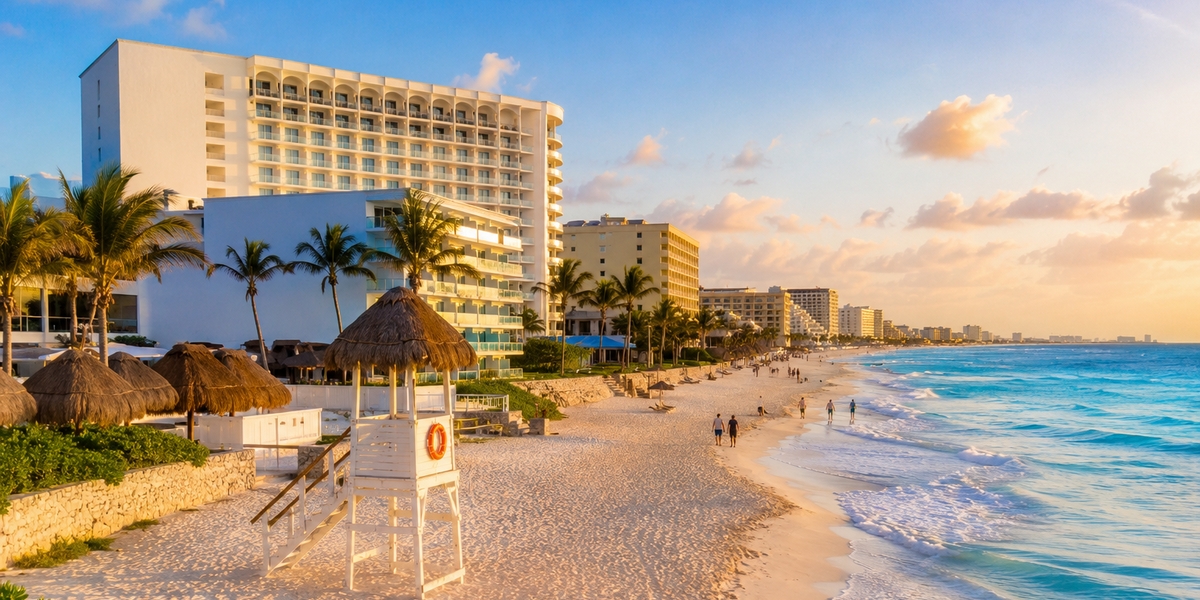
One pattern holds across all of these: the bubble is very safe, and safety degrades gently as you move away from tourist infrastructure and toward late-night, alcohol-heavy, or isolated settings. That's not unique to Mexico — it's true of most beach destinations — but it's the single most useful map of where to pay attention. If picking a base is part of why you're reading this, the breakdown of the safest areas to stay in Cancun compares the Hotel Zone and downtown on exactly this trade-off.
The Risks That Actually Affect Tourists
If you strip out the headlines, a short and unglamorous list explains almost every bad day a tourist has on this coast. None of it is dramatic. All of it is manageable once you know to expect it.
Taxi overcharging is the single most common complaint. Most taxis are unmetered, the union keeps rideshare options limited and contested, and tourists are quoted inflated fares as a matter of routine. The mechanism is simple: a $15 ride can quietly become a $40 one if you ask the price after you've shut the door. Always settle the fare before getting in, and for arrival day, a pre-booked airport transfer spares you the busiest moment for this game. ATM tricks come next: street machines with higher skimming risk, and the "would you like to be charged in dollars?" prompt that quietly costs you on the exchange rate — always choose pesos. For the full money picture, including tipping and cash habits, see money in Mexico for travelers.
Keep it boring
→ Pre-book the first transfer, use bank or hotel ATMs, and tell someone your plan for any late night out. The basics carry you.
Watch the late hours
→ The bar scene is the one place worth real caution. Avoid buying drugs, keep tabs on drinks, and leave the drug-adjacent corners alone.
Drive daylight, toll roads
→ Highways are fine by day. Skip night driving between towns, mind the unmarked speed bumps, and hide valuables out of sight.
Respect sea and sun
→ Check beach flags, don't swim drunk, hydrate hard, and treat strong currents and midday heat as the real hazards they are.
The two risks travelers most underrate are environmental, not criminal. The sun and sea — sustained heat, dehydration, and rip currents on the more open beaches — put more visitors in a clinic than crime does, especially when alcohol is involved. And the stomach: tap water, unfamiliar food, and ice from the wrong place. Drink bottled or filtered water, and read the food and water safety guide before you decide how adventurous to be with street stalls. Because private clinics treat tourists well but expect payment up front — a card swipe before a stitched foot, not after — this is the practical case for travel insurance for Mexico. The likeliest claim isn't dramatic: a stomach bug, a reef cut, a scooter scrape. That's exactly why skipping a cheap policy to save a few dollars is the gamble, not buying one.
Safety by Situation: What to Actually Do
Generic "stay alert" advice helps no one. This is the part to screenshot — the common situations on a Riviera Maya trip, an honest risk read for each, and the specific habit that neutralizes it.
| Situation | Real risk level | What to actually do |
|---|---|---|
| Resort / hotel zone, day or night | Low | Relax. Normal valuables sense is plenty; this is the controlled bubble. |
| Walking tourist streets after dark | Low–medium | Stay on busy, lit streets; watch pockets and bags in crowds. |
| Street-hailed taxi | Medium (money) | Agree the fare first; carry small bills; call a taxi late at night. |
| Airport arrival transfer | Medium (scams) | Book in advance; ignore curbside "amigo, taxi?" pressure and timeshare booths. |
| ATM withdrawal | Medium | Use bank or hotel machines; decline dollar conversion; cover the keypad. |
| Driving between towns at night | Elevated | Avoid if you can; prefer toll roads by day; never leave valuables visible. |
| Late-night, drug-adjacent nightlife | Elevated | The one place to be strict: no buying drugs, mind your drink, leave early. |
| Open-beach swimming / midday sun | Underrated | Obey beach flags, never swim drunk, hydrate, and respect strong currents. |
Read the right-hand column on its own and a theme appears: almost every fix is a small decision made in advance, not a reaction in the moment. That's the whole game here. Safety on this coast is mostly bought at the planning stage, cheaply.
Mistakes Travelers Make
The bad trips usually trace back to one of a few predictable errors — and not the ones people brace for.
Fearing the wrong thing. Travelers obsess over cartel headlines and then get fleeced at the ATM and the taxi line. The energy spent on improbable violence is better aimed at the boring, likely stuff.
Negotiating the airport curbside. Arrival day, jet-lagged, with bags, is the worst possible moment to haggle a taxi or entertain a "free breakfast" timeshare pitch. Book the transfer before you fly.
Underestimating sun, sea and alcohol together. The classic Riviera Maya clinic visit is dehydration, sunstroke, or a swimming mishap after drinking — not a crime. Treat the environment as the main hazard.
Skipping insurance to save a little. Care is good but paid upfront, and the likely claim is mundane: a stomach bug, a scooter scrape, a cut on a reef. Going uninsured turns a small problem into an expensive one.
Notice that three of the four have nothing to do with crime. That's not an accident — it's the most accurate picture of what a normal week here actually tests.
Sources Checked
Sources checked on June 10, 2026. Travel advisories, local conditions and crime patterns shift over time and by exact location, so read the current advisory for Quintana Roo and any recent local guidance close to your travel dates rather than relying on a single snapshot.
How this guide was checked: We compared the official U.S. State Department Mexico travel advisory (state-by-state levels, including Quintana Roo), the Government of Canada's travel advice for Mexico, and widely reported traveler-facing risk patterns for the Cancun–Riviera Maya corridor. The aim is not to predict any single incident, but to separate statistically rare risks from the everyday ones travelers can plan around.
Frequently Asked Questions
Is Mexico safe for tourists in Cancun, Playa del Carmen and Tulum?
For the vast majority of visitors, yes. The resort corridor from Cancun down through Playa del Carmen and Tulum is the most tourist-oriented, heavily policed part of Mexico, and most trips pass without any safety incident. The headlines that scare people usually describe cartel activity in other states that travelers never go near. What actually affects tourists here is far more ordinary: taxi overcharging, ATM tricks, petty theft, road risk, and heat or water issues. Treat those seriously and the violent-crime fear mostly takes care of itself.
Do the U.S. and Canada warn against travel to the Riviera Maya?
Not against travel. The U.S. State Department places Quintana Roo, the state that contains Cancun, Playa del Carmen and Tulum, at Level 2, Exercise Increased Caution, the same level given to France or Spain. The Government of Canada uses similar wording. The strongest U.S. warnings, Level 4, Do Not Travel, apply to entirely different states such as Colima, Guerrero and Sinaloa, not the Caribbean coast. Read the advisory for Quintana Roo specifically, not the country headline.
Are taxis safe in Cancun and Tulum?
Physically, street taxis are generally safe; the real problem is price. Taxis in the region are often unmetered, the local taxi union is strong, and tourists are routinely quoted several times the fair rate, especially at night and outside clubs. Agree on the fare before you get in, carry small bills, and for airport arrivals book a transfer in advance instead of negotiating curbside. A hotel-called taxi costs more than a local would pay but removes most of the haggling and the worst overcharging.
Is it safe to use ATMs in Mexico?
Yes, with two habits. Use ATMs inside banks or inside your hotel rather than free-standing machines on the street or in nightlife areas, which carry a higher skimming and tampering risk. And always decline the machine's offer to charge you in dollars; that dynamic currency conversion bakes in a poor exchange rate. Choosing to be charged in pesos and letting your own bank convert is almost always cheaper. Cover the keypad, and avoid withdrawing late at night in busy bar zones.
Can you drink the tap water in Cancun, Playa del Carmen and Tulum?
Stick to bottled or filtered water for drinking and brushing teeth. Most hotels and restaurants serve purified water and make ice from it, so ice in established venues is usually fine, but tap water itself is not worth the gamble for a short trip. The bigger stomach risks for most travelers are sudden changes in diet, undercooked street food, and dehydration in the heat rather than the water alone. Our food and water safety guide covers how to lower the risk without living in fear of every taco.
Is it safe to drive in the Riviera Maya, and is night driving a problem?
Daytime driving on the main highways between Cancun, Playa del Carmen and Tulum is straightforward for most visitors. The real hazards are practical: poorly lit roads, unmarked topes (speed bumps), occasional potholes, animals, and rare but real checkpoints. The standard advice from both travelers and advisories is to avoid driving at night between towns, keep to toll highways where possible, never leave valuables visible, and treat any flagged stop calmly. If you only need a few transfers, a private driver is often less stressful than a rental.
Bottom Line: Stay Safe in One Minute
The whole guide, compressed to what actually moves your odds.
If you remember one thing: the Riviera Maya is about as safe as a Western European city for ordinary tourism — the danger people imagine is not the danger that's actually there.
For nearly everyone, the right move is to stop worrying about violence and start planning the dull stuff: transfers, cash, the road, the sun, and a basic insurance policy. Handle those and you've closed almost every realistic gap.
Keep genuine caution in reserve for exactly two settings — late-night, drug-adjacent nightlife and driving between towns after dark — and a Cancun, Playa or Tulum trip is far more likely to be remembered for the water than for anything that went wrong.