
Almost every Riviera Maya itinerary reaches the same fork: a day, maybe two, set aside for "the Mayan ruins" — without much sense of which ruins. The booking pages don't help, because they sell all four big sites with the same drone footage and the same word, "ancient." On the ground they are not interchangeable at all.
Chichen Itza is a restored, world-famous monument you visit shoulder to shoulder. Cobá is a jungle archaeological zone you cross by bike. Tulum is a small clifftop site you photograph from above. Ek Balam is the quiet one almost nobody plans for and many remember best. Pick by fame alone and you can spend a hot, expensive day at exactly the wrong one for the trip you wanted.
This guide treats the real question, which is not "are the ruins worth it" but "which of these four deserves the day I can spare, and which can I skip without regret." The short version is that you almost never need all four, and the smartest trips usually choose one big-name site and one quiet one.
Quick Answer: Which Ruins to Choose
If you only read this far: see Chichen Itza once for the icon, add Cobá or Ek Balam if you want atmosphere and a pyramid you can actually climb, and treat Tulum as the easy, scenic option when you are already down south and short on time.
- Chichen Itza — the must-see-once wonder; biggest crowds, highest fee, no climbing.
- Cobá — jungle setting and bikes; you can climb Nohoch Mul again as of December 2025.
- Ek Balam — the underrated sleeper; climbable pyramid, rare stucco carvings, few people.
- Tulum — small but spectacular over the sea; fast, central, but you stay behind the ropes.
The one everyone means by "the ruins." Best-restored, genuinely awe-inspiring, and a box most travelers want ticked once.
Real jungle, ancient white roads, and bikes between ruin groups. Its main pyramid reopened to climbers in December 2025.
Small, quiet, and the most hands-on: climb the Acropolis and stand beside a remarkably intact stucco frieze.
A compact site on a cliff above turquoise water, close to the coast hotels. The easiest ruin to fit into a beach week.
If you've already narrowed it down, the deep dives back up everything here: the full Chichen Itza day-trip guide, the Cobá jungle-pyramids guide, and what to actually expect at the Tulum ruins.
The Four Sites, Briefly
Before any comparison table, it helps to know what each place actually is, because the differences are bigger than "more pyramids" versus "fewer pyramids." They feel like four different kinds of day out.
Chichen Itza
The big one: a vast restored ceremonial city anchored by El Castillo, the stepped pyramid you've seen on every poster. Polished, signposted, and rightly famous — but also a working tourist machine, with a wall of souvenir stalls lining the paths by mid-morning.
Tulum
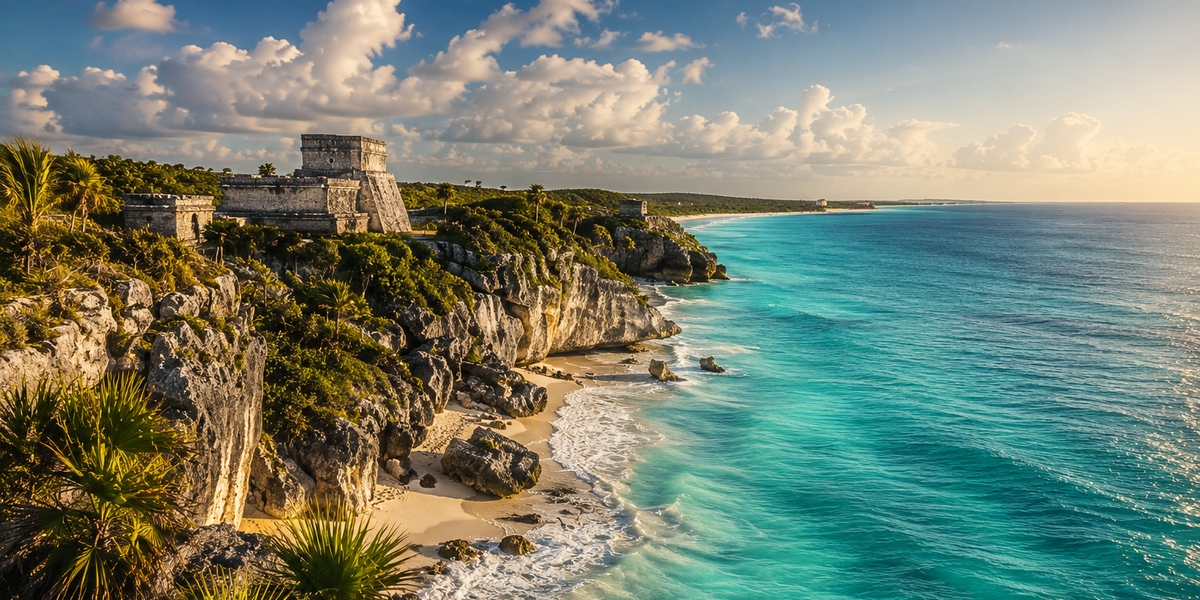
Smaller and lower than the others, but with the one setting none of them can match: a walled site perched on a low cliff straight above the Caribbean. You come for the postcard angle and the sea breeze, not for scale or for going inside the buildings.
Cobá
An archaeological zone swallowed by forest, with structures scattered over a couple of kilometres linked by ancient raised causeways. You move between them on foot, by rented bike, or by pedicab — and as of late 2025 you can again climb Nohoch Mul, its tall jungle pyramid.
Ek Balam
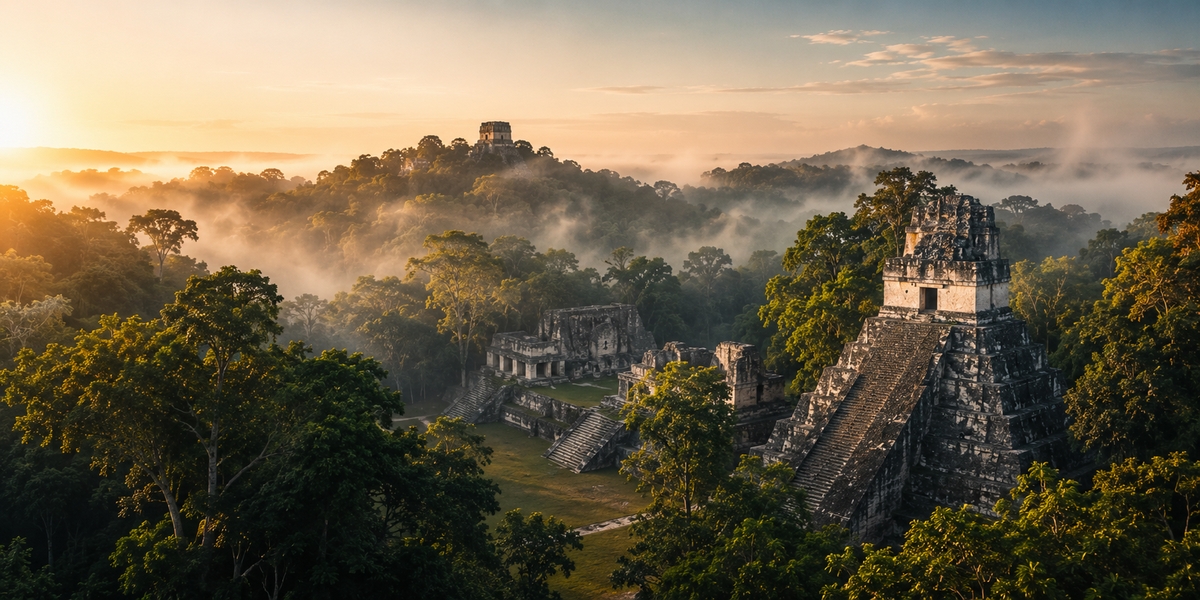
Compact, uncrowded, and unusually rewarding for its size. The Acropolis is climbable, and near the top sits El Trono, a stucco frieze with a doorway carved as a jaguar's open mouth — the kind of detail you can stand right next to, which almost never happens at the famous sites.
Which Pyramids You Can Still Climb
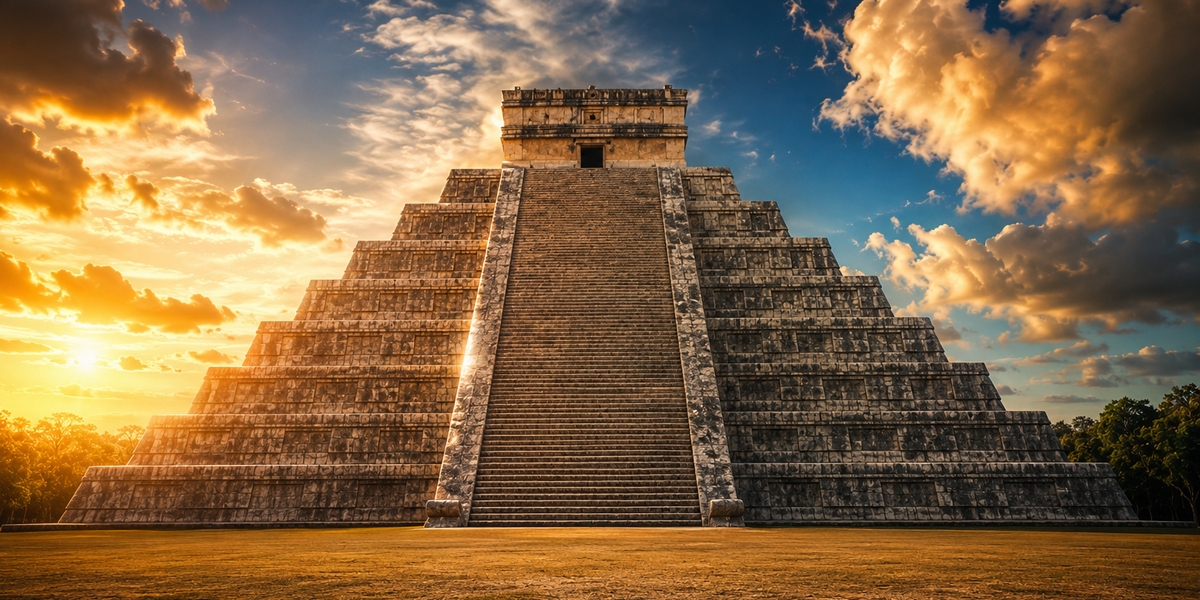
This is the single fact that surprises most people, and it quietly decides a lot of itineraries: you cannot climb the famous one. El Castillo at Chichen Itza was closed to climbers in the mid-2000s, on preservation grounds and after a visitor died on the steps, and it has stayed closed since. Tulum's buildings have been roped off for decades. So at the two sites most travelers default to, you stay on the ground.
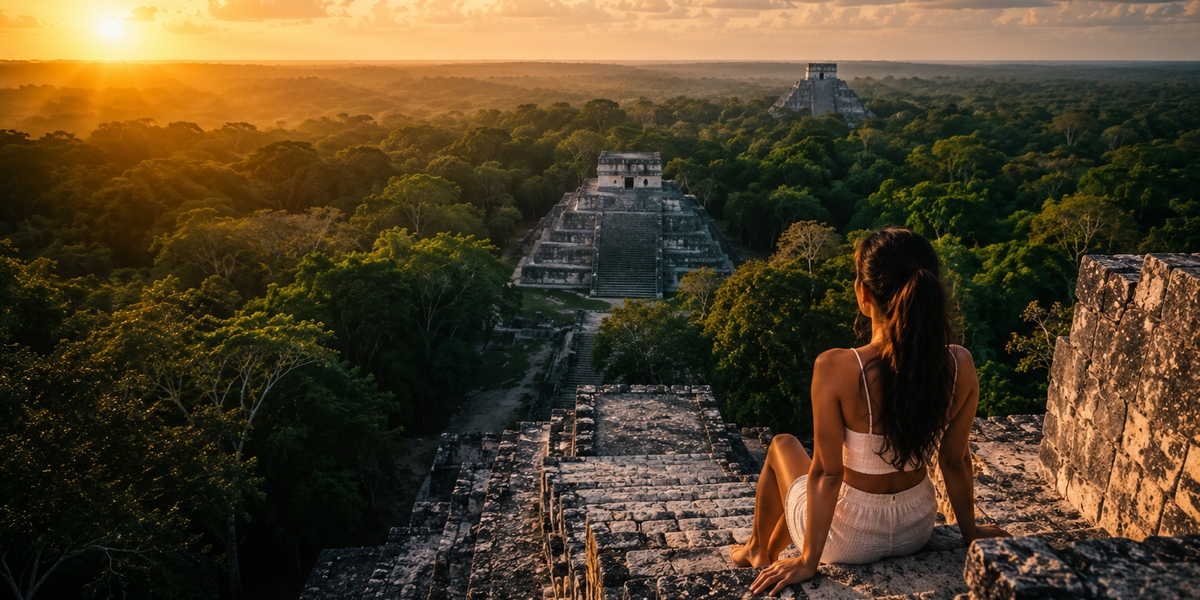
The two you can climb are the quieter pair. Ek Balam's Acropolis has kept its rope-assisted staircase open throughout, and Cobá's Nohoch Mul reopened to climbers in December 2025 after roughly six years closed — which, for a brief window, makes Cobá and Ek Balam the only major Yucatán pyramids you can summit at all. If standing at the top of a Maya pyramid, looking out over unbroken jungle, is on your list, that desire alone should point you away from Chichen Itza and toward Cobá, covered in full in the Cobá guide.
Where the Crowds Are (and Aren't)
Crowds are the other deciding factor nobody puts on the booking page, and the gap between these sites is enormous. Chichen Itza is one of the most visited archaeological sites in the Americas; it runs a daily visitor cap in the low thousands and still feels busy, with tour buses from across the peninsula converging late morning. Tulum is the other crowd magnet, partly because it's small, so the same number of people feels far denser inside the walls. By contrast, Cobá's forest swallows visitors across its spread-out groups, and Ek Balam receives only a fraction of Chichen Itza's flow — on a good morning you may have a structure to yourself.
The fix is the same everywhere and it's almost embarrassingly simple: be at the gate when it opens, usually 8 a.m. The first ninety minutes at Chichen Itza are a different experience from the same plaza at noon — cooler, quieter, and without the vendor stalls fully set up. Arrive at 11 and you get heat, lines, and crowds in every photo. The same early-start logic, and the full transport options, are laid out in the Chichen Itza day-trip guide.
The Four Compared, Side by Side
Here is the whole decision on one screen. The point of this table isn't to crown a winner — it's to let you scan the row that matters most to you (the climb, the crowds, the fee, the drive) and read across.
| Criteria | Chichen Itza | Tulum | Cobá | Ek Balam |
|---|---|---|---|---|
| What's unique | Restored wonder; El Castillo | Clifftop over the Caribbean | Jungle zone you bike across | Climb + jaguar-mouth frieze |
| Can you climb? | No | No | Yes (since Dec 2025) | Yes |
| Crowds | Heaviest | Very busy, feels packed | Moderate, spreads out | Quietest |
| Entry, foreigners (2026) | ~700–770 MXN | ~515–625 MXN | ~310–330 MXN | ~530–580 MXN |
| From Cancun | ~2.5 hrs | ~2 hrs (fastest) | ~2–2.5 hrs | ~2–2.5 hrs |
| Best for | First-timers, history buffs | Beach-trip add-on, photos | Active travelers, climbers | Repeat visitors, quiet seekers |
Read across the climbing and crowds rows together and a clean pattern appears: the two most famous sites are the ones you can't climb and where you'll share the view with the most people, while the two you can climb are the calmer, cheaper ones. That's the honest trade at the heart of this whole comparison — fame and restoration on one side, atmosphere and a summit on the other.
And the honest "skip it" cases deserve saying plainly. Skip Tulum's ruins as a dedicated trip if you're coming from Cancun purely for them; they're a great add-on when you're already in Tulum, but thin as a standalone two-hour drive. Skip Chichen Itza if crowds genuinely ruin places for you and you can't make an early start — a packed midday visit underwhelms a lot of people. And skip Cobá or Ek Balam if a long, hot, active day in the jungle is the opposite of the holiday you booked.
Which One Fits Your Trip
The table tells you what each site is; this tells you which to actually book. Match yourself to the closest profile rather than trying to optimize across all of them.
Chichen Itza. If you'll see a single ruin in your life, see the wonder — just commit to the early start.
Chichen Itza for depth and scale, then Ek Balam for the carvings and a climb. The pairing rewards genuine curiosity.
Tulum at opening for the sea-cliff angle; Cobá and Ek Balam for jungle-from-above frames you can't get elsewhere.
Tulum is short, scenic and manageable. Cobá works too if you rent bikes — the ride keeps kids engaged in the heat.
Cobá or Ek Balam, full stop. They're the only two big sites where you can still stand on top of a pyramid.
If a ruin is a "nice to have," Tulum is the lowest-effort yes. If it's the priority, give Chichen Itza a full day.
One profile is missing on purpose: the traveler who wants to see all four in a week. You can, but it usually means four long transit days and ruin fatigue by the third site, when the carvings start to blur. Two sites, chosen for contrast, almost always beats four seen in a hurry.
Pairing Two in a Day (and When Not To)
The most common mistake people make with these four isn't picking the "wrong" ruin — it's treating them like a checklist and trying to bolt two marquee sites onto one day. It rarely works. The smart pairings keep the driving short or combine one ruin with something lighter, like a cenote or a town.
A concrete example shows the math. Chichen Itza and Ek Balam sit only about 50 km apart in the same Yucatán direction, so a self-driven day works well: Chichen Itza at the 8 a.m. opening, back on the road by late morning, Ek Balam after lunch when it's quiet, and a cenote or dinner in Valladolid to close. Two sites for roughly 1,200–1,350 MXN in entry fees per foreign adult, plus fuel and parking — full, but not frantic. Try instead to combine Chichen Itza with Cobá and you're looking at hours of cross-peninsula driving and two big sites rushed in the worst of the heat. That's the day people regret. A rental car is what makes the good pairings possible; on a bus tour you take the operator's fixed combo, usually one ruin plus a cenote and a buffet.
- Chichen Itza + Ek Balam — the best two-ruin day; ~50 km apart, same direction, Valladolid in the middle for lunch.
- Cobá + a cenote + Tulum town — all close together in Quintana Roo; an active morning, then water and food.
- Tulum ruins + a beach or cenote — the ruins are a 1.5-hour visit, so leave the rest of the day for the coast.
- Avoid: Chichen Itza + Cobá same day — opposite ends, hours of driving, two big sites half-seen.
If ruins turn out not to be your thing at all, that's a valid trip too. Plenty of travelers get more from the region's cenotes than from any pyramid, and the broader day-trips guide lays out the non-ruin options — islands, lagoons, and nature reserves — that fill a day just as well.
Sources Checked
Sources checked on June 20, 2026. Entry fees, climbing access and opening rules at Mexican archaeological sites change by policy and season — 2026 already brought a fee increase — so confirm the current details for your chosen site close to travel.
How this guide was checked: We compared the fee structures published and reported for each site after INAH (the Instituto Nacional de Antropología e Historia) raised its federal entry charge for 2026, alongside the Yucatán state (Cultur) portion that pushes Chichen Itza highest, plus the December 2025 reopening of the Nohoch Mul climb at Cobá and current crowd-management and opening-hour reports. The aim is to help you choose a site and a realistic plan, not to quote one exact peso figure on one day.
Frequently Asked Questions
Which Mayan ruins near Cancun are worth visiting?
For most first-timers, Chichen Itza is the one to see once: it is the icon, the best-restored, and a New Wonder of the World. After that it depends on what you want. Cobá and Ek Balam still let you climb a pyramid and feel far quieter; Tulum trades scale for a dramatic clifftop setting over the Caribbean and is the easiest to reach if you are staying in the Riviera Maya. You do not need to see all four. One marquee site plus one quieter site is the sweet spot for a normal trip.
Can you climb the pyramids at Chichen Itza, Tulum, Cobá or Ek Balam?
In 2026, only two of the four. You can climb Nohoch Mul at Cobá, which reopened to climbers in December 2025 after roughly six years closed, and you can climb the Acropolis at Ek Balam, where a rope-assisted staircase has stayed open. Chichen Itza closed El Castillo to climbing back in the mid-2000s, and Tulum has been roped off for decades, so at those two you admire the structures from the ground only.
How much does it cost to enter the Mayan ruins in 2026?
Foreign-visitor pricing rose in January 2026 after INAH raised its federal fee, and most sites now stack a federal charge with a state or park fee. Rough 2026 ranges for foreigners, paid in cash pesos: Cobá about 310 to 330 MXN, Tulum about 515 to 625 MXN, Ek Balam about 530 to 580 MXN, and Chichen Itza the highest at roughly 700 to 770 MXN because of the large Yucatán state portion. Figures shift between sources and seasons, so confirm the exact amount close to your trip and bring pesos.
Can you visit two Mayan sites in one day?
Two smaller or nearby sites, yes; two marquee sites, not comfortably. Chichen Itza and Ek Balam pair well because they sit about 50 km apart in the same direction: do Chichen Itza at opening, then Ek Balam after lunch. Cobá pairs naturally with a cenote and Tulum town because they are all close together in Quintana Roo. The pairing to avoid is Chichen Itza plus Cobá in a single day, which means hours of driving across the peninsula and two big sites rushed in the heat.
Is Ek Balam worth it compared to Chichen Itza?
They answer different questions. Chichen Itza is the grand, must-see-once monument, but it is also the most crowded and the most expensive, and you cannot climb it. Ek Balam is far smaller and quieter, you can still climb its main pyramid, and its standout is an unusually well-preserved stucco frieze with a jaguar-mouth doorway. If you have already seen Chichen Itza, or you value atmosphere and a climb over fame, Ek Balam is the more memorable visit, especially combined with Valladolid.
Can you skip the Mayan ruins entirely?
Yes, and for some trips that is the right call. If your week is built around the beach, cenotes and rest, a long, hot day trip to a major ruin can feel like a chore bolted onto a relaxing holiday. If you want one taste of Maya history without a full expedition, the compact Tulum ruins beside the sea are the gentle option. Skipping the ruins does not mean you did the Riviera Maya wrong.
Choose Your Ruins in One Minute
The whole guide, compressed to five decisions.
If you remember one rule: see Chichen Itza once for the wonder, then choose a quieter, climbable site — Cobá or Ek Balam — for the visit you'll actually remember. Two contrasting sites beat four rushed ones every time.
For most travelers the winning combination is Chichen Itza plus Ek Balam on a single self-driven Yucatán day, with Tulum's ruins kept in reserve as a scenic add-on when you're already on the coast.
And if a long, hot ruins day simply isn't your trip, skip them without guilt and spend the day in a cenote — the Riviera Maya gives you more than one way to spend it well.