
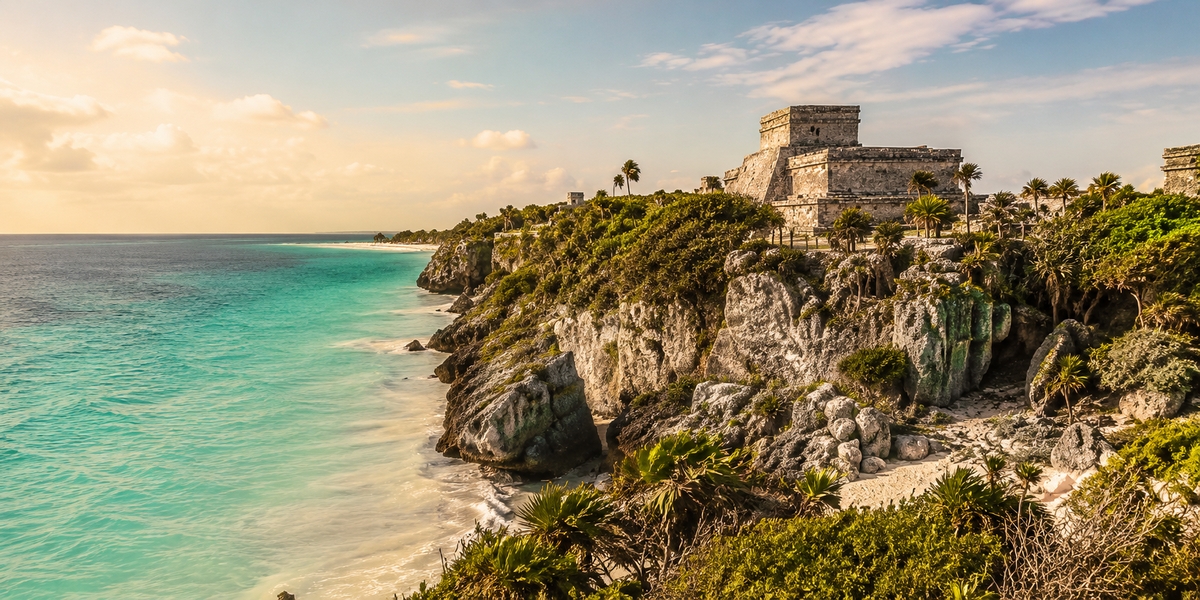
There is one photo everyone has seen: a squat grey temple on a green cliff, the Caribbean glowing impossibly blue behind it. That photo is real, and it is taken from a single viewing platform at the Tulum ruins. What the photo doesn't show is the rest of the visit — a compact, walled site you can cross in well under two hours, ruins you are no longer allowed to climb or enter, and, by late morning, a slow river of tour groups funneling past that one viewpoint.
None of that makes Tulum a bad visit. It makes it a specific one. This is the only major Maya site built right on the sea, and standing on that cliff with the water below is something Chichen Itza and Cobá, for all their scale, simply cannot offer. The trip goes wrong when people arrive expecting a monumental archaeological park and instead find a small, hot, busy clifftop — and it goes right when they come for the setting and plan around the crowds and the heat.
And in 2025 and 2026 the visit changed more than most travelers realize. The ruins are now the headline attraction inside a much larger government project, the Parque del Jaguar, with its own Maya Train station, beaches, and a layered set of fees. What follows is what you actually get, what it now costs, when to come, and how to decide whether Tulum earns a slot in your trip at all.
Quick Answer: Are the Tulum Ruins Worth It?
The honest version: go for the setting, not the stones. Tulum is a small site with modest buildings and a one-of-a-kind clifftop sea view. It is worth a short visit if you are already on the coast and arrive early; it is a weaker choice if you want a big, climbable pyramid or a deep archaeological experience. In that case, Chichen Itza is the better day.
- Best for: the cliff-and-sea setting, photos, a short half-morning near Tulum town — worth it, arrive at opening.
- Skip if: you want grand pyramids you can climb, or a long, in-depth ruins day — choose Chichen Itza or Cobá instead.
- The catch: by 10–11 a.m. it is crowded and very hot with almost no shade.
The Photos vs the Reality
Tulum was a walled Maya port city, active when Spanish ships first passed in the early 1500s, and that history is genuinely interesting once you're standing in it. But the marketing image oversells the scale and undersells the crowds, so it helps to know the gap before you pay in.
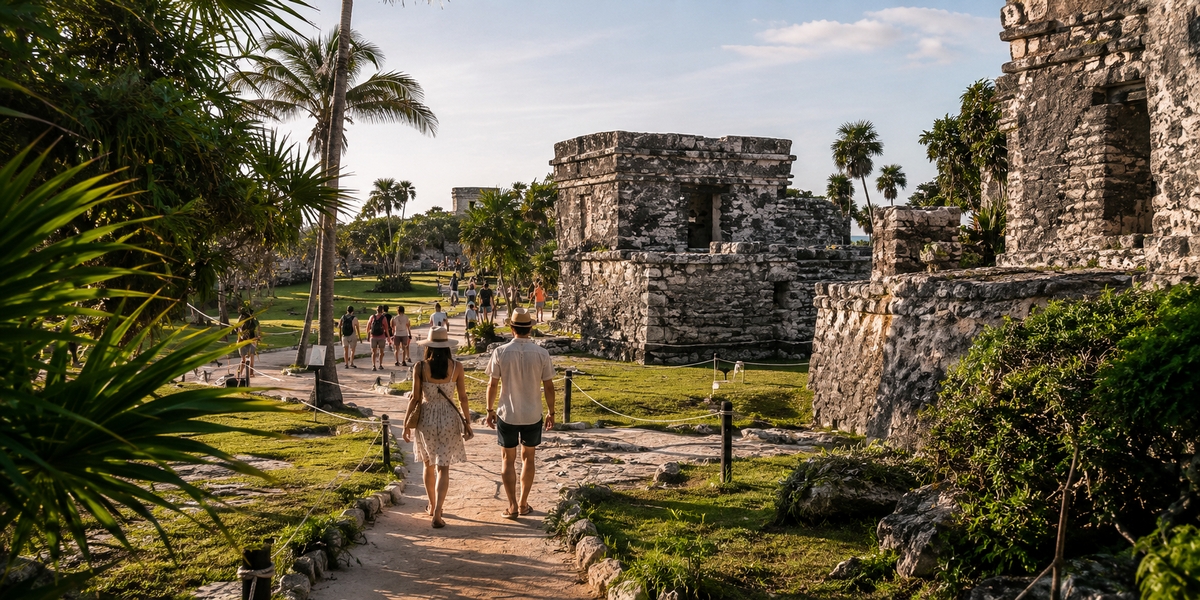
The buildings are small. El Castillo, the temple on the cliff edge that anchors every photo, is a modest structure by Maya standards — impressive for its position, not its height. The Temple of the Frescoes has faded interior murals you view from a distance, and a scattering of lower platforms and a wall complete the site. You walk a loop on raised wooden and gravel paths, and almost everything is viewed from behind a rope. Since climbing was banned in 1994 to protect stonework worn thin by salt air, you cannot go up or inside any structure. That surprises a lot of first-timers who pictured scrambling up a pyramid.
The other reality is heat and exposure. The site sits on open, low scrub with very little shade, and the Yucatán sun on a treeless clifftop at midday is punishing. Combine that with the tour-bus wave that lands mid-morning and the famous sea-view platform develops a genuine queue. The iguanas, at least, are a real and charming bonus — big, sun-basking, and completely unbothered by visitors.
Who Should Actually Go (and Who Can Skip It)
Whether Tulum is worth your time depends almost entirely on what you came to the Riviera Maya for. This is the decision section — find the line that sounds like your trip and let it settle the question.
The clifftop sea view and photos
→ Go, and go at 8 a.m. This is exactly what Tulum does better than any ruin in Mexico. An hour of soft early light on an empty cliff is the whole payoff.
Ruins plus a swim in one stop
→ Strong fit. The site now sits inside Parque del Jaguar with nearby beaches like Playa Paraiso a short shuttle away. Do the ruins early, swim after.
A history-first traveler
→ Manage expectations. Tulum's story is good but the site is small and roped off. Pair it with Chichen Itza or Cobá for real depth.
Kids who want to climb
→ Adjust the plan. Nothing here can be climbed. Cobá and Ek Balam still allow it and will land far better with energetic kids.
Already staying in Tulum
→ Easy yes. It is a 10-minute ride from town and a short, rewarding half-morning. Skipping it when you're this close makes little sense.
Drive 2+ hours just for this
→ Reconsider. A long special trip from Cancun for Tulum alone rarely pays off. Bundle it into a coast day, or pick a bigger site instead.
One honest rule: distance decides it. If you're near Tulum, the ruins are an easy win. If you'd be crossing the whole region for them, the math only works as part of a wider day — the setting is special, but it is not a destination worth hours of driving on its own.
Tulum vs Chichen Itza vs Cobá: Which Ruin Fits the Day
Most travelers have time for one or two archaeological sites, not all of them, and these three pull in different directions. Tulum sells the setting, Chichen Itza sells the monument, and Cobá sells the jungle and the one thing Tulum can't offer — a pyramid you can still climb. Use this as a quick decision recap, not a scorecard.
| Criteria | Tulum | Chichen Itza | Cobá |
|---|---|---|---|
| What's unique | Cliff above the sea | Monumental great pyramid | Jungle setting, bike paths |
| Scale | Small | Large & grand | Large, spread out |
| Can you climb? | No | No | Yes (Nohoch Mul) |
| Crowds | Heavy by late morning | Very heavy | Lighter |
| From the coast | Close to Tulum town | 2–2.5 hrs each way | ~45 min from Tulum |
| Time on site | 1.5–2 hrs | 3–4 hrs | 2–3 hrs |
| Best for | View & photos, short stop | One big "wow" site | Climbing, jungle, fewer people |
The common mistake is treating these as interchangeable "Maya ruins." They aren't. If you only do one and want to be impressed by architecture, Chichen Itza wins. If you're basing yourself on the coast and want scenery with less commitment, Tulum wins. And if climbing a real pyramid is the dream, Cobá is the answer — a pairing of Tulum's view in the morning and Cobá's climb later makes a strong, varied day. For wider routing ideas, the best day trips from Cancun guide maps how these fit a coast-based itinerary.
How to Visit Tulum the Right Way
Tulum rewards a little planning more than almost any site in the region, because its two weaknesses — crowds and heat — are both solved by the same move: get there first. These are the things that actually change your morning.
If you're choosing dates as well as a time of day, the same seasonal logic that governs the beach governs the ruins: the dry, clearer months are kinder for a treeless clifftop walk. The best time to visit Tulum guide breaks down the weather and crowd calendar, and a clear morning is exactly when that view is worth getting up early for.
Getting There, the New Fees, and the Beach Question
This is where the 2025–2026 changes matter most. The ruins are no longer a simple standalone ticket booth — they're the centerpiece of the federal Parque del Jaguar, which reorganized access, pricing, and even how you arrive. Knowing the shape of it prevents the most common confusion at the gate.
On fees, foreign visitors now pay three separate charges rather than one: an INAH archaeological-site fee, a CONANP national-park bracelet, and a Parque del Jaguar access fee. Together they land around 500–625 pesos per adult (roughly $28–35), with children generally free. It's more than the old single ticket, and the multi-counter setup is exactly why pesos in cash save time. INAH (Mexico's National Institute of Anthropology and History) sets the archaeological fee, and the structures stay roped off under its preservation rules.
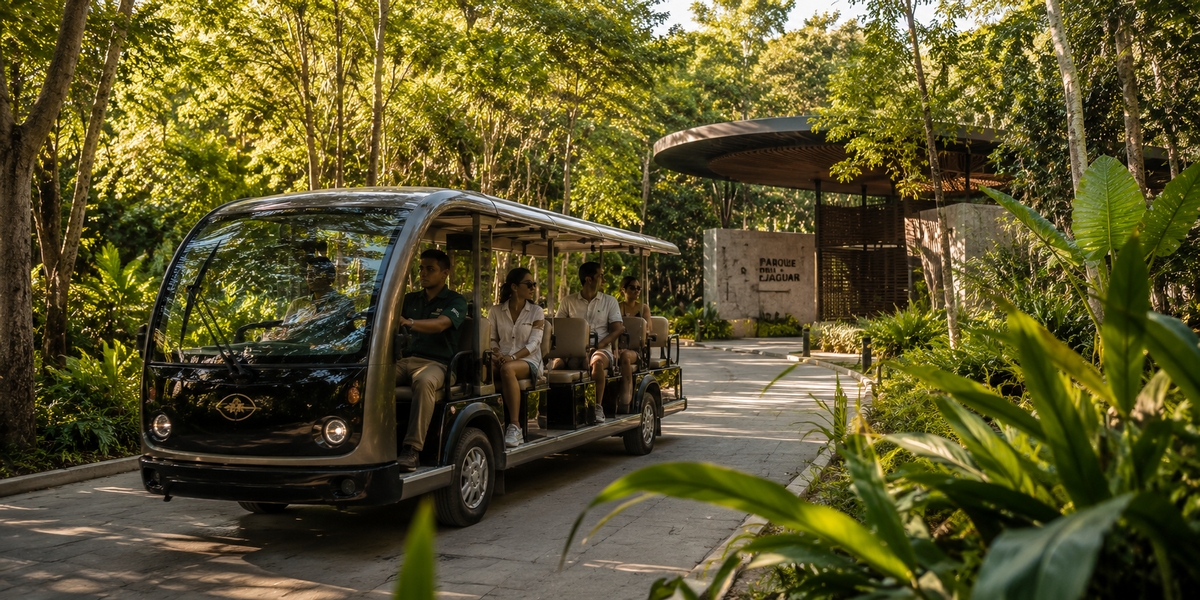
Getting there is genuinely easier than it used to be. The Maya Train (Tren Maya) now stops at a station built inside the park, with direct access and free parking at the main entrance — a real option if you're coming from Cancun or Valladolid and don't want to drive. Inside the park, free electric shuttles loop between the archaeological zone and the beaches, so you don't walk the whole thing in the sun.
The beach question trips people up. The little cove directly below the ruins, Playa Ruinas, has been closed to swimming for years. But the wider park includes nearby beaches — Playa Paraiso, Pescadores, and Santa Fe — reachable on foot or by shuttle and accessed with your park bracelet. So you can combine ruins and a swim; you just can't swim at the foot of El Castillo itself. Access rules and any beach fees have been shifting across the park's rollout, so confirm the current situation on arrival rather than assuming. If a beach day is the real priority, the guide to Tulum's public beaches covers the better-protected stretches and where access is simplest.
One more pairing worth knowing: the cenotes inland from Tulum stay cool and clear regardless of the heat or the crowds at the ruins, which makes them a natural afternoon counterweight to a hot clifftop morning. The cenotes near Tulum guide explains which ones suit a ruins-day add-on. And if you haven't locked your base yet, where to stay in Tulum shapes how easy this whole morning is — staying in town puts you 10 minutes from the gate.
Mistakes Travelers Make at Tulum
Almost every disappointed Tulum review comes down to one of these, and all of them are avoidable with a little foresight.
Arriving at midday. Showing up at 11 a.m. means full sun, no shade, and the heaviest crowds of the day at a tiny site. The same ruins at 8 a.m. feel like a different place.
Expecting a grand pyramid. Tulum's buildings are modest and you can't climb them. Come for the cliff-and-sea setting; if you want monumental scale, that's Chichen Itza's job, not Tulum's.
Driving hours just for the ruins. A dedicated trip from Cancun for a 90-minute site rarely justifies itself. Fold it into a coast day or pair it with a cenote or Cobá.
Coming with no pesos and no swimwear. The split fees want cash, and skipping a swimsuit means missing the park beaches a short shuttle away — the easy upgrade from "ruins stop" to "good morning."
Sources Checked
Sources checked on June 19, 2026. Fees, hours, and beach-access rules at Tulum have been changing rapidly since the site was absorbed into Parque del Jaguar, so confirm the current details close to your visit, especially the beach situation and exact pricing.
How this guide was checked: We cross-referenced INAH and Parque del Jaguar access and fee information, current opening hours and the climbing restriction, the Maya Train station and entrance/parking setup, and recent visitor reports on beach access and crowd timing. Where sources disagreed (notably on beach fees), we describe the range and flag it as something to verify on arrival rather than stating a single figure.
Frequently Asked Questions
Are the Tulum Ruins worth visiting?
Yes, but for the setting more than the ruins themselves. Tulum is a small site you can walk in under two hours, and the buildings are modest next to Chichen Itza or Coba. What makes it worth the trip is the location: a walled Maya city perched on a low cliff directly above the turquoise Caribbean, which is unlike any other ruin in the region. If you go expecting grand pyramids you may be underwhelmed; if you go for the cliff-and-sea setting and arrive early, it delivers.
Can you climb the Tulum Ruins?
No. Climbing has been banned since 1994 and every structure, including El Castillo and the Temple of the Frescoes, is roped off to protect the salt-worn stonework. You can walk right up to the bases and photograph them, but you cannot go inside or up. If climbing a pyramid matters to you, Coba and Ek Balam still allow it, which is why many travelers pair Tulum's setting with a climbable site elsewhere.
How much do the Tulum Ruins cost in 2026?
Since the site was folded into the new Parque del Jaguar, foreign visitors pay several separate fees rather than one ticket: an INAH archaeological fee, a CONANP national-park bracelet, and a Parque del Jaguar access fee. Together these typically add up to roughly 500 to 625 Mexican pesos per adult, in the region of 28 to 35 US dollars, with children generally free. Bring pesos in cash, since card systems at the gate are unreliable, and budget a small extra permit for tripods or professional cameras.
What time should I arrive at the Tulum Ruins?
Be at the gate for the 8:00 a.m. opening. The site is open daily until around 5:00 p.m. with last entry in the mid-afternoon, but by 10 or 11 a.m. tour buses from Cancun and Playa del Carmen arrive and the small site gets crowded and very hot with almost no shade. The first two hours after opening are cooler, quieter, and far better for photos. Arriving early is the single biggest thing you can do to enjoy Tulum.
Can you go to the beach at the Tulum Ruins?
The small cove directly beneath the ruins (Playa Ruinas) has been closed to swimming for several years. However, the surrounding Parque del Jaguar includes nearby beaches such as Playa Paraiso, Pescadores and Santa Fe, reachable on foot or by the park's free electric shuttle and accessed with your park bracelet. Bring swimwear if you want to combine the ruins with a swim, but confirm current beach access and any fees when you arrive, as the rules have been changing.
Is it better to visit Tulum Ruins or Chichen Itza?
They answer different wishes. Chichen Itza is the monumental, world-famous site with a true great pyramid, but it is a two-hour-plus drive from the coast and a longer day. Tulum is far smaller and the structures are modest, yet it is close to the beach towns and offers a cliff-top sea view no other ruin has. If you want one impressive archaeological site, choose Chichen Itza; if you are already near Tulum and want a short, scenic half-morning, choose Tulum. Many travelers see both on separate days rather than choosing.
Before You Go: Tulum Ruins in One Minute
The short version, if you skipped to the bottom.
If you remember one thing: Tulum is a setting, not a monument. The cliff above the Caribbean is genuinely unique, and an early-morning hour there is one of the loveliest short visits on the coast.
For most travelers already on the Riviera Maya, the answer is yes — go, but go at opening and keep it short. Treat it as a scenic 90 minutes, fold in a swim or a cenote, and you'll come away glad you did.
If your heart is set on climbing a pyramid or spending a half-day deep in Maya history, send that energy to Chichen Itza or Cobá instead, and let Tulum be the view.