
Almost everyone arrives in Valladolid the same way: tired, sunburned, and on a tour bus that has already spent three hours at Chichen Itza. The guide announces forty minutes for lunch and a photo of the yellow convent, and that is the entire impression most travelers ever form of the town. It is a strange way to meet one of the most complete colonial centers in the Yucatan.
Valladolid is not a transit stop, and it is also not a hidden gem that demands a week. It sits in an awkward, useful middle: too good to skip blindly, not large enough to anchor a whole holiday. The honest question is not "is it nice" — it is, photogenically so — but how much of your limited trip it deserves, and in what form.
This guide answers that as a decision rather than a love letter. What you can actually cover in a couple of hours, what an overnight adds that a day trip can't, how to fold it together with the ruins without ruining the day, and the realistic ways to get there now that the train has changed the math. By the end you should know which of the three calls — day trip, overnight, or skip — is yours.
Quick Answer: Day Trip, Overnight or Skip
The short version: most travelers should treat Valladolid as a half-day stop bolted onto Chichen Itza. Stay overnight if colonial towns and slow mornings are your kind of travel, and skip it only if you came purely for the beach and resent any time away from it.
- Day trip: best for most people — 2–3 hours in the center, ideally combined with the ruins. Risk: feels rushed if you arrive late.
- Overnight: best for slow travelers and photographers — the town empties beautifully after the day-trippers leave. Risk: not enough to do for a full extra day if sights are all you want.
- Skip: only for beach-locked, short trips where every hour off the sand is a loss. Risk: missing the one easy taste of "real" inland Mexico on the whole trip.
A few hours in the center covers the square, the Calzada de los Frailes, a cenote, and a real Yucatecan lunch. Pair it with the ruins and the day pays for itself.
You get the town at its two best hours — early morning and after dark — plus quiet cenotes before the crowds and an unhurried pace.
If your trip is short and entirely beach-driven, heading straight back to the coast after the ruins is a defensible call. No shame in protecting the pool days.
What Valladolid Actually Is
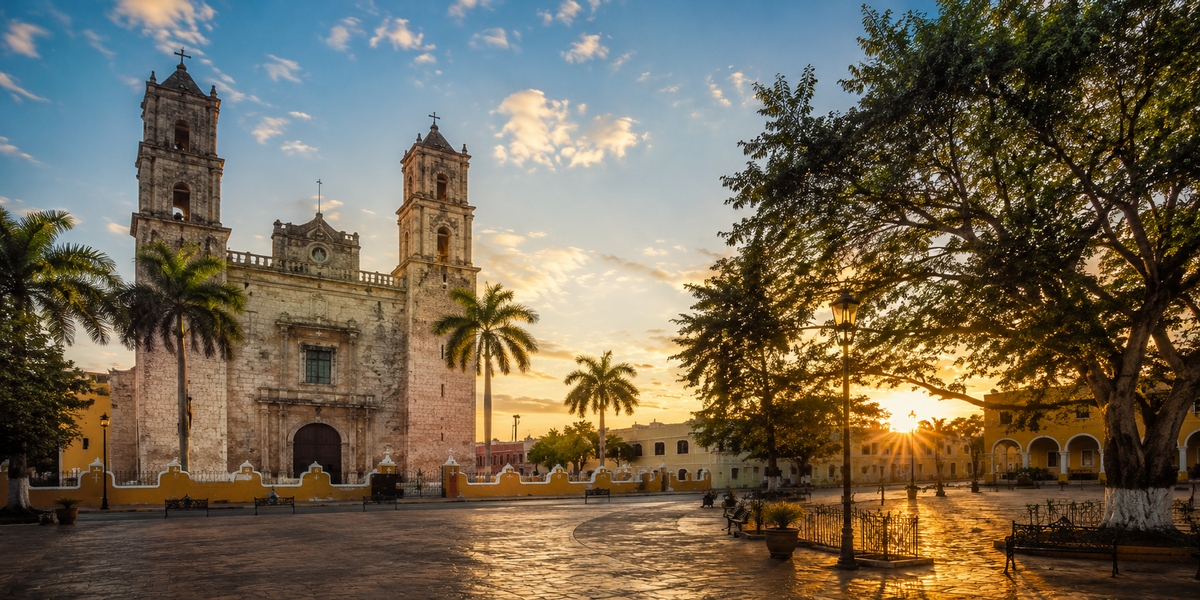
Founded in 1543 and rebuilt on top of the Maya town of Zaci, Valladolid is one of Mexico's designated Pueblos Magicos — and unlike some towns that wear the label loosely, it earns it. The center is a tight grid of single-story colonial houses painted in ochre, rose, and faded blue, anchored by a large main square and the stone church of San Servacio. It is small enough to walk end to end, calm enough that you hear birds over traffic, and lived-in rather than staged.
Geography is what makes it useful. Valladolid sits almost exactly halfway between Cancun and Merida on Highway 180D, and only a short hop east of Chichen Itza. That position is the whole reason it appears on so many itineraries: it is the natural lunch-and-stretch point on the inland route, and the closest real town to the most famous ruins in the country. Treat that as an advantage, not a reason to rush — the same location that makes it a convenient stop also makes it an easy base.
What surprises first-timers is how complete it feels for its size. There is a genuine food culture here, not a tourist-menu imitation; a cenote you can swim in without leaving the street grid; and a craft and market scene that supplies half the souvenir stalls on the coast. If you have only ever seen the Riviera Maya's resort strip, the contrast is the point. For the wider context of how this town fits the region, the Riviera Maya explained guide maps where the coast ends and inland Yucatan begins.
What You See in Two or Three Hours
The good news for day-trippers: Valladolid's highlights cluster. You can cover the essentials on foot without a plan more complicated than "start at the square and wander." Here is what actually fills a short visit, in rough order of how most people experience it.
The main square & San Servacio
Parque Francisco Canton, the leafy central plaza, with the 1700s San Servacio church on its south side. Confettied tu y yo love-seat chairs, vendors, and the best people-watching in town. Your orientation point for everything else.
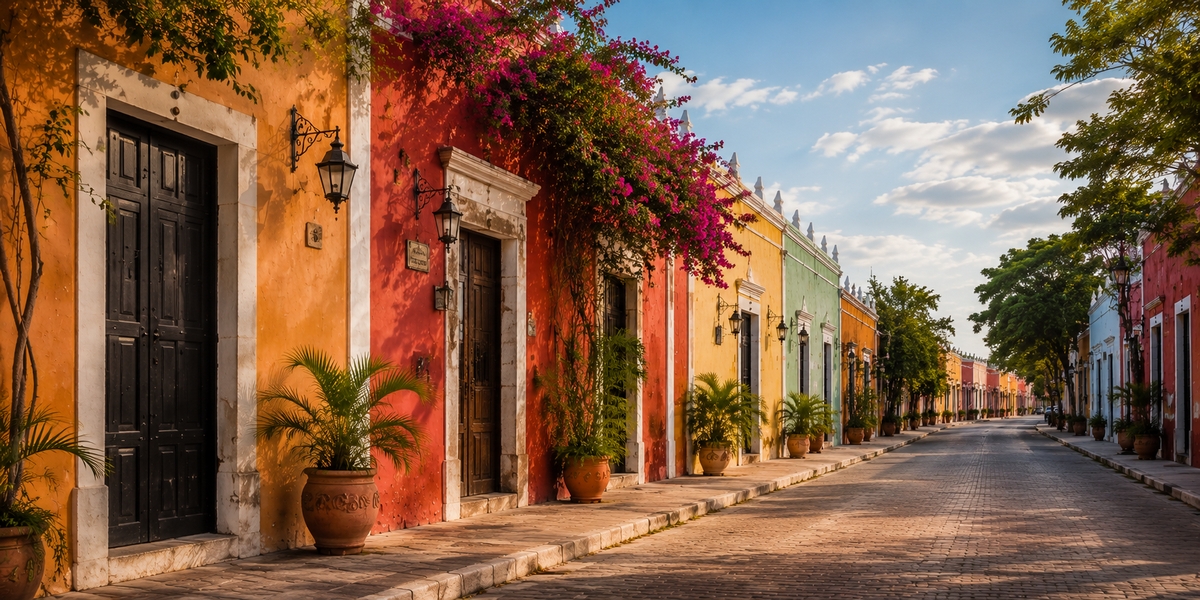
Calzada de los Frailes
A short, ruler-straight lane of restored pastel houses running to the San Bernardino convent. It is the image you've seen on Instagram; it is also genuinely lovely early or late, and overrun with photo queues midday.
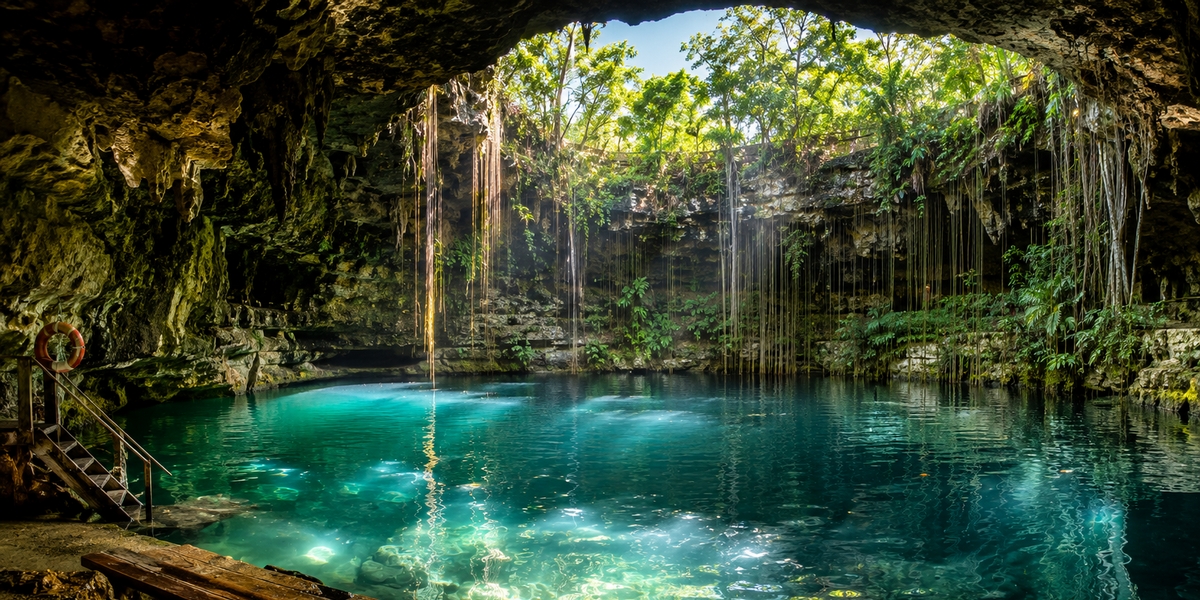
Cenote Zaci
A large, partly open cenote right in the street grid — rare for a colonial center. Entry runs roughly 60–150 MXN, life jacket included; a quick, cooling break rather than a wilderness swim.
Market & food scene
The municipal market for breakfast and the surrounding cocinas for cochinita pibil and Valladolid-style longaniza, a smoky regional sausage. The food is a highlight in its own right, not an afterthought.
If you have closer to a full afternoon, add the San Bernardino de Siena convent itself — one of the oldest in the Yucatan, with an evening light-and-sound show — or the small but charming Casa de los Venados folk-art collection. But the four cards above are the honest core. Miss everything else and you have still seen Valladolid; miss these and you have only seen a parking lot.
Day Trip vs Overnight vs Skip: The Honest Matrix
This is the decision the whole article turns on. The three options are not better and worse versions of the same thing — they suit genuinely different travelers. Read across the row that matches your priority, not down the column you'd like to be true.
| Criterion | Day Trip | Overnight | Skip |
|---|---|---|---|
| Time on the ground | 2–3 hours in the center | An afternoon, an evening, and a calm morning | None — straight back to the coast |
| Who it fits | Most travelers Ruins-focused day-trippers, first-timers |
Slow travelers Couples, photographers, culture-first trips |
Beach-locked Short, sand-only holidays |
| What you actually get | Square, Calzada, a cenote, a real lunch | All of that, plus the town empty at dawn and dusk and unhurried cenotes | More hours of beach and resort time |
| Main trade-off | Feels rushed if you arrive after midday | Sights alone won't fill a second full day | You miss the trip's easiest taste of inland Mexico |
| Our verdict | Default choice | Worth it for the right traveler | Only if truly beach-driven |
One honest correction to a common assumption: people imagine the overnight is for "seeing more." It isn't, really — you can see the sights in an afternoon. The overnight buys atmosphere and timing. If that distinction sounds like splitting hairs to you, that's a useful signal: you're a day-tripper.
Combining Valladolid with Chichen Itza
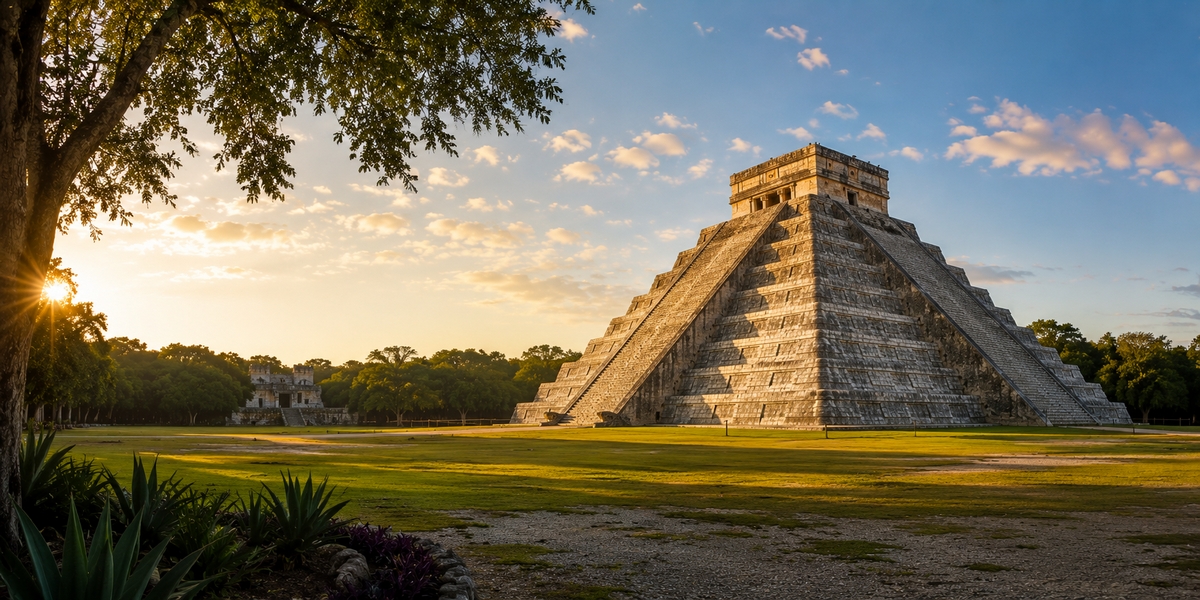
The single best reason Valladolid lands on itineraries is its proximity to Chichen Itza — about 40 km west, a 40 to 50 minute drive with no tolls on that stretch. Played right, the two make one excellent day. Played wrong, you arrive at the ruins at noon in brutal heat with a thousand other people. The order matters more than anything else.
From Valladolid it's a short hop; from Cancun or the Riviera Maya you need a genuinely early start to beat the heat and the bus convoys.
Be at the gate when it opens at 8 a.m. The first two hours are cooler, emptier, and the only time you'll photograph El Castillo without crowds.
Leave as the tour buses pour in. Forty minutes later you're in town, and you've dodged the worst of both the heat and the queues.
A long Yucatecan lunch, the square, the Calzada, and a cool-off at Cenote Zaci. This is the relaxed half of the day, by design.
Day-trippers head home; overnighters get the town's best hours. This stop is exactly where the day-trip vs overnight fork bites.
A worked example for the round-trip crowd: leave a Cancun hotel at 7 a.m., reach the ruins around 9, spend two to three hours, drive 40 minutes to Valladolid, give the town three hours, and you're back on the coast by roughly 7–8 p.m. That's an 11 to 13 hour door-to-door day. It's a great day — but it is a long one, and it's the strongest argument for either basing yourself in Valladolid or booking the overnight. The ruins themselves, ticketing, and timing are covered in depth in the Chichen Itza from Cancun guide, and Valladolid features as a top stop in the broader best day trips from Cancun roundup.
One more reason the town beats a pure ruins run: cenotes. Two of the most photographed in the region — Suytun, with its famous shaft of light over a stone platform, and Oxman, with its swing and hanging roots — sit just outside Valladolid. Manage expectations on Suytun, though: that light beam is a brief, queued photo moment on the right day and hour, not a leisurely swim. For a calmer water day, the wider cenotes guide compares which ones reward an actual swim over a photo.
Getting There: Car, Bus or Train
How you arrive shapes which version of the visit makes sense. A car makes the day-trip-plus-ruins plan effortless; the bus is cheap and easy but ties you to the center; the train is new and promising but not yet a sure thing. The numbers below are the ones that decide it.
Each option suits a different traveler. Match the way you get there to the kind of day you actually want, rather than defaulting to whatever the tour desk pushes.
The freedom pick. Roughly 2 to 2.5 hours from Cancun on Highway 180D, and the only way to fold in Chichen Itza plus a cenote on your own clock. Best for the combined day. See the car rental guide for the real costs and the toll-road caveats.
The cheap, simple pick. First-class ADO runs from the downtown Cancun terminal (not the airport) several times a day, about 190–250 MXN, dropping you near the center. Great for an overnight, awkward for chaining the ruins on the same day. Compared with other transport in the ADO vs transfer vs car guide.
The new pick. The Tren Maya stops at Valladolid, with Chichen Itza one station west — on paper, ideal. In practice the station sits about 5 km north of town and the schedule is still building out, so confirm times before you commit a day to it.
The zero-planning pick. Most Chichen Itza tours from the coast include a short Valladolid stop — usually a rushed 40 minutes. Fine if you only want a glimpse; frustrating if the town is the point.
Mistakes Travelers Make in Valladolid
Most disappointment here comes from timing and expectations, not from the town. Four patterns cause almost all of it.
Arriving in the heat of midday. The Calzada and the square are punishing under the noon sun and clogged with the same tour buses you'll meet at the ruins. Morning or late afternoon is a different, far better town.
Giving it only the tour's 40 minutes. A packaged stop reduces Valladolid to one photo of the convent and a bathroom break. If the town interests you at all, that's the version most likely to leave you shrugging.
Expecting a wild swim at Cenote Zaci. The in-town cenote is convenient and atmospheric, not a remote jungle pool. Come for the novelty of swimming downtown; drive to Oxman or Suytun for the bigger scenery.
Going to Suytun for the swim, not the photo. Its fame is one beam of light on a platform, weather- and hour-dependent, with a queue. Plan it as a photo stop, and don't let a cloudy day feel like a failure.
None of these are reasons to avoid Valladolid — they're reasons to time it well and arrive with the right picture in your head. Get the hour right and the town consistently overdelivers on the modest expectations most day-trippers bring.
Sources Checked
Sources checked on June 17, 2026. Bus and train schedules, cenote entry fees, and opening hours change by season and operator, so reconfirm the specifics close to travel — especially anything involving the still-expanding Tren Maya timetable.
How this guide was checked: We compared current ADO and Tren Maya route information, recent visitor reports on Cenote Zaci fees and hours, mapped driving distances between Valladolid and Chichen Itza, and cross-checked the archaeological-site details against the national heritage authority. The aim is a realistic decision framework, not a fixed price list.
Frequently Asked Questions
Is Valladolid worth visiting?
For most travelers, yes, but as a deliberate stop rather than a detour. Valladolid is a real colonial town with pastel streets, a cenote in the center, a genuine food scene, and a relaxed pace that nothing on the Cancun coast offers. It pairs naturally with Chichen Itza, which sits about 40 minutes west. The travelers who get the least from it are those who came purely for the beach and resort life, and for them a half day in the town can feel like time taken from the pool.
Can you visit Valladolid and Chichen Itza in one day?
Yes, and it is the smartest way to combine them. Chichen Itza is only about 40 km from Valladolid, roughly a 40 to 50 minute drive. The efficient plan is to reach the ruins close to the 8 a.m. opening, spend two to three hours before the heat and tour buses peak, then drive east to Valladolid for lunch and a few hours in the center. Done from Valladolid it is easy; done as a round trip from Cancun or the Riviera Maya it becomes a long 11 to 13 hour day.
How do you get from Cancun to Valladolid?
Three main options. A rental car gives the most freedom and takes roughly two to two and a half hours on Highway 180D. The ADO first-class bus runs from the downtown Cancun terminal, not the airport, several times a day for about 190 to 250 MXN, taking around two to two and a half hours. The Tren Maya also stops at Valladolid, with Chichen Itza one station to the west, though the station sits about 5 km north of the center and the schedule is still limited, so check the current timetable before relying on it.
Is one day enough for Valladolid, or should you stay overnight?
A few hours cover the highlights: the main square, the Calzada de los Frailes, Cenote Zaci, the market, and a proper Yucatecan lunch. That is enough for many travelers. An overnight changes the experience rather than just adding more sights. You get the town in the cool early morning and after dark when the day-trippers have gone, easier access to the cenotes just outside town at quiet hours, and a slower pace. Stay over if colonial towns are your kind of travel; day-trip it if the ruins are the real goal.
Is Valladolid safe for tourists?
Valladolid is generally considered one of the calmer, lower-key destinations in the Yucatan, and the historic center is comfortable to walk during the day and evening. Normal city precautions apply: watch your belongings in the market, use cash carefully, and agree taxi fares before getting in. As always, check your government's current travel advice for Yucatan state before you go, but the town does not carry the nightlife-driven risks of the larger beach resorts.
What is there to do in Valladolid?
The core of a visit is the historic center: the main square with the San Servacio church, the pastel Calzada de los Frailes leading to the San Bernardino convent, and Cenote Zaci right in town for a swim. Add the municipal market for breakfast or snacks, the local food scene built around cochinita pibil and Valladolid-style longaniza sausage, and the photogenic cenotes just outside town such as Suytun and Oxman. With Chichen Itza and Ek Balam both nearby, the town also works as a base for ruins.
Make the Call in One Minute
The short version, if you don't want to re-read the whole thing.
If you remember one line: day-trip Valladolid alongside Chichen Itza, and upgrade to an overnight only if a slow colonial town is genuinely your kind of travel.
For the majority — people on a beach holiday who want one strong inland day — the half-day stop bolted onto the ruins is the clear winner. It adds the trip's most authentic town at almost no extra cost in time, as long as you arrive before the heat.
Stay over if the goal is mood over sights, or skip it outright if your days are few and the beach is the entire reason you came. All three can be the right answer; the wrong move is the unplanned 40-minute version that leaves you wondering what the fuss was about.