
Once you rule out Cancun, the Riviera Maya quickly narrows to two names: Tulum and Playa del Carmen. They sit about an hour apart on the same coast, share the same turquoise water, and yet they sell almost opposite vacations.
Tulum is the one you have seen on Instagram — jungle-backed beach, design hotels, candlelit dinners, wellness, a deliberately curated mood. Playa del Carmen is the working beach town: a long pedestrian avenue of restaurants and bars, a ferry to Cozumel at the end of the street, and the easiest logistics on the coast.
The mistake travelers make is assuming they are interchangeable because they are close. They are not. One is built around how the trip looks and feels; the other around how convenient and affordable it is. Pick the wrong one and you spend the week fighting the place instead of enjoying it.
This guide is about matching the base to the kind of week you actually want.
Quick Answer: Which One Fits Your Trip?
The short version: choose Tulum for aesthetics, atmosphere, and a long wild beach, and choose Playa del Carmen for convenience, varied affordable food, and the easiest base for getting around.
Bohemian eco-chic: jungle-meets-beach design, wellness, photogenic dinners, and a slower, more secluded rhythm.
A walkable urban beach town: Fifth Avenue dining on foot, the Cozumel ferry in the center, and simple day-trips.
- Choose Tulum if — design, wellness, a long wild beach, and a slower aesthetic matter more than price or convenience.
- Choose Playa del Carmen if — you want a walkable beach town, varied affordable food, and the easiest base for day-trips and getting around.
- Lean Playa for budget control and traveling without a car.
- Lean Tulum for atmosphere, photography, and a more secluded resort feel.
At a glance, here is how the two compare on what matters most:
| What matters | Tulum | Playa del Carmen |
|---|---|---|
| Price | Higher, harder to control | Lower, easy to control |
| Beaches | Long, wild, photogenic | Good but shorter and busier |
| Getting around | Spread out; taxi, bike or car | Walkable, no car needed |
| Atmosphere | Bohemian eco-chic, secluded | Lively urban beach town |
| Best for | Aesthetics, wellness, couples, photos | Convenience, value, first-timers, day-trips |
The Core Difference: Eco-Chic vs Urban Beach Town
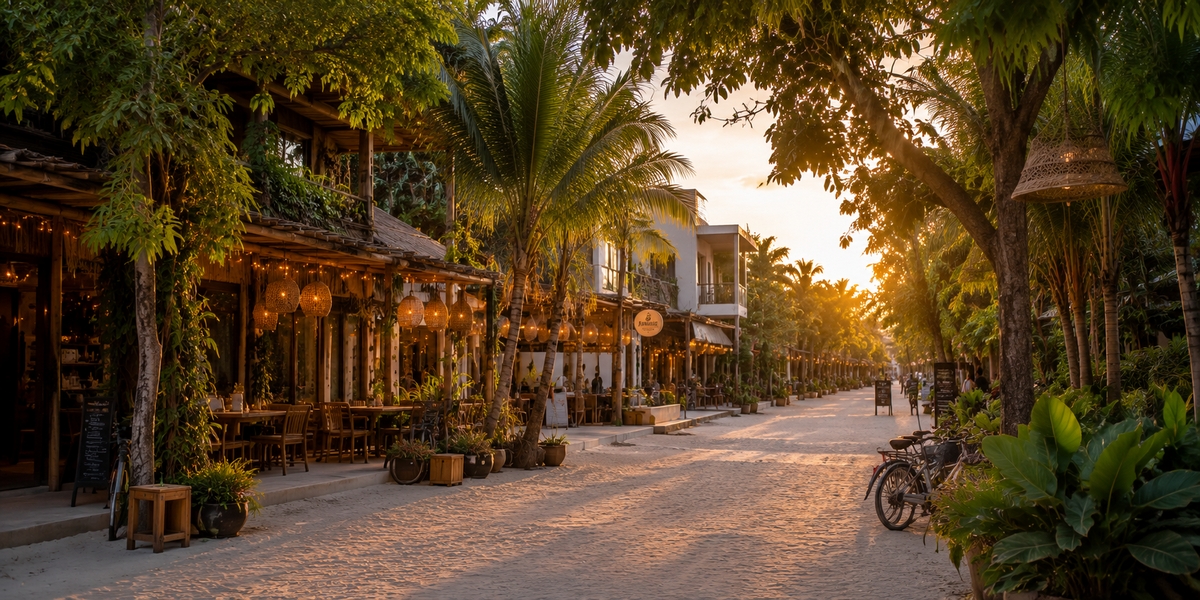
Almost everything else flows from one thing: Tulum is a mood, Playa is a town. Tulum's beach zone is a single jungle-lined road of boutique hotels and beach clubs, designed to feel remote and unplugged — barefoot luxury with generators humming behind the palms. There is a real town a few kilometers inland, plus a newer residential area called Aldea Zama, but the famous Tulum is that strip of sand and design.
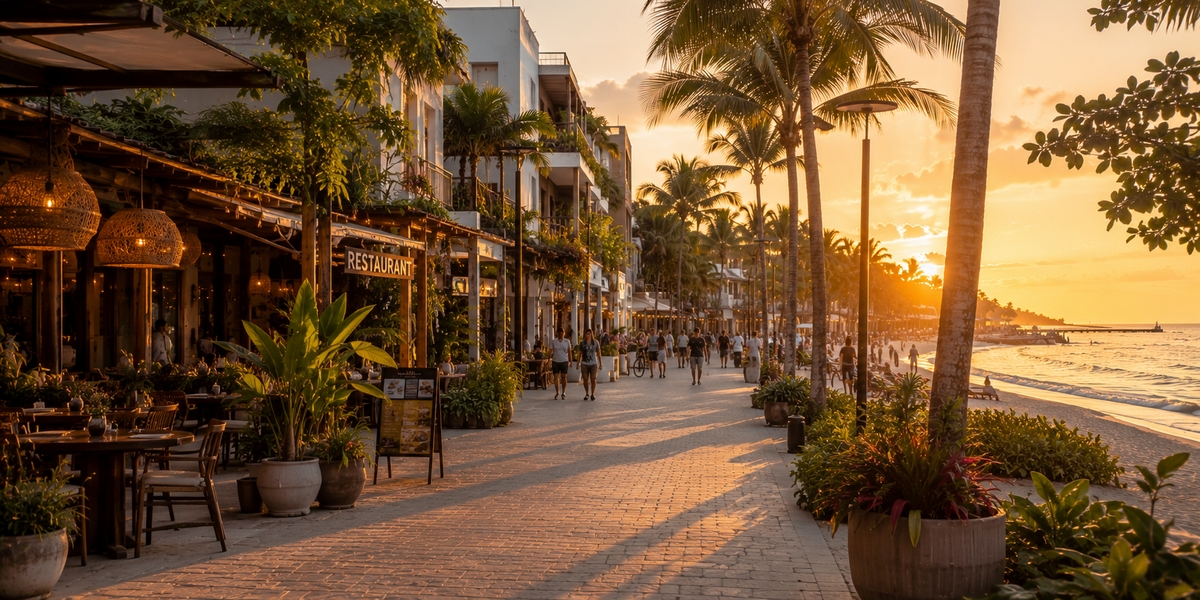
Playa del Carmen is the opposite: a genuine, functioning beach city built around Quinta Avenida (Fifth Avenue), a long pedestrian street where most of your trip happens on foot. It is louder, more commercial, and less curated — but everything is close, and you never have to plan logistics to get dinner.
Here is the part people underestimate. Tulum's seclusion is also its friction: that dreamy beach road is far from restaurants, ATMs, and the town, so the same atmosphere you came for is what makes daily life fiddly and expensive. Playa trades some of the magic for the ability to just walk out the door.
Beaches Compared
On looks alone, Tulum wins. Its beach is a long, dramatic ribbon of white sand backed by jungle and ruins — the image that put it on every feed. But the postcard hides two catches. First, much of that beach sits behind hotels and beach clubs that expect a minimum spend, so “free” beach access is more limited than it looks. Second, like the whole Caribbean coast, Tulum carries a real sargassum seaweed risk, mainly from spring into summer, which can bury that perfect sand for stretches at a time.
None of that makes the beach a letdown. It just is not the walk-down-from-your-room sand the photos promise.
Playa del Carmen's beaches are good rather than spectacular: shorter, busier, more openly accessible, with easy public entry points and beach clubs you can use without committing your whole day to one spot. They also catch sargassum, but you are never far from a pool, a restaurant, or a different stretch if one section is rough.
The honest summary: Tulum is the better beach to look at, Playa the easier beach to actually use.
Getting Around & Day Trips
This is where Playa quietly wins the practical argument. In Playa, you base near Fifth Avenue and walk to almost everything — restaurants, bars, the beach, and the Cozumel ferry that leaves right from the center. Day-trips are effortless: cenotes, Cozumel, Coba, and ruins are all easy to reach by bus, colectivo, or tour without renting a car. If you want the cheapest way to move between towns, the breakdown of ADO buses, colectivos and transfers is worth a look.
Tulum asks more of you. The beach zone, the town, and Aldea Zama are spread several kilometers apart, so you are constantly choosing between pricey beach-road taxis, a rented bike in the heat, or a car. Where you sleep changes the whole trip: a beach-zone hotel is dreamy but isolating, while a town stay is cheaper and more connected but a taxi ride from the sand. Read how the Tulum zones differ before you book — the wrong zone is the most common Tulum regret.
Plan to budget for movement in Tulum. Here is what it actually runs:
Food & Dining
Both eat well, but differently. Playa del Carmen has the wider, more democratic food scene: street tacos, mid-range gems, and international restaurants stacked along and just off Fifth Avenue, at prices you can actually steer. Step one block back from the main drag and the same plate often costs noticeably less — a small surprise that rewards anyone watching their budget. For a full breakdown, see where to eat in Playa del Carmen.
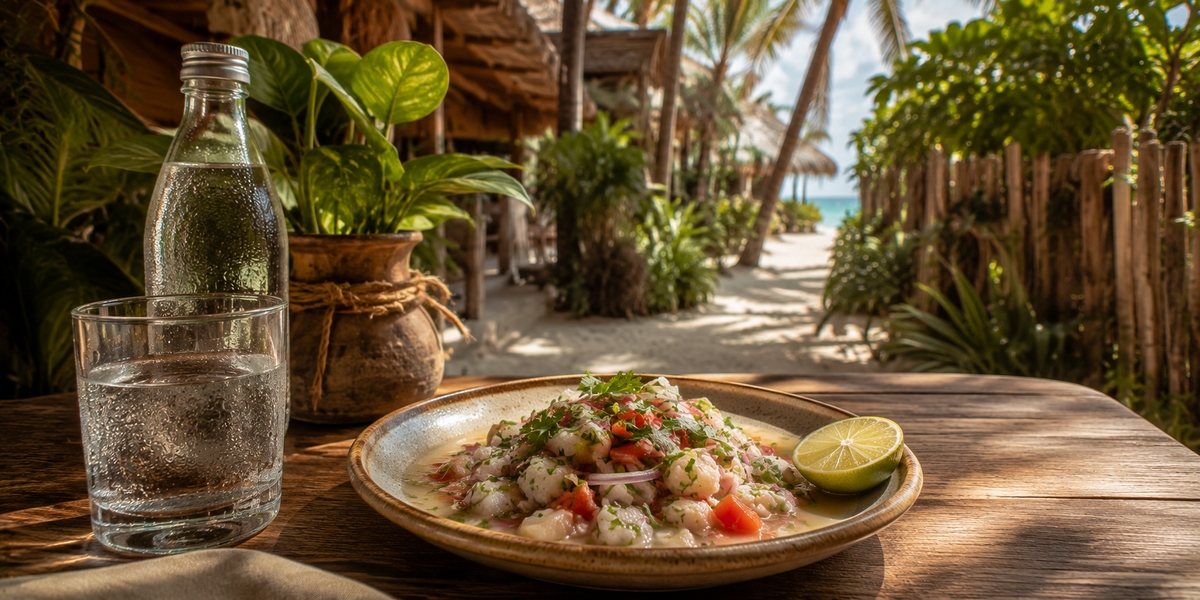
Tulum's food is more about the setting: jungle dining rooms, beach-club tasting menus, and design-forward cafes that look extraordinary and are priced for it. The quality can be genuinely high, but Tulum's beach zone runs at near-resort prices, and a casual dinner can quietly cost double what it would in Playa. The flavor you are paying for is partly the atmosphere.
Budget Reality
If money is part of the decision — and for most people it is — this is where the two genuinely diverge. Playa is simply easier to control: more hotel choice at every level, walkable logistics that cut taxi costs, and food at any price point. Tulum is a place where the budget leaks from several directions at once. Before you go, sort your cards and cash for Mexico — the beach zone leans cash-heavy and ATM fees bite.
- Mid-range hotels widely available
- Walkable — low taxi spend
- Restaurants at every price point
- Easy free public beach access
- Beach-zone hotels command a premium
- Beach clubs often require minimum spend
- Stylish dining priced for tourists
- Transport between zones adds up
The leaks matter as much as the headline rates. These are the costs that surprise first-time Tulum visitors:
Which One Are You?
The fastest way to decide is to name your one priority and follow it. Tap what matters most to you and see which base fits.
Mistakes to Avoid in This Choice
Most regret here is not about picking the “wrong” town. It is about booking the right town with the wrong expectations.
Booking the Tulum beach zone without doing the math. It is dreamy but isolated and expensive, with taxi rides for everything. If you want to leave the hotel often, a town or Aldea Zama base saves money and frustration.
Expecting Tulum's beach to be free and pristine. Much of it sits behind beach clubs with minimums, and sargassum can hit hard in season. Check current seaweed reports before committing to peak-summer dates.
Dismissing Playa as “too touristy.” That same density is why it is so easy and affordable. If convenience and value rank high, Playa's walkability is a feature, not a flaw.
Trying to do both in a short trip. Switching hotels mid-week burns half a day and money. With seven nights or fewer, pick one base and day-trip to the other instead.
Before You Book
Run through these before you lock in either base:
Choose Tulum if the trip is about how it looks and feels — design hotels, a wild jungle-backed beach, wellness, and a slower, more secluded mood — and you are comfortable paying more and planning around the distances.
Choose Playa del Carmen if you want the easiest, most flexible Riviera Maya week: walk everywhere, eat well at any budget, and day-trip without friction. It is the safer pick for first-timers and anyone watching costs.
They are an hour apart, not worlds apart — so if one clearly fits, base there and visit the other for a day. Decide by the week you want, not by whose beach photo looks dreamier.
Sources Checked
Sources checked on June 29, 2026. Hotel rates, beach-club minimums, transport costs, and seaweed levels change constantly, so treat figures as ranges and verify current conditions before booking. Key references: the Quintana Roo tourism board, Profeco (Mexico's consumer-protection agency) on tourist-zone pricing, and regional sargassum monitoring.
- Quintana Roo tourism information: destination positioning, Tulum zones (beach zone, town, Aldea Zama), and Playa del Carmen layout and transport.
- Regional sargassum monitoring: typical Caribbean seaweed timing for the Riviera Maya, cross-referenced with recent seasonal reports.
- Profeco and local consumer guidance: context on tourist-zone pricing, beach-club practices, and cash-versus-card realities.
- Live hotel, dining, and transport spot-checks (June 2026): indicative daily-budget ranges, compared across major booking platforms rather than a single source.
Frequently Asked Questions
Is Tulum or Playa del Carmen better?
Neither is better overall; they suit different travelers. Tulum is bohemian and design-led, with a long wild beach and a slower, more curated rhythm, but it is pricier and harder to get around. Playa del Carmen is a walkable urban beach town with varied affordable food and the easiest logistics in the Riviera Maya, though its beach is less iconic. Choose Tulum for atmosphere and aesthetics, Playa for convenience and value.
Is Tulum or Playa del Carmen cheaper?
Playa del Carmen is generally cheaper and far easier to control costs in. It has a wider range of mid-range hotels and restaurants, walkable logistics that cut taxi spending, and free public beach access. Tulum runs higher across the board, with premium beach-zone hotels, beach-club minimum spends, tourist-priced dining, and transport costs between its spread-out zones. Tulum can be done on a budget, but you work against the current the whole time.
Which is better for a first trip to the Riviera Maya, Tulum or Playa del Carmen?
For most first-timers, Playa del Carmen is the easier base. Everything is walkable, day-trips to cenotes, Cozumel, and ruins are simple to arrange, and you do not need a car or constant taxis. Tulum is a better first trip only if your priority is its specific aesthetic and beach atmosphere and you are comfortable budgeting more for transport and dining.
Do you need a car in Tulum or Playa del Carmen?
In Playa del Carmen you rarely need a car: the town is walkable, the Cozumel ferry leaves from the center, and buses and tours cover day-trips. Tulum is more spread out, with the beach zone, town, and Aldea Zama separated by several kilometers, so you rely on taxis, a bike, or a rental car. If traveling without a car matters to you, Playa is the simpler choice.
Which has better beaches, Tulum or Playa del Carmen?
Tulum has the more beautiful beach on paper: a long stretch of white sand backed by jungle. The catch is that much of it sits behind beach clubs or hotels with minimum spends, and it carries a real sargassum seaweed risk from spring into summer. Playa del Carmen's beaches are good and more openly accessible but shorter and busier. For postcard looks choose Tulum; for easy, free access choose Playa.
How far apart are Tulum and Playa del Carmen, and can I visit both?
They are roughly 60 kilometers apart, about a one-hour drive along Highway 307, and frequent ADO buses and colectivos connect them. Many travelers base in one and visit the other as a day-trip, or split a longer trip between the two. If you only have a week and want simple logistics, pick one base rather than moving hotels mid-trip.