
Playa del Carmen eats better than its reputation suggests — and worse than it should, if you never leave the main strip.
This is the most food-dense town on the Riviera Maya. It has more taquerias, seafood counters, Italian kitchens, Argentine grills, vegan cafes, and late-night street carts per block than Cancun or Tulum, partly because so many of the people cooking here came from somewhere else. The catch is that the street most visitors treat as the whole town — Quinta Avenida, the pedestrian Fifth Avenue — is also the single most tourist-priced corridor in the region.
So the question in Playa is not really "what's good." Plenty is good. The question is where you point yourself for each meal, because the same plate of tacos can cost three times more depending on which side of a street you order it.
This guide skips the rotating list of "10 must-try restaurants" — those open, close, and change chefs faster than any article can keep up. Instead it is an operating manual: how the town is laid out for eating, what Quinta Avenida is honestly good and bad for, where residents go when they are paying with their own money, and what a day of eating actually costs at each level.
Quick Answer: How to Eat Well in Playa
The short version: use Quinta Avenida for coffee, breakfast, and atmosphere, then walk one or two blocks inland for almost everything else. The food barely changes; the price does.
- Quinta Avenida — great for coffee, brunch, and people-watching; weakest for dinner value and seafood.
- One block off Quinta — the sweet spot: real restaurants, posted prices, mixed local-and-visitor crowd.
- Colonia Centro & the side streets (around Calle Coba and Calle 30) — where locals eat; best value and most authentic.
- Supermarkets & the fish market — the cheapest path of all if you have a kitchen or a cooler.
Typical single-item prices at a glance
Rough orientation for common orders off the strip. On Quinta Avenida, add anywhere from 30% to double. Peso figures are approximate.
| Item | Typical price (USD) |
|---|---|
| Taco al pastor (street stall) | $1–2 (~20–40 MXN) |
| Torta or burrito | $4–7 (~75–130 MXN) |
| Beer (cerveza) | $2–4 (~40–75 MXN) |
| Coffee (specialty) | $3–6 (~55–115 MXN) |
| Breakfast (cafe) | $8–14 (~150–270 MXN) |
| Ceviche (casual marisquería) | $8–15 (~150–285 MXN) |
Where to Aim Each Craving
Playa is small enough to walk, so the real decision is directional: which way to point yourself depending on what you actually want. This is the core of eating here well — not a list of names, but a sense of which streets pay off for which meal.
Quinta Avenida earns its keep here. Good specialty coffee, smoothie bowls, and long unhurried breakfasts with a steady parade of people. Prices run high, but a coffee and a pastry is a low-stakes way to enjoy the street.
Step one block off Quinta — toward Calle 1, Avenida 10, or Avenida 15. You get full sit-down restaurants with printed prices and a calmer room, usually 20–40% cheaper than the parallel spot on the avenue.
Head inland into Colonia Centro, around Calle Coba and the streets near Calle 30. This is where residents eat: busy taquerias, loncherias, and seafood spots at a fraction of strip prices, often cash-only.
The big supermarkets (Mega, Chedraui, Walmart) and the local fish market let you self-cater for almost nothing. Even buying just breakfast and drinks for the room quietly deflates a week of food spending.
The Quinta Avenida Problem
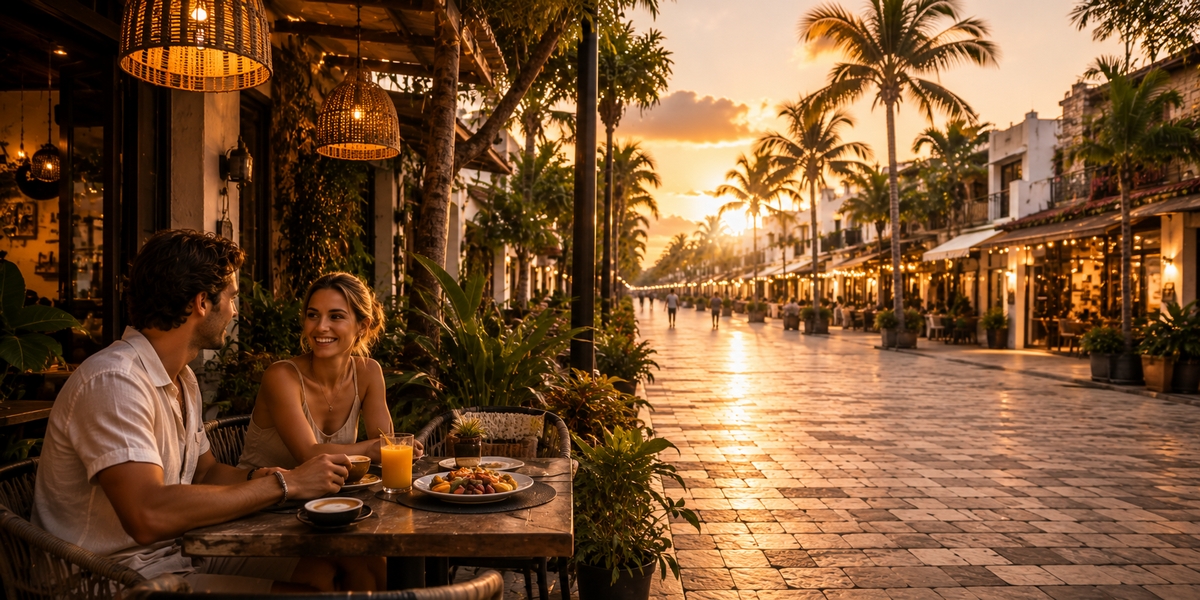
Quinta Avenida (La Quinta, or Fifth Avenue) is the spine of Playa del Carmen — a long pedestrian street running parallel to the beach, packed with restaurants, bars, and shops. It is genuinely pleasant to walk, and a handful of honest places have survived on it for years. But as a place to eat, it works against you more often than for you.
The economics are simple: rent on the avenue is brutal, foot traffic is enormous, and a large share of customers will never come back. That combination rewards restaurants that optimize for the one-time tourist, not the regular. You see it in the photo menus, the dollar pricing, and the hosts physically pulling people off the sidewalk.
So no, you don't have to avoid Quinta. Just walk it knowing how it pays its rent.
The strip is at its best earlier in the day. A morning coffee on Quinta is a fair trade; a full seafood dinner with cocktails there is usually where people feel they overpaid.
Where Locals Actually Eat
The good news is that "real" Playa is never far — often the difference is a single block. As you move west, away from the beach and across the highway into Colonia Centro and the residential neighborhoods, prices drop and the cooking gets more honest. This is the same shift you see in where you choose to stay: the beach side is convenience, the inland side is value.
Colonia Centro & Calle Coba
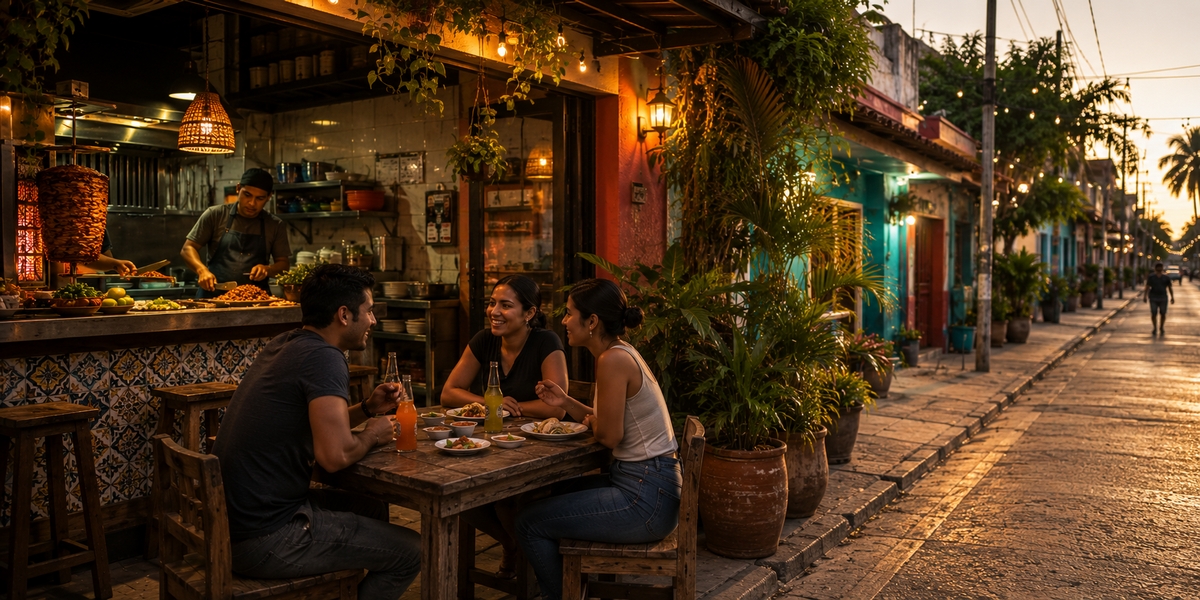
The dense grid of streets inland from the avenue is taqueria country. Spit-roasted al pastor, cochinita pibil in the morning, and loncherias doing a fixed-price comida corrida lunch for a few dollars. Busy, unglamorous, excellent.
Around Calle 30 and beyond
Sit-down family restaurants, regional Mexican kitchens, and casual seafood spots that fill with residents at night. You trade beach proximity for better food at a price that does not flinch.
Markets & the fish counter
Local markets and the fish market are where you find ceviche and whole fish at the price residents pay. Great for self-catering, and a window into what's actually in season.
None of these need a reservation, and most reward showing up when they are busy — a packed taqueria at 2pm is telling you everything you need to know about turnover and freshness.
What to Order: Local Dishes Worth Seeking Out
Knowing where to eat only gets you halfway. Here is the short list of regional plates worth ordering at least once — a mix of Yucatán classics and Caribbean-coast staples you will see on menus all over town.
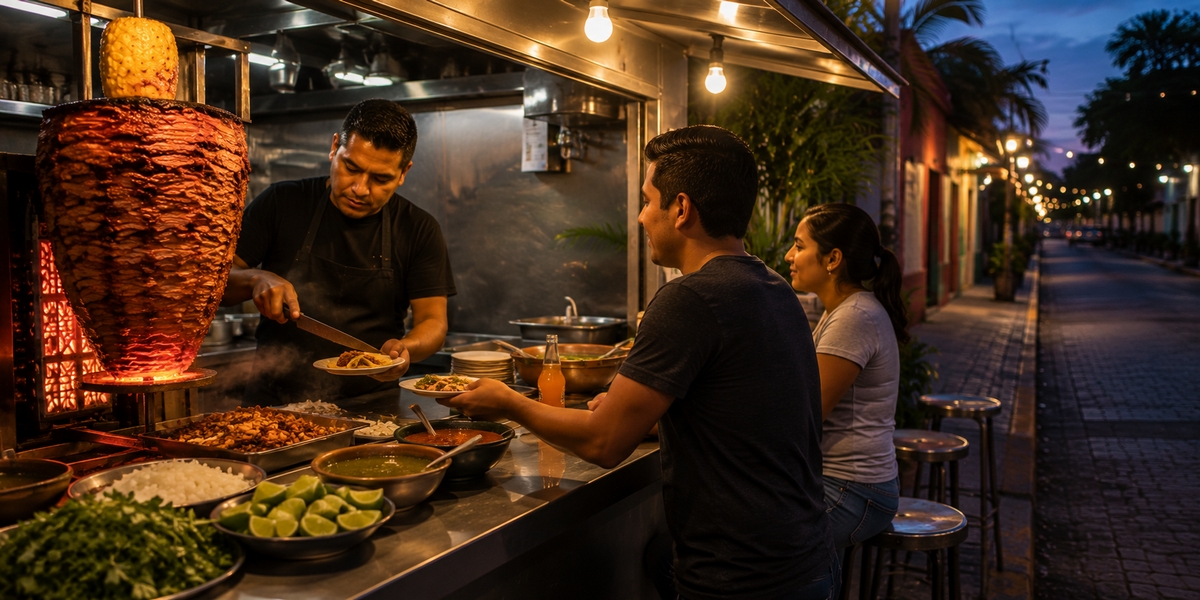
- Tacos al pastor — marinated pork shaved off a vertical spit, topped with pineapple. The default street taco, and the thing a good taquería lives or dies by.
- Cochinita pibil — Yucatán's slow-roasted pork in achiote and sour orange, usually a morning-to-lunch dish. Look for it on tortas and tacos before it sells out.
- Ceviche & aguachile — fresh fish or shrimp "cooked" in lime, the aguachile version sharper and spicier. Best at a busy marisquería, not a strip restaurant.
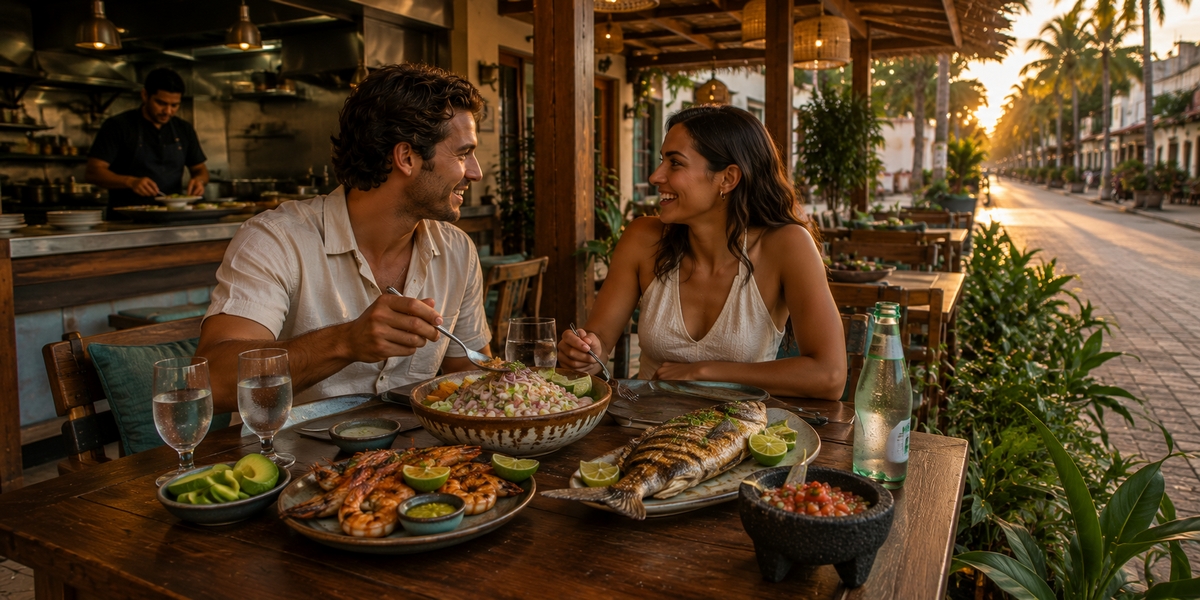
- Pescado a la talla — butterflied whole fish marinated in chili and grilled over coals. A coastal specialty and a genuine splurge worth making at a seafood spot.
- Sopa de lima — Yucatecan lime soup with shredded turkey or chicken and crisp tortilla strips. Light, citrusy, and a good first course away from the heat.
- Agua fresca — fruit waters like jamaica (hibiscus), horchata, or tamarind. A couple of dollars, refreshing, and far better than another overpriced soda.
Breakfast, Lunch, Dinner: Aim by Time of Day
The smartest eaters in Playa let the clock decide where they go. Each meal has a zone that gives the best return, and stacking them is how you eat well all week without burning cash.
Coffee & eggs on or near Quinta
→ This is the one meal where the avenue is worth it. Specialty coffee, fruit, chilaquiles, and a relaxed start. Or grab a few pesos' worth of pastries from a local panaderia inland.
Comida corrida or tacos inland
→ Midday is when loncherias run their fixed-price set lunches. Soup, a main, and agua fresca for the cost of a single Quinta cocktail. The best-value meal of the day, by far.
One block off the avenue
→ Step just off Quinta for a proper sit-down dinner with printed prices and a calmer room. Save the actual avenue for a drink afterward, when you are paying for the stroll, not the meal.
Pack it before you leave
→ Heading to a cenote or over to Cozumel? Grab fruit, water, and torta sandwiches from a supermarket first. On-site food at attractions is captive-audience priced.
Real Budgets (June 2026): What Things Cost
There is no single number for eating in Playa, because the spread is enormous — the same day can cost $15 or $150 depending entirely on which streets you choose. Here is a realistic look at three honest levels. Peso figures are approximate and move with the exchange rate.
- Tacos al pastor: ~$1–2 (20–40 MXN) each
- Comida corrida lunch: ~$4–7 (80–130 MXN)
- Casual local dinner: ~$6–10 (120–190 MXN)
- Cafe breakfast: ~$8–14 (150–270 MXN)
- Sit-down lunch: ~$12–20 (230–380 MXN)
- Restaurant dinner + drink: ~$25–40 (475–760 MXN)
- Cocktail on the avenue: ~$10–16 (190–300 MXN)
- Seafood dinner for two: ~$80–140 (1,500–2,650 MXN)
- Rooftop with minimum spend: ~$40+ (760+ MXN)
A quick worked example shows how fast the strip adds up. Order a whole grilled fish at "market price" on Quinta — say it weighs in at 5,000 MXN once they tally it — and let the card machine bill you in dollars at its own rate, and you might pay around $300. The same fish, ordered where the price is printed and paid in pesos through your own bank's rate, lands closer to $250. Two small habits, a 20% difference.
If you are renting an apartment, the supermarkets and the fish market make self-catering almost trivially cheap — buying breakfast and drinks alone can cut a week's food bill noticeably. For the mechanics of paying without losing money, read the Mexico money guide (cash & ATMs) and the guide to paying by card in Mexico.
One seasonal note: prices on Quinta climb during Christmas, New Year, and spring break, and the rooftop minimums tend to rise with them. The inland streets move far less.
How to Find Good Spots (That Are Still Good)
Because restaurants here turn over so quickly, a name someone recommended last year may already be under new ownership. Rather than chase specific places, it is more reliable to learn how to read a street in real time. A few habits do most of the work.
On safety: the usual Mexico rules apply and they are not onerous. Drink bottled or purified water, lean on busy stalls with high turnover, and trust ice at established restaurants. The full picture is in the Mexico food and water safety guide.
Dining Mistakes to Avoid
Most bad meals in Playa are not about bad cooking — they are about a few avoidable patterns that quietly drain your budget or your evening.
Treating Quinta Avenida as the whole town. If every meal happens on the strip, you will overpay all week and never taste what Playa is actually known for. The best food is consistently a block or two inland.
Letting the card machine convert to dollars. Dynamic currency conversion looks convenient and costs you every time. Always choose to be charged in pesos and let your own bank do the math.
Ordering "market price" seafood blind. Lobster and whole fish sold by weight with no posted number can produce a shocking bill. Confirm the price per kilo or per piece before you say yes.
Tipping twice. Check the bill for an added propina or servicio before leaving cash. A 10–15% tip is standard and appreciated — but only once.
Before You Go Out to Eat
A few ground rules that keep your money pointed at the food, not the markup:
Playa del Carmen rewards the traveler who treats Quinta Avenida as a place to walk, not the place to eat every meal.
Use the strip for coffee, breakfast, and an evening drink — then take almost everything else one or two blocks inland, where the cooking is just as good and the prices are honest.
Do that, and Playa is the best-value food town on the Riviera Maya. Stay on the avenue for every plate, and it quietly becomes one of the most expensive.
Sources Checked
Sources checked on June 28, 2026. Restaurant prices, rooftop minimums, and which specific places are worth visiting change constantly in Playa del Carmen, so treat the figures here as ranges and verify current prices on the spot.
- Profeco (Procuraduría Federal del Consumidor): checked the consumer-protection guidance stating that tips (propina) must be voluntary and cannot be added to the bill as a mandatory charge, plus the rules requiring prices to be displayed clearly and honored as shown.
- Quintana Roo tourism board (CPTQ) and the municipality of Solidaridad: destination orientation, the Quinta Avenida pedestrian zone, and municipal advisories for Playa del Carmen.
- COFEPRIS: federal food-handling and water-safety standards applied to restaurants and street vendors across the Riviera Maya.
- Price ranges — cross-checked, not estimated: the per-item and per-day figures here were compared across several current restaurant and taquería menus on and off Quinta Avenida, supermarket shelf prices, and traveler reviews from the last few months (sorted by newest), so the ranges reflect what places are charging now rather than a single source.
Frequently Asked Questions
Is Quinta Avenida a good place to eat in Playa del Carmen?
It is fine for coffee, breakfast, and people-watching, and a few honest spots survive on the strip. But Quinta Avenida (Fifth Avenue) is the most tourist-priced street in town. For dinner and real value, step one or two blocks inland, where the same kind of food costs noticeably less and the menus actually show prices.
Where do locals eat in Playa del Carmen?
Mostly off Quinta Avenida, in Colonia Centro and the neighborhoods west of the highway, along streets like Calle Coba and around Calle 30. The taquerias, loncherias, and family seafood spots a few blocks back from the beach serve better food at local prices, often cash-only, and they are busy with residents rather than tourists.
How much does food cost per day in Playa del Carmen?
Roughly $15 to $30 USD per person per day if you eat at taquerias and loncherias off the strip, about $40 to $80 for a mix of casual restaurants and one nicer meal, and $100 or more per day if you eat mainly on Quinta Avenida and at rooftop bars. Cooking some meals from a supermarket drops the lower end further.
Should I carry cash or cards for eating in Playa del Carmen?
Carry both, but keep pesos on hand. Restaurants on Quinta Avenida and mid-range places accept cards, while the cheaper taquerias, street stalls, and market loncherias off the strip are frequently cash-only. When paying by card, always choose to be charged in Mexican pesos, not your home currency, to avoid a poor on-the-spot exchange rate.
Is street food safe to eat in Playa del Carmen?
Generally yes, if you follow the crowds. A busy stall with high turnover means fresh food that has not been sitting out, and items cooked to order over heat (like tacos al pastor) are the safest bet. Drink only bottled or purified water, and at established restaurants the ice is made from purified water and is fine.
Is Playa del Carmen good for vegetarians and vegans?
Yes, it is one of the better Riviera Maya towns for plant-based eating. There is a solid cluster of vegetarian and vegan cafes, juice bars, and health-focused kitchens, especially around Quinta Avenida and the nearby side streets. Traditional taquerias can also do veggie versions, and the markets make self-catering easy.