
You have seen the photo: a person reclining in water the color of bubblegum, the horizon a flat pink line, no one else in frame. It launched a thousand bucket lists, and it is the reason "is Las Coloradas worth it?" gets typed into search bars from hotel rooms all over the Riviera Maya. The honest answer starts with a small heartbreak — that photo is essentially impossible to recreate now, and was never quite what it looked like.
Las Coloradas is real, striking, and genuinely unlike anything on the coast you flew into. It is also a working industrial salt operation on the far north shore of Yucatan, three and a half hours from Cancun, where you can no longer get in the water and the color shows up only when the weather cooperates. None of that makes it a bad trip. It makes it a trip you should understand before you commit a whole day to it.
This guide is the version I would want before driving north: what the place actually is, whether it will be pink the day you go, how to reach it, and — the part most guides skip — who should make the journey at all, and who is better off keeping that day for the beach.
Quick Answer: The Las Coloradas Day Trip
Short version: Las Coloradas is worth it as part of a wider Yucatan road trip or an overnight in the north, and rarely worth it as a dedicated same-day round trip from the Cancun beach. You cannot swim, the pink is weather-dependent, and the drive is long. Go for the strangeness of the landscape and the flamingos nearby — not to float in pink water, because that is no longer a thing.
- Can you swim? No — swimming is banned and enforced; you walk paths and photograph from the edge.
- How far? About 3.5 hours each way from Cancun (roughly 280 km), via Valladolid.
- Will it be pink? Only on a sunny, low-wind day, best 11 a.m.–3 p.m.; brightest in the dry season.
- Best for: road-trippers, photographers, and flamingo/nature travelers basing in the north.
- Skip if: you are on a short Cancun beach trip and would burn a whole day just to get there and back.
If you are road-tripping inland and sleeping in Valladolid or Rio Lagartos, the lakes are a short detour, not a marathon. This is exactly the trip they suit.
The biosphere reserve next door is the real prize. Pair the lakes with a Rio Lagartos boat tour and the long drive starts to earn itself.
Seven-plus hours of driving for a sub-hour visit is a lot to give up from a five-day beach holiday. A closer water day usually wins.
That experience is over. If floating in pink is the whole point, you will be disappointed no matter how good the day is.
If you are still mapping out the wider trip, this slots in alongside the region's other excursions — the things to do in Cancun and the Riviera Maya guide shows where a far-north day like this fits against the cenotes, ruins and beach time competing for the same mornings.
What Las Coloradas Actually Is
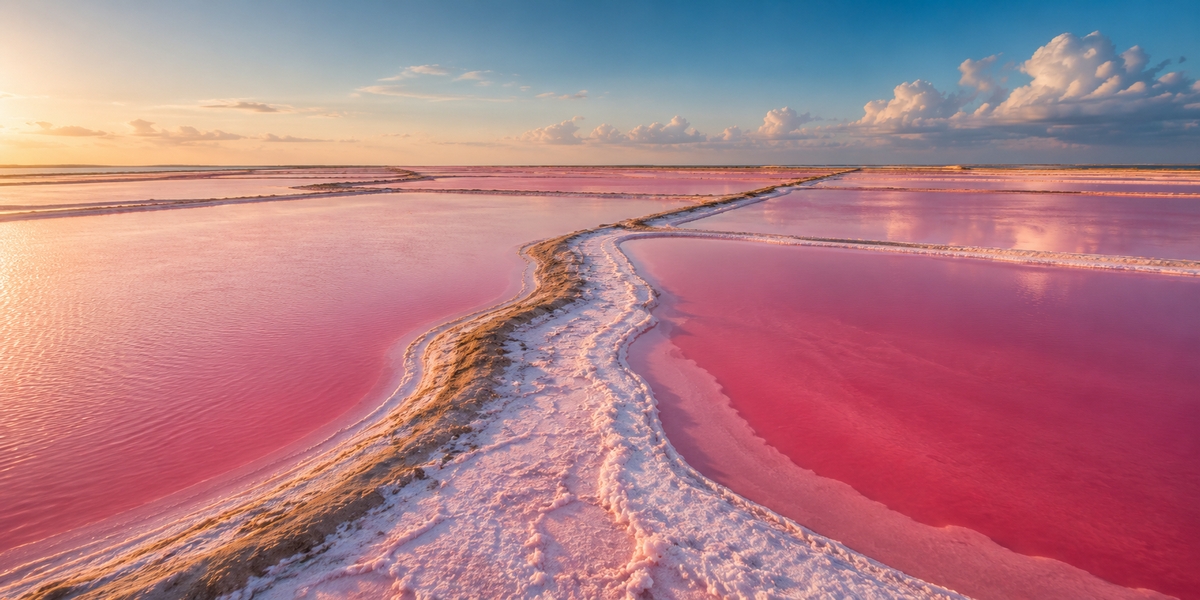
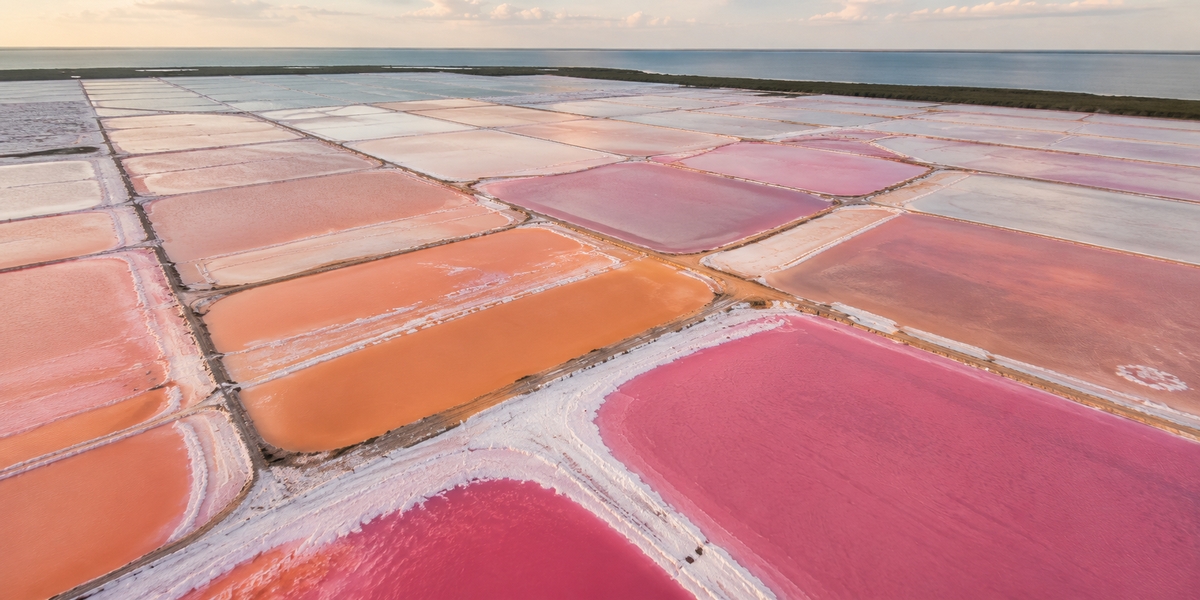
Here is the part that reframes the whole trip: Las Coloradas is not a natural attraction built for tourists. It is a century-old commercial salt works run by Industria Salinera de Yucatan, and the famous pink "lakes" are evaporation ponds where seawater is concentrated until salt can be harvested. The color is a by-product of the chemistry, not a feature anyone designed for your camera. Knowing that changes how you read the place — the dykes, the white salt mountains, the machinery on the horizon are the point, not a blemish on it.
The ponds sit inside the federally protected Rio Lagartos Biosphere Reserve, a wetland that shelters flamingos, crocodiles, sea turtles and hundreds of bird species. Between a private salt company and a protected reserve, almost none of the area is a free-for-all. You cannot wander in alone; access to the close-up viewpoints is through the visitor area, with a guide, along marked paths.
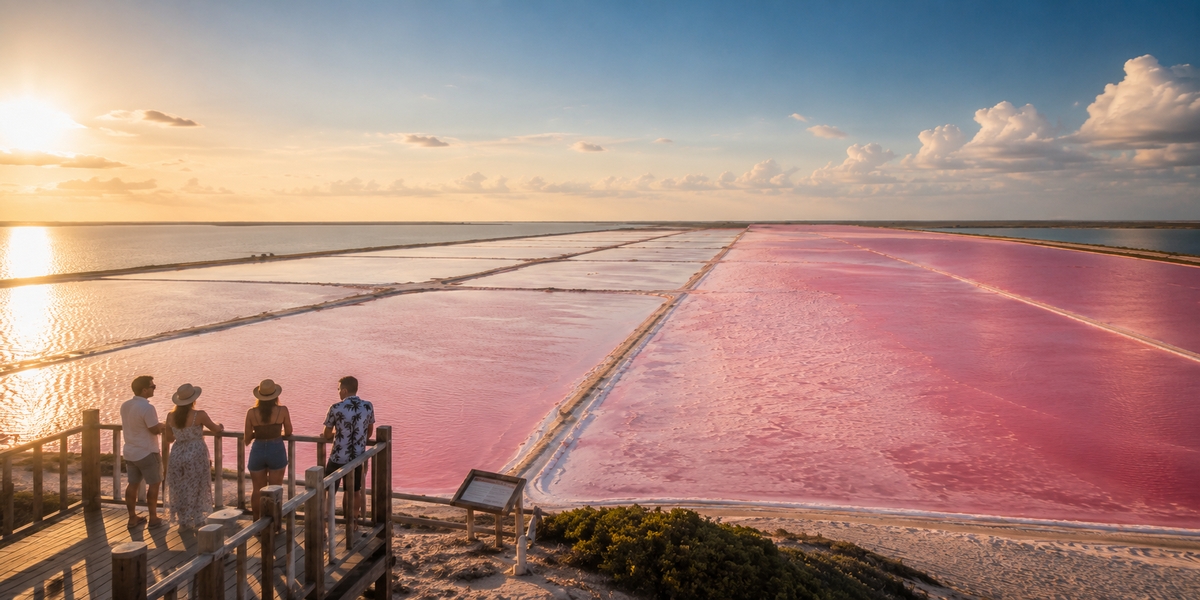
Practically, the visit itself is short. Expect a guided walk of roughly 45 minutes around the most photogenic ponds, plus an optional climb up a lookout tower a few stories high for the wide view over the patchwork of pink, rust and white. Fees are modest but cash-only and a little inconsistent depending on whether you take the basic entry or the full guided option — budget a few hundred pesos per person and bring cash, because cards are not accepted out here.
Will It Even Be Pink?
This is the question that decides whether the drive pays off, and the honest answer is: sometimes. The pink comes from microorganisms — Dunaliella algae and salt-loving bacteria — that thrive in the hypersaline ponds and produce the same carotenoid pigments that turn flamingos pink. The denser they get, the stronger the color. That density is a function of heat, evaporation and salinity, which means the color is a moving target, not a constant.
Three things have to line up. First, strong overhead sun: the ponds look their most saturated roughly between 11 a.m. and 3 p.m., and flat or low light leaves them muted. Second, a dry stretch: in the hot, dry months the water concentrates and the pink deepens toward magenta, while heavy rain dilutes it to a pale wash. Third, low wind: a breeze ripples the surface and erases the mirror-smooth reflection that makes the photos sing. Show up on an overcast, breezy afternoon right after a wet-season storm and you may see a dull, greyish-pink and wonder what the fuss was about.
So the cruel irony is that the most comfortable time to be on the north coast — cooler, less humid — is not always the most vivid, and the brightest pink often comes with brutal midday heat and zero shade. There is no schedule that guarantees the color. The most you can do is stack the odds: pick a sunny, calm day, arrive in the midday window, and treat a knockout pink as a bonus rather than a promise.
The Drive, and How to Do It
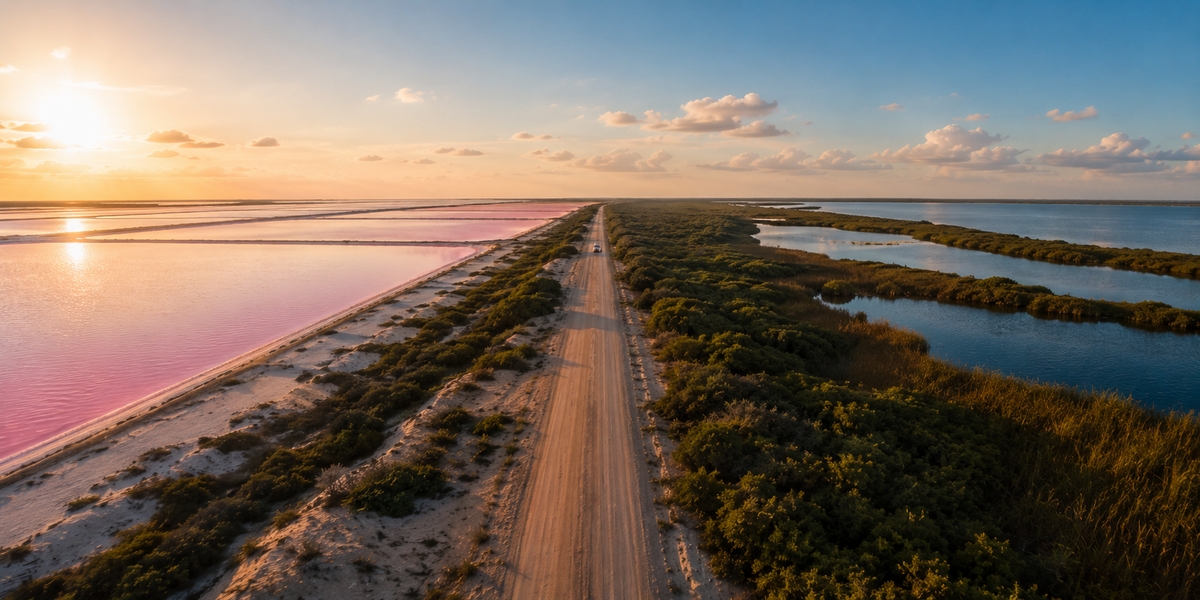
Las Coloradas is remote in a way the Riviera Maya is not, and the logistics are most of the decision. The drive from Cancun runs about 280 kilometers and three and a half hours, almost all of it the fast toll-and-highway route inland to Valladolid and then north through small Yucatan towns to the coast. The roads near the end get narrow and patchy, but nothing a normal rental car can't handle. The catch worth tattooing on your hand: there is no reliable fuel between Valladolid and the lakes, so fill the tank in Valladolid, not "later."
You have three realistic ways in. A rental car is the most flexible and the one I'd pick — you set your own departure, stop where you like, and bolt on Rio Lagartos or Ek Balam without negotiating with a schedule. An organized day tour from Cancun or Playa del Carmen takes the driving off your plate and usually bundles a cenote, a Rio Lagartos flamingo boat ride and the lakes into one long day, often from around 80 US dollars per person with fees included. Public buses reach the area through Tizimin, but the connections are slow and leave you stranded on timing — fine for a relaxed multi-day loop, impractical for a single day.
Leave early. A late start is what turns this from a long day into a miserable one, and it pushes you out of the midday color window.
Last reliable fuel, coffee and a bathroom. A pretty colonial town worth a stop on its own — and the obvious place to base overnight.
The pink ponds, the lookout tower, the guided walk. Aim to arrive in the late-morning-to-midday window for the strongest color.
The flamingo boat tour and the real wildlife payoff. Pairing the two is what makes the distance make sense.
Run the math before you romanticize it. As a same-day round trip from Cancun, a sensible plan looks like: leave by 6:30 a.m., reach the lakes around 11, spend 45 minutes to an hour walking and shooting, add a couple of hours for a Rio Lagartos boat and lunch, then drive 3.5 hours back — home around 7 or 8 p.m. That is a 13-hour day for maybe three hours of actual destination. Split across an overnight in Rio Lagartos or Valladolid, the same itinerary turns from an endurance test into a genuinely good two days.
Is It Worth It for You?
There is no universal answer here, only the right call for the trip you are actually taking. Pick the option that sounds most like you and read the honest verdict — it is a fast way to avoid driving seven hours for the wrong reason.
The steer is deliberately narrow. If you are already moving inland, Las Coloradas is an easy, rewarding stop. If you are anchored to a Cancun beach for a short week, the math rarely works for a dedicated run north — and that is not a knock on the place, just an honest read of what a day costs you. The asymmetry trap to name out loud: the people most likely to be let down are the ones expecting the old swim-in-pink fantasy, and the people most likely to love it are the ones who came for a weird, beautiful industrial wetland and a flamingo or two.
Make It a Road Trip, Not a Day Trip
The single best thing you can do for this trip is stop treating Las Coloradas as the destination and start treating it as one stop on a north-Yucatan loop. Once you are this far inland, the lakes are surrounded by better-known sights that turn a long drive into a proper two- or three-day route — and most of them are things you would otherwise drive separately to see.
Rio Lagartos flamingos
A 20-minute hop from the lakes, the boat tour through the biosphere reserve is the wildlife highlight: flamingos year-round, crocodiles, herons and a natural "Mayan bath" mud stop. Bring a zoom lens; boats keep their distance.
Valladolid
The pastel colonial town two hours south is the natural place to sleep, eat well, and split the drive. It also puts Chichen Itza and a cluster of swimmable cenotes within easy reach the next morning.
Ek Balam
A compact, low-crowd Mayan site near Valladolid where you can still climb the main pyramid for a jungle-canopy view. Pairs naturally with the cenote X'Canche next door.
Cenote Suytun
The famous stone platform under a beam of light sits just outside Valladolid and shows up on most organized Las Coloradas tours. Touristy and often busy, but genuinely striking early.
Strung together, a clean version looks like this: sleep in Valladolid, do Ek Balam and a cenote in the cool morning, drive up to Las Coloradas for the midday pink, finish with the Rio Lagartos boat in the late afternoon, and either overnight on the coast or roll back to Valladolid. That is a trip people remember. The same pieces crammed into one Cancun-to-Cancun day are a trip people endure.
Mistakes Travelers Make
Almost all the regret around Las Coloradas comes from the same handful of wrong assumptions, and every one of them is avoidable.
Expecting to swim in the pink water. The defining letdown. The bathing photos are from before the ban — today it is look, don't touch. Go for the landscape, not the float.
Going on the wrong day or at the wrong hour. Cloud, wind, low sun or a recent storm can flatten the color entirely. Aim for a clear, calm midday and accept the color is never guaranteed.
Forcing it into a single Cancun day. Seven-plus hours of driving for under an hour at the lakes burns a whole holiday day. Overnight in the north or fold it into a road trip instead.
Arriving unprepared. No fuel past Valladolid, almost no shade, mosquitoes near the mangroves, and cash-only entry. Fill up, bring sun cover, repellent and pesos before you go.
Sources Checked
Sources checked on June 20, 2026. Access rules, entry fees and seasonal color all shift — fees in particular are cash-only and vary by whether you take basic entry or a full guided visit — so confirm the current situation with your operator or on arrival, and treat any price here as a rough range rather than a fixed number.
How this guide was checked: The site's status as a working salt operation by Industria Salinera de Yucatan, its location inside the federally protected Rio Lagartos Biosphere Reserve, and the strict no-swimming and guided-access rules come from Mexican government and reserve information plus consistent on-the-ground reporting. Distances and drive times are cross-checked against mapping for the Cancun–Valladolid–Las Coloradas route. The color behavior (midday light, dry-season concentration, wind and storm effects, the Dunaliella and halobacteria pigment source) and the Rio Lagartos flamingo seasonality reflect ecological and travel reporting on the reserve. Fee ranges and the combined-tour pricing are kept as ranges, not quotes, because they change by season, operator and option.
Frequently Asked Questions
Can you swim in the Las Coloradas pink lakes?
No. Swimming is strictly prohibited and the rule is enforced. The lakes are shallow, hypersaline salt-production ponds on private land inside the Rio Lagartos Biosphere Reserve, and getting into the water is no longer allowed. This trips up a lot of visitors, because the photos that made Las Coloradas famous show people floating in bright pink water. Those images are old. Today you walk designated paths with a guide, take photos from the edge, and that is the experience.
How far is Las Coloradas from Cancun, and how long is the drive?
Las Coloradas sits on the north coast of Yucatan, roughly 280 kilometers from Cancun, which is about a 3.5-hour drive each way via Valladolid. From Valladolid it is around two hours; from Tulum it is a similar 3.5 hours. That distance is the single biggest factor in whether the trip is worth it: as a same-day round trip from Cancun you are looking at seven or more hours in the car for a visit of well under an hour at the lakes.
Is the Las Coloradas day trip from Cancun worth it?
For most people based on the Cancun coast for a short beach holiday, not as a dedicated day trip. The drive is long, the visit is short, and the color is weather-dependent. It becomes worth it when Las Coloradas is one stop on a wider Yucatan road trip, when you base overnight in Rio Lagartos or Valladolid, or when flamingos and nature photography are the real reason you are going. If you are choosing it as a day off the beach, a closer water day usually delivers more.
What is the best time of day and season to see the pink color?
Aim for a sunny, low-wind day between roughly 11 a.m. and 3 p.m., when the high sun makes the water most vivid. The color is most intense in the hot, dry months, when evaporation concentrates the salt and the pink-producing microorganisms; heavy rain dilutes it to a paler tone, and a windy day ripples the surface and kills the mirror effect. After a storm in the wet season the lakes can look dull. The color is never guaranteed, so go on a clear day or manage your expectations.
Do you need a car to visit Las Coloradas, or can you do it on a tour?
Both work, but a rental car is the most flexible option and lets you start early, stop in Valladolid, and add Rio Lagartos or Ek Balam on the way. If you would rather not drive, organized day tours run from Cancun and the Riviera Maya, usually combining a cenote, a Rio Lagartos flamingo boat ride, and Las Coloradas, often from around 80 US dollars per person. Public buses reach the area via Tizimin but are slow and not practical for a single day. Note there is no fuel between Valladolid and the lakes, so fill up first.
Can you see flamingos at Las Coloradas?
You may spot a few near the salt flats, but the real flamingo experience is the boat tour out of nearby Rio Lagartos, about 20 minutes away, inside the same biosphere reserve. Flamingos are present year-round, with the biggest concentrations during the April-to-June breeding season. Boats keep a respectful distance to avoid disturbing the birds, so bring a zoom lens or binoculars rather than expecting close-up encounters.
Before You Go
Five honest checks before you commit a day to the far north.
If you remember one thing: Las Coloradas is worth it as part of a Yucatan road trip or a northern overnight, and rarely worth a dedicated same-day round trip from the Cancun beach.
For road-trippers, photographers and flamingo lovers, the strange beauty of an industrial salt wetland next to a biosphere reserve genuinely earns the drive — go on a clear, calm day, base nearby, and pair it with Rio Lagartos. For travelers anchored to a short beach holiday, the seven-plus hours of driving for a sub-hour visit almost never pencils out.
And whoever you are, go for what it actually is now — a weird, photogenic landscape and some of Mexico's best flamingo country — not for the old fantasy of swimming in pink water, which no longer exists.