
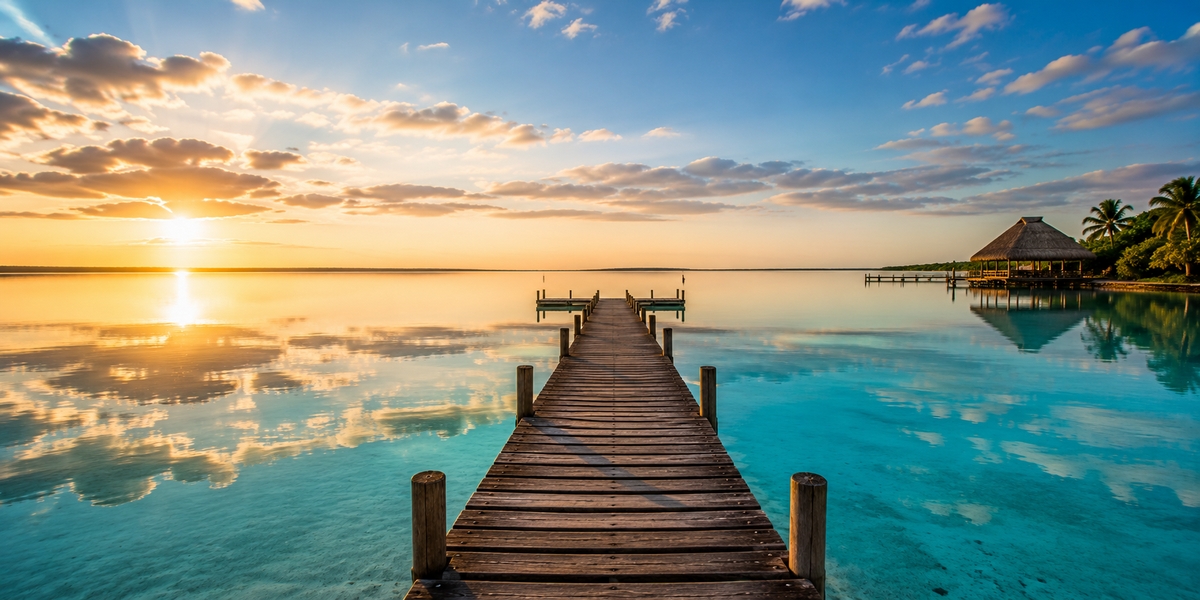
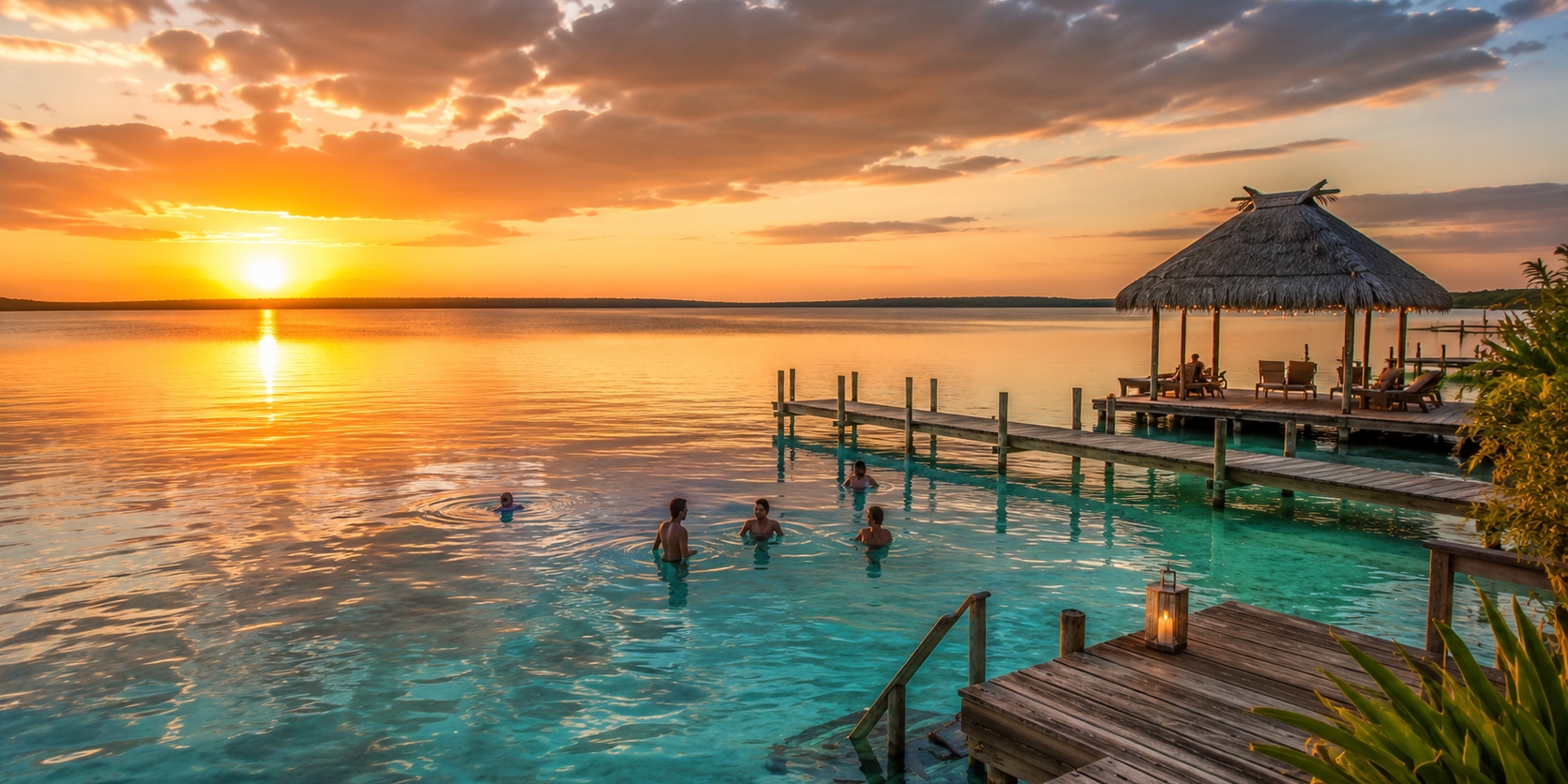
Bacalar shows up on travel feeds as a single, almost suspicious image: a wooden dock running into water that shifts from pale mint to deep navy in the space of a few meters. The nickname writes itself — the Lagoon of Seven Colors, the Maldives of Mexico. What the photos never mention is the part that decides whether you should actually go: it sits roughly 340 kilometers south of Cancun, near the border with Belize.
That distance changes everything. Bacalar is not a place you bolt onto a Cancun beach week between breakfast and dinner. It is a freshwater lagoon with a slow, low-rise rhythm and, crucially, no sargassum — the one thing the Caribbean coast cannot promise in summer. Both of those facts pull in opposite directions: the lagoon is genuinely special, and getting to it from Cancun is genuinely a commitment.
This guide treats the real question, which is not whether Bacalar is beautiful (it is) but whether it is worth the drive for your trip, how to do it without wasting a day in the car, and who should quietly leave it off the itinerary. Spoiler for the impatient: from Cancun, this is an overnight, not a day trip.
Quick Answer: Should You Go to Bacalar from Cancun?
The short version: Bacalar is worth it if you treat it as an overnight (better two nights), if you come for calm freshwater and slow days rather than ocean surf, and ideally if you are already heading south toward Tulum. As a day trip straight from Cancun, it makes almost no sense.
- Go if: you want clear, sargassum-free water, kayaking and quiet, and have 2+ spare days.
- Best format: overnight from Cancun or a short hop from a Tulum base — not a same-day round trip.
- Skip if: you want a sandy ocean beach, nightlife, or only have a few days in the region.
- The honest catch: ~5 hours each way from Cancun; the lagoon, not the town, is the whole point.
Sunrise kayak, a hammock over the water, an early dinner in town. Bacalar rewards people who want to do less, well.
Pair Bacalar with Tulum or a road trip south. One or two nights turns the drive into a journey, not a chore.
When seaweed buries the coast from spring through summer, Bacalar stays clear because it is freshwater. A real plan B.
If you have under five days in the region and came for the ocean, the drive eats your trip. Stay north.
What Bacalar Actually Is (and Is Not)
Bacalar is a small town on the western shore of a long, narrow freshwater lagoon in southern Quintana Roo, close to the Belize border and just north of Chetumal. It carries Mexico's Pueblo Mágico designation, the federal tourism label for towns with a distinct character worth protecting, and it has stayed refreshingly low-rise: think guesthouses, eco-lodges, and waterfront cabins instead of high-rise all-inclusives.
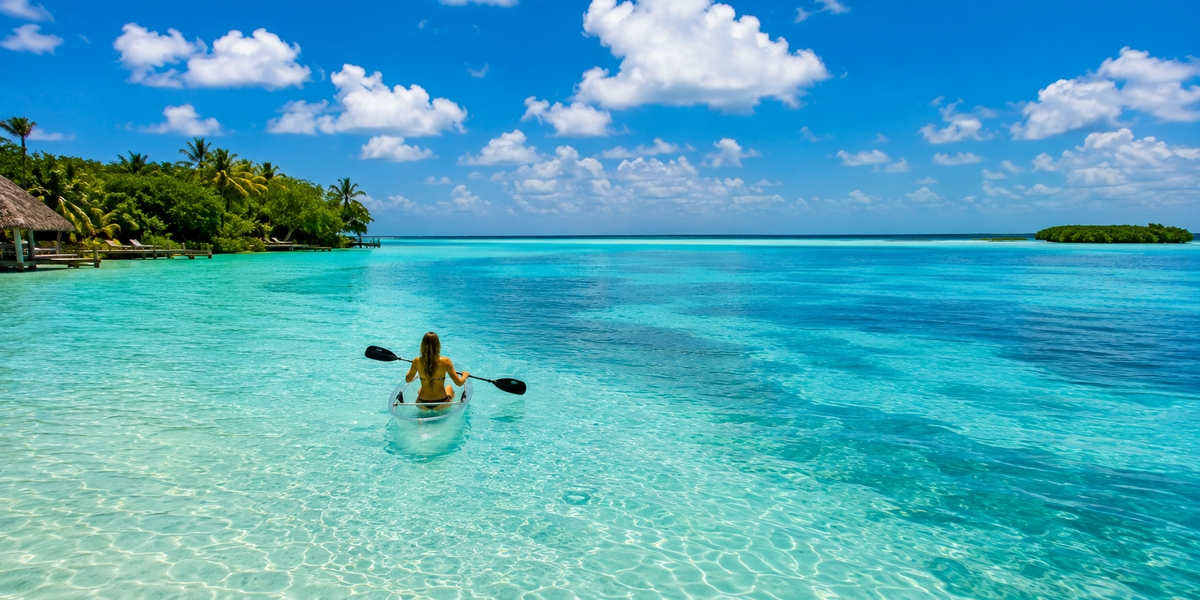
The famous colors are real, and they have a real cause. The lagoon sits over a white limestone bed and is fed by several cenotes and underground springs. Where the water is shallow over pale sand it reads almost mint; over the deep cenote sinkholes it turns into bands of dark blue. The shifting palette is just sunlight hitting different depths and a chalk-white floor — which is also why a cloudy day flattens the whole effect. The single most useful thing to know before booking is that Bacalar is at its absolute best under direct sun and calm morning air.
Here is what surprises first-time visitors: there is essentially no beach. The shoreline is limestone and grass, and you get into the water from docks, decks, and a handful of swimming spots, not by walking across sand. People who arrive expecting a Caribbean beach in freshwater form leave disappointed; people who arrive expecting the world's largest natural infinity pool leave thrilled. Same lagoon, completely different trip, depending on what you pictured.
The other defining feature lives just below the surface. Bacalar holds one of the largest freshwater colonies of stromatolites on the planet — living microbial reefs that are among the oldest life forms on Earth and that quietly produce oxygen. They look like dull grey rock shelves and are absurdly fragile: stand on one and it dies. That single fact shapes most of the local rules you will run into, from where you can swim to what you can put on your skin.
The Distance Problem, Honestly
This is the section that should decide your trip more than any photo. Bacalar's whole reputation rests on being unspoiled, and the reason it stayed that way is the same reason it is awkward to reach: it is far. From Cancun you are looking at roughly 340 kilometers and about five hours by car, sometimes closer to five and a half once you factor in stops and the slow stretch through smaller towns.
Do the math on a day trip and it falls apart immediately. Leaving Cancun at 7 a.m. gets you to the lagoon around midday, gives you a few hot, bright hours on the water, and puts you back in the car for another five-hour haul home, arriving exhausted after dark. You would spend roughly ten hours driving to experience Bacalar at exactly the time of day it looks worst — harsh midday glare, the afternoon breeze chopping up the surface — and you would miss both the still sunrise and the quiet evening that make the place.
The distance math improves dramatically the further south you already are. From Tulum the drive drops to about 2.5 to 3 hours, which is why most people who reach Bacalar do it from a Riviera Maya base rather than straight from the Cancun airport. If you are weighing a self-drive, the car rental guide for Cancun and the Riviera Maya covers the realities of the toll road and one-way drop-offs, and the ADO bus versus transfer versus rental car comparison lays out which mode actually fits a long southern leg like this one.
There is one genuine upside hiding in all that distance. Because sargassum is a saltwater seaweed and Bacalar is freshwater, the lagoon is immune to the seasonal seaweed that can wreck a Caribbean beach trip. During a bad bloom — and the Cancun seaweed season guide explains how unpredictable those have become — Bacalar is one of the few places in the region where the water is guaranteed clear. For some travelers, that alone justifies the drive.
Is Bacalar Right for Your Trip?
There is no universal answer here, only the right call for the trip you are actually taking. Pick the priority that sounds most like you and read the honest verdict — this is a fast way to avoid driving five hours for the wrong reason.
What You Actually Do in Bacalar
Almost everything in Bacalar happens on or beside the water, and the best version of it happens early. Mornings are glassy and bright; by early afternoon the breeze arrives, the surface ripples, and the colors lose some of their drama. Build your day around that, not around a lie-in.
Sunrise kayak or paddleboard
The signature Bacalar experience, and free if your hotel lends boards. Calm water, full color, no engine noise. Motorboats are discouraged and the lagoon takes a rest day on Wednesdays, so paddle power is the local default anyway.
Sailboat on the lagoon
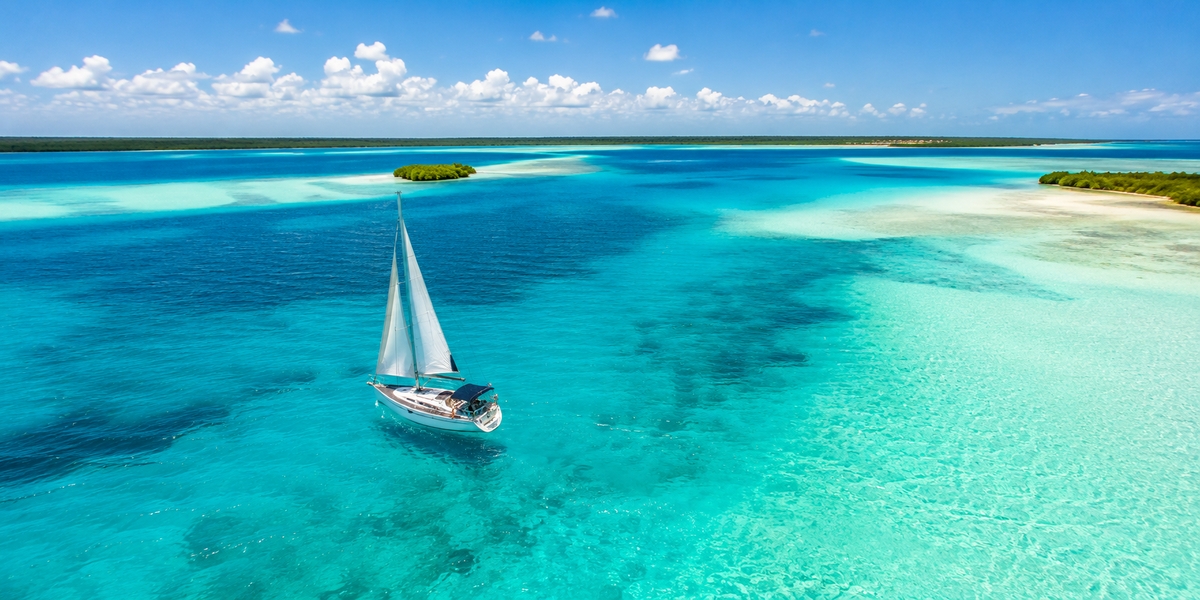
A half-day sailing or catamaran trip hits the deeper blues, the Pirate Channel shallows, and a cenote or two. Choose sail over loud party boats — it is gentler on the water and a far nicer few hours.
Cenote Azul & Los Rápidos
Cenote Azul is a deep, dark sinkhole right by the road, great for a proper swim. Los Rápidos, where the lagoon narrows into a gentle current, is the easiest place to see stromatolites up close — look, do not touch.
The fort and the town
The 18th-century Fuerte de San Felipe, built against pirate raids, anchors a small lakeview museum and a walkable centre. An hour or two here plus a slow dinner is about all the town itself asks of you.
A few honest notes on the experience itself. The water is shallow and warm in the swimming zones, with a soft chalky bed that clouds if you kick it up — part of why the no-sunscreen-in-the-water habit matters so much. Crocodiles do live in the lagoon's mangrove edges, but they keep to the quiet, less-trafficked stretches and are not a practical concern in the marked swimming and tour areas. And bring cash: many rentals, smaller eateries, and entrance fees are cash-only, with limited ATMs in town.
If freshwater swimming is the part that excites you, the wider region delivers more of it. The cenotes near Cancun, Playa and Tulum stay clear and cool year-round and make a natural pairing with a Bacalar leg, especially if you are driving south and back.
Getting There and Where to Stay
You have four realistic ways to reach Bacalar from the Cancun side, and they trade money for comfort and flexibility in fairly predictable ways. None of them is wrong; the right one depends on whether Bacalar is a stop on a bigger southern route or a single dedicated overnight.
| Option | Time from Cancun | Rough cost | Best for |
|---|---|---|---|
| Rental car | ~5 hrs | Mid | Combining Bacalar with cenotes and stops; full flexibility on the lagoon. |
| ADO bus | ~5.5 hrs | Lowest | Solo and budget travelers; comfortable first-class coach, no driving. |
| Tren Maya | ~4.5 hrs+ | Mid | Scenery and novelty — if the limited schedule lines up with your plans. |
| Private transfer | ~5 hrs | Highest | Families or groups who want door-to-door with no logistics. |
A word on the train, because it is the newest and most misunderstood option. The Tren Maya now serves the southern line through Bacalar, but two catches matter: the Cancun station sits at the airport rather than downtown, and service runs only a few times a day, sometimes requiring a two-leg booking to reach the southern segment. It is a lovely ride when it fits, but check the official schedule before you build a trip around it — do not assume turn-up-and-go frequency.
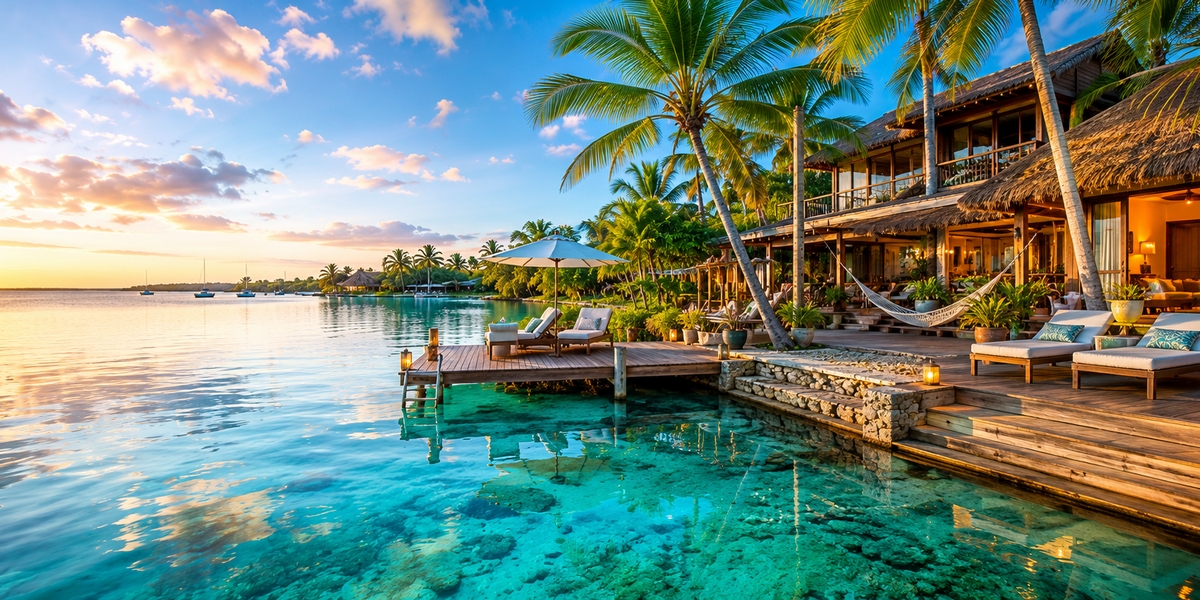
For where to sleep, Bacalar splits into two simple choices. Lakefront stays — eco-lodges, glamping cabins, and small boutique hotels strung along the Costera — put a dock and the water at your doorstep, which is worth paying for given that the lagoon is the entire reason you came. Town guesthouses are cheaper and walkable to restaurants and the fort, but you will taxi or walk to the water. There are no large resorts and no all-inclusive machine here; this is a small-lodging destination, and that is exactly why it still feels calm. Book ahead in winter and over Mexican holidays, when the best lakefront rooms sell out early.
Mistakes Travelers Make with Bacalar
Most Bacalar regret is not bad luck. It is an expectation set by a photo and never corrected before booking.
Forcing it as a day trip from Cancun. Ten hours of driving for a few midday hours on the water is the classic Bacalar mismatch. Overnight or skip — there is no good same-day version from Cancun.
Expecting a sandy ocean beach. Bacalar is a lagoon with limestone shores and no surf. Come for clear, calm freshwater, not for a beach walk, and you will love it.
Sleeping in and going out midday. The colors and calm peak at sunrise; the afternoon wind dulls both. Get on the water early and treat the hot hours as siesta time.
Wearing regular sunscreen in the lagoon. It harms the stromatolites and the water clarity. Apply reef-safe protection well before you swim, or wear a rash guard, and never stand on the grey reef shelves.
If a long southern leg like this feels like more than you want to organize, it is worth comparing against simpler options first. The best day trips from Cancun covers what genuinely works within a single day, and the best time to visit Tulum guide helps you time a Riviera Maya base from which Bacalar becomes a far easier add-on.
Sources Checked
Sources checked on June 17, 2026. Distances, bus and train schedules, lagoon-protection rules, and accommodation availability all shift, so confirm transport times and any lagoon access rules close to travel.
How this guide was checked: We compared official transport information for the ADO network and the Tren Maya, current driving-distance data for the Cancun and Tulum routes, and local conservation guidance on the stromatolites, sunscreen, and the Wednesday boating rest day. The aim is to set honest expectations about the journey and the lagoon, not to predict one specific day on the water.
Frequently Asked Questions
Is Bacalar worth visiting from Cancun?
Yes, if you give it the time it needs and go for the right reasons. Bacalar is a freshwater lagoon known for its bands of blue, year-round clarity, and a slow, low-rise pace with no mega-resorts. The catch is distance: it sits roughly 340 km south of Cancun, about a five-hour drive or a five-to-six-hour ADO bus. That makes it an overnight trip, ideally two nights, rather than a realistic day trip. If you want a classic sandy ocean beach or only have a couple of days, Bacalar is the wrong call.
How long does it take to get from Cancun to Bacalar?
By car or private transfer, plan on about five hours for the roughly 340 km drive, sometimes closer to five and a half with stops and traffic. The ADO first-class bus takes around five and a half hours and runs several times a day from the downtown Cancun terminal. From Tulum the same trip is far shorter, about 2.5 to 3 hours, which is why many travelers reach Bacalar from a Tulum or Riviera Maya base rather than straight from Cancun.
Can you do Bacalar as a day trip from Cancun?
Technically yes, realistically no. A day trip from Cancun means roughly ten hours of driving for a few hours at the lagoon, and you would miss the two things Bacalar does best: a calm sunrise on the water and a quiet evening in town. A day trip is only reasonable from a closer base like Tulum, and even then it is a long day. From Cancun, treat Bacalar as a one or two-night stay or skip it.
Why is there no sargassum in Bacalar?
Bacalar is a freshwater lagoon fed by underground springs and cenotes, with no direct connection to the Caribbean Sea. Sargassum is a saltwater seaweed, so it cannot survive or drift in. That is why Bacalar stays clear during the spring-and-summer months when sargassum hits the Cancun, Playa del Carmen, and Tulum coastline. For many travelers, escaping seaweed season is the single strongest reason to make the trip south.
Do you need a car in Bacalar, or is the ADO bus enough?
You can manage without a car if you stay at a lakefront hotel with its own dock, since most lagoon activities happen on the water and the town is walkable. A car helps if you want to reach Cenote Azul, Los Rápidos, and several lookout points on your own schedule rather than by taxi or tour. For most short visits the ADO bus plus the occasional taxi is enough; rent a car mainly if you are combining Bacalar with other stops in the south.
What are the stromatolites, and what are the rules for swimming?
Stromatolites are living microbial reefs, among the oldest life forms on Earth, and Bacalar has one of the largest freshwater colonies. They look like rough grey rocks just under the surface and are extremely fragile: stepping on or touching them kills them, and they barely regrow. The local rules are simple. Do not stand on or touch them, enter the water only at marked points, and keep sunscreen and repellent out of the lagoon. The safest approach is to apply reef-safe sunscreen well before you swim, or wear a rash guard instead.
Decide on Bacalar in One Minute
The short version, if you do not want to re-read the whole guide.
If you remember one thing: Bacalar is worth it as an overnight, not as a day trip from Cancun. The lagoon almost always delivers; the only way to get it wrong is to underestimate the drive.
For most travelers, the smart play is to add Bacalar to a southern leg from Tulum and give it at least one full night, ideally two, with an early start on the water. That turns five hours of road into a real change of scene rather than a wasted day.
And if your trip is short or beach-first, give yourself permission to skip it. Bacalar will still be there, quieter than the coast, the next time you have the days to do it justice.