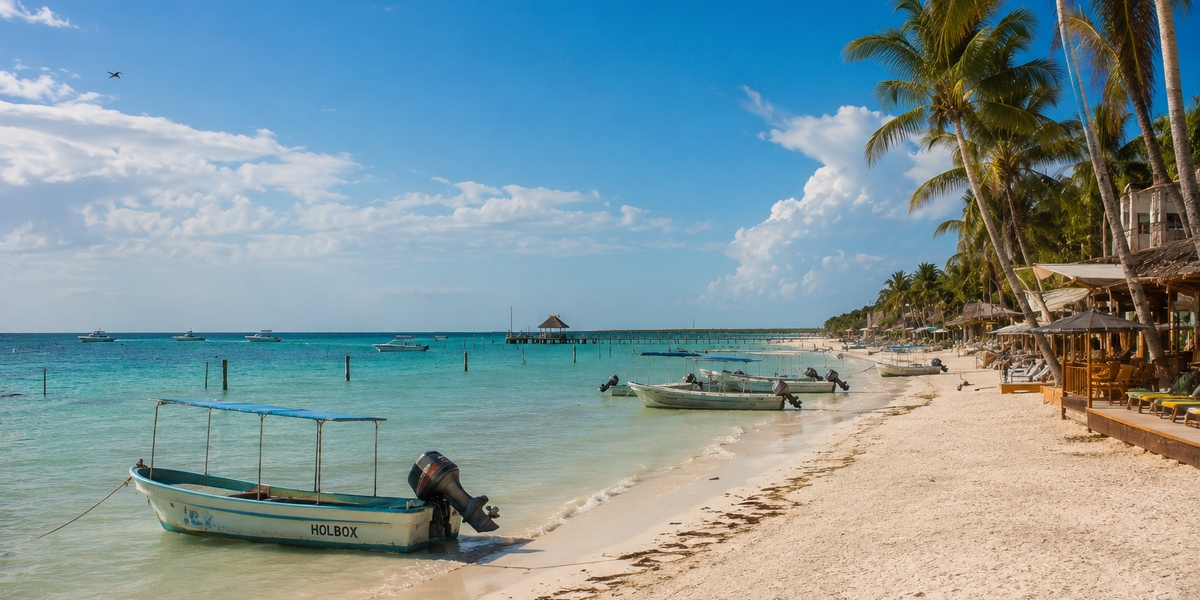
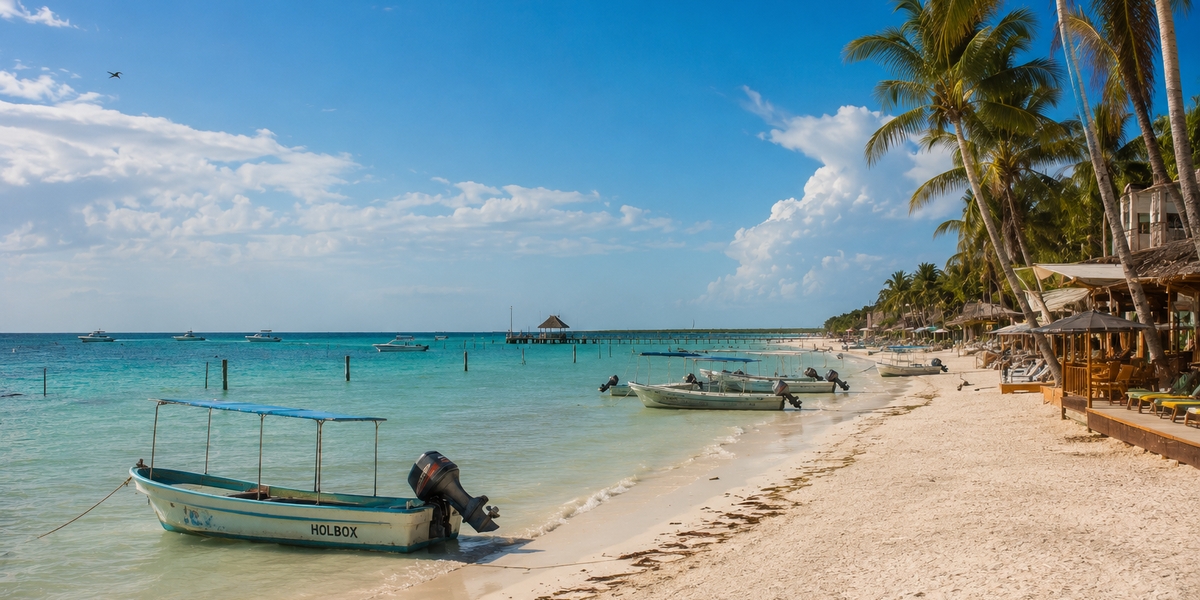
Holbox arrives in your feed as a single mood: a barefoot sandy lane, a hammock strung over shallow water, flamingos in the distance, nobody in a hurry. Most of that is real. What the photos quietly leave out is that the water is not the glass-clear Caribbean of Cancun, that getting there eats a half day, and that the mosquitoes are a genuine character in the story. None of that is a reason to skip Holbox. It is a reason to go on purpose.
This is a small sandbar island off the north coast of the Yucatan Peninsula, where the Gulf of Mexico meets the Caribbean. There are no cars, the streets are sand, and the whole place sits inside a federally protected nature reserve. It draws a specific kind of traveler — and politely frustrates everyone else.
So this guide does the honest version. How you actually reach the island, what the water and the days really feel like, when to go for whale sharks versus comfort, how long to stay, and the clear-eyed answer to the only question that matters: is Holbox right for the trip you're planning? If you're still choosing between Mexican beach bases at all, start with the wider first-time Mexico vacation planner and come back here once Holbox is on the shortlist.
Quick Answer: Should You Go to Holbox?
Go to Holbox if you want a slow, car-free island with calm shallow water, big skies, and almost nothing to do but unwind — and you can accept lagoon-colored water instead of clear Caribbean blue. Skip it, or keep it to a side trip, if you want nightlife and resorts, busy days full of options, or simple logistics.
- Where: a sandbar island off the north Yucatan coast, reached only by ferry from Chiquila.
- Getting there: about a 2–2.5 hour drive from Cancun to Chiquila, then a 25–30 minute ferry.
- The catch: shallow, milky-turquoise lagoon water — calm and warm, but not postcard-clear.
- Best for: slow-travel couples, nature lovers, families wanting calm water, and people who want to disconnect.
Sunset walks on the sandbar, dinner by candlelight on a sand street, no schedule. Holbox was built for this pace.
Flamingos, whale shark season, bioluminescent nights and reflective shallows make this one of the most photogenic spots in the region.
Warm, shallow, wave-free water is genuinely good for young kids, and the car-free streets ease one worry.
If a clear, swimmable, postcard beach is the whole point of the trip, clarity is the one thing Holbox trades away — the section below names where to go instead.
How to Get to Holbox From Cancun
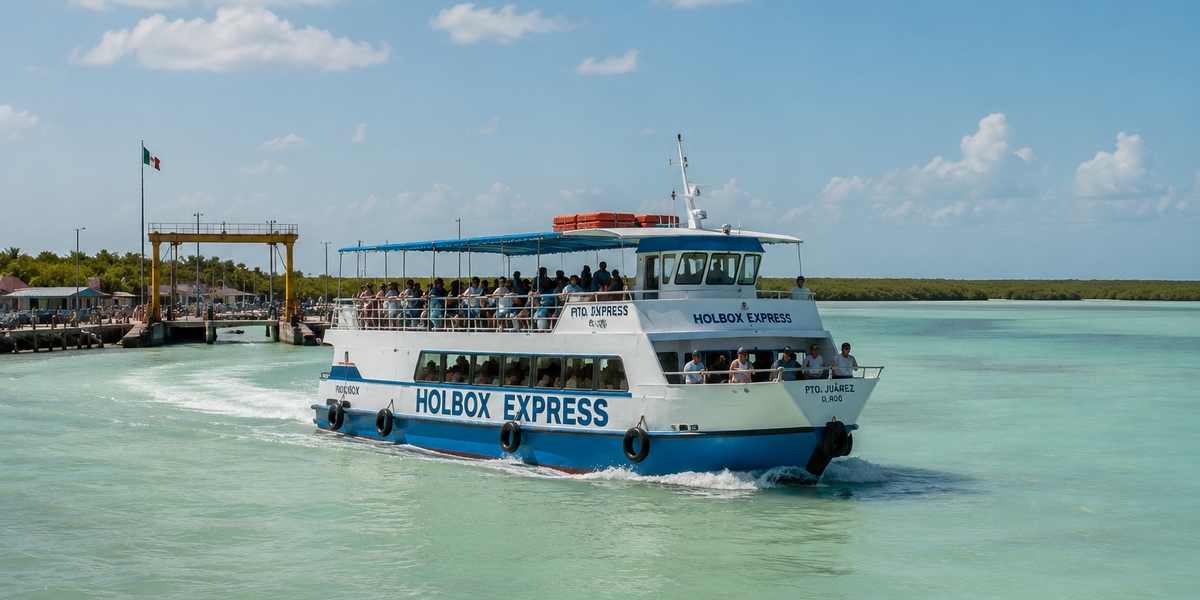
There is exactly one way onto the island, and understanding it up front prevents the most common planning mistake. Holbox has no airport and no road across the water. Everyone — backpacker and honeymooner alike — funnels through the same small mainland port, Chiquila, and crosses by passenger ferry. Your car, if you drove, waits in a Chiquila parking lot until you come back.
Where almost every Holbox trip begins. Build the journey into your first and last day, not a tight connection.
By private transfer, rental car, or ADO bus. A straightforward highway run, but it is a real chunk of the day.
Holbox Express and 9 Hermanos run crossings roughly every 30 minutes from early morning to mid-evening, about $10–12 each way. Cars stay behind in secured Chiquila lots.
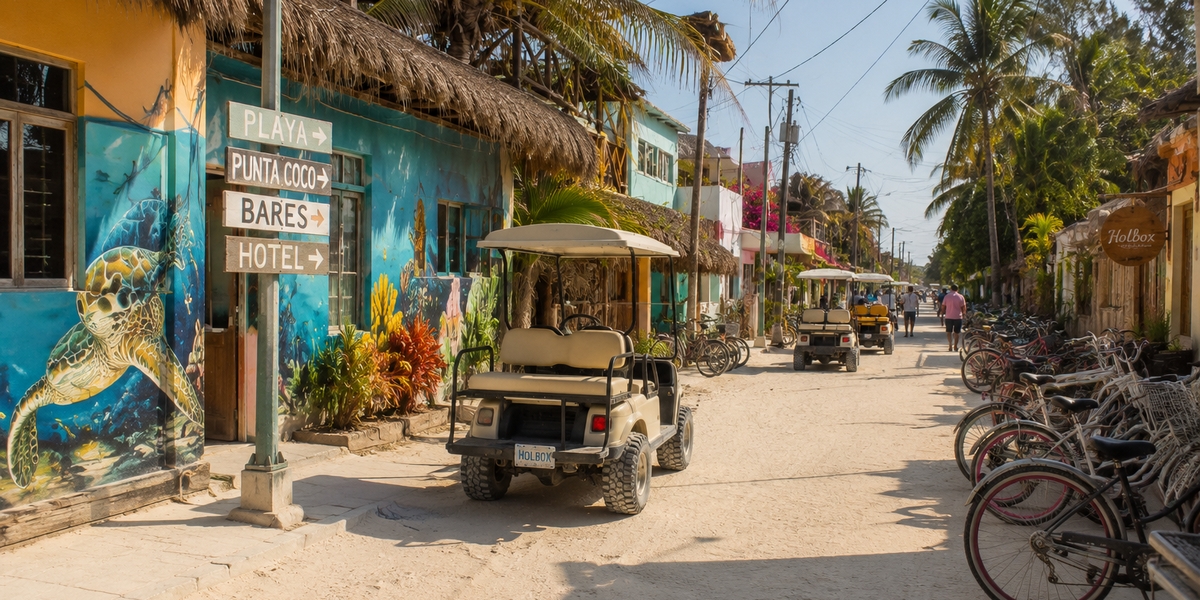
Golf-cart taxis meet the ferry. From here, the pace drops and the schedule disappears.
A quick worked example, because the time adds up in a way people underestimate: from Cancun airport, the Chiquila dock is about a 2 to 2.5 hour drive, the crossing adds another 25 to 30 minutes, and the last convenient return ferries leave in the early evening. Realistically you lose a half day in each direction. That math is exactly why a day trip rarely makes sense, and why two nights is the practical floor.
On the choice of transport: the ADO bus is the budget option and runs to Chiquila, a private transfer is the low-stress option if you want to be dropped straight at the dock, and a rental car only pays off if you're combining Holbox with inland stops like Valladolid or the pink lakes — otherwise it just sits in a parking lot accruing daily fees. If you're weighing it, the rental car guide for Cancun and the Riviera Maya covers when a car genuinely helps and when it's dead weight.
The Water Reality (Read This Before You Book)
If you take one thing from this guide, take this. The most common Holbox disappointment isn't the mosquitoes or the journey — it's the water, because travelers arrive holding a Cancun postcard in their heads. Holbox sits over a shallow, sandy, seagrass-flecked shelf where the Gulf of Mexico blends into the Caribbean. The water is warm, flat, and so shallow you can wade out a remarkable distance. What it is not is glass-clear. It reads milky green to pale, chalky turquoise — the color of fine white sand suspended in shallow, plankton-rich Gulf water, the same nutrient load that feeds the whale sharks offshore — and a windy day stirs the bottom and clouds it further.
This isn't pollution or a bad-luck week; it's simply what a shallow sandbar lagoon looks like. Set against the deep, clear blue of Isla Mujeres or Cozumel, Holbox loses on clarity every time. Set against those islands on calm, wild, golden-hour beauty, it often wins. The trick is knowing which of those two things you actually want.
There is an upside that rarely makes the brochures. Because Holbox faces north into the Gulf rather than east into the open Atlantic, it largely sidesteps the sargassum seaweed that hammers the Riviera Maya's east-facing beaches in summer. In a record sargassum year, that protected geography is a real, underrated advantage — the broader pattern is mapped in our look at how the 2026 season is reshaping where to stay. You trade clarity for calm, and you also trade away most of the seaweed risk.
What Holbox Is Actually Like
Picture a single sandy main strip, a handful of cross-streets, golf carts purring instead of cars, and bicycles everywhere. Murals cover the walls; the village is genuinely walkable end to end. After rain the sand streets puddle and you learn to read the dry edges. By night, the action is dinner, a drink, and the sky — there's a low-key bar scene, but no clubs, no Coco Bongo, no buzz spilling from a tower next door.
The island's pull is its nature, and most of it is seasonal, so manage expectations by date rather than hope. A few things genuinely set Holbox apart:
Whale sharks
One of the world's most reliable seasons for swimming alongside the gentle giants. Tours leave Holbox by boat; Mexican rules cap each group to two swimmers and a guide in the water at a time and ban touching or sunscreen, so book a licensed operator, not the cheapest.
Bioluminescence
On new-moon nights in the warmer months, the shallows glow blue when disturbed. It's faint, weather-dependent, and best away from village lights — magical when it lines up, a no-show when it doesn't.
Sandbars & flamingos
Long, shallow sand spits you can walk far out on, with flamingos and wading birds drawn to the lagoon. The island sits inside the Yum Balam Flora and Fauna Protection Area, decreed in 1994 and managed by Mexico's CONANP, which is why the mangroves and birdlife are still intact.
Doing very little
The honest core attraction. Hammocks, slow lunches, a bike to the quieter beach, a sunset that empties the bars onto the sand. If "nothing planned" sounds like a flaw, that's useful to know now.
Holbox shows up on a lot of day-trip lists from Cancun, which is misleading — it's the one place on most of those lists that actively punishes a rushed visit. It is an overnight destination wearing a day-trip costume.
When to Go: Whale Sharks vs Comfort
Holbox has an awkward calendar: the headline wildlife and the most comfortable weather pull in opposite directions, so you usually pick one. The dry, breezier, lower-humidity stretch runs roughly November through April, with fewer mosquitoes and the most pleasant days. That's the comfort window. The whale shark season, the reason many people come at all, runs about mid-May or June through mid-September and peaks in July and August — the hottest, wettest, buggiest part of the year.
So decide what anchors the trip. If swimming with whale sharks is the dream, you accept heat, afternoon downpours, and insects as the cost of the ticket, and you go in summer. If you mostly want calm beach days, biking, sunsets, and a comfortable room, the winter months are clearly better, and you simply miss the whale sharks. Bioluminescence leans toward the warmer, darker new-moon nights, which nudges slightly toward the summer side. There is no month that quietly gives you everything, and pretending otherwise is how people end up sweating through a August trip they booked for the "beach."
Who Should Visit Holbox — and Who Shouldn't
This is the decision the whole guide builds toward. Holbox is unusually polarizing: the same traits that make one traveler call it the best stop of their trip make another count the hours until the ferry back. Match yourself honestly to a row below rather than to the photos.
Slow-travel couples
You want to disconnect, eat well, walk the sandbar at sunset, and not look at a schedule. Holbox is close to ideal.
Nature & wildlife travelers
Whale sharks, flamingos, birdlife, bioluminescence and a protected reserve — you're here for the ecosystem, and you time the trip to the season.
Families with young kids
Warm, shallow, waveless water and car-free streets are real wins for little kids. Just pack strong repellent and skip the stroller — sand streets defeat wheels.
Beach-clarity seekers
If the dream is clear, swimmable, snorkel-from-the-sand water, Holbox will let you down — this is the one priority it simply can't satisfy.
Nightlife & resort travelers
No clubs, no big-brand all-inclusives, no buzz. If you want energy and full resort amenities, this is the wrong island entirely.
Tight, comfort-first trips
Short on days, sensitive to heat and bugs, or unwilling to trade comfort for character? The journey and the rough edges won't feel worth it.
The pattern is simple once you see it: Holbox rewards travelers who value atmosphere over amenities, and frustrates the ones who don't. If clarity and an easy day-trip matter more, the swimmable north-coast alternatives are the better fit — compare Isla Mujeres and the region's best snorkeling spots before you commit.
How Long to Stay on Holbox
Because the journey is a half day each way, length of stay is really a question of whether the island gets enough of your time to pay back the transit. The island is small and the appeal is doing little, so this is less about "fitting everything in" and more about not arriving and immediately packing.
Enough to get one full, unhurried day plus a sunset or two, and to make the drive-and-ferry worth it. Below this, you're commuting more than visiting.
Time to settle into the pace, fit a whale shark or sandbar tour, bike to the quieter beaches, and still have a do-nothing day. This is where Holbox clicks for most people.
Wonderful if disconnecting is the entire goal. If you need variety, restaurants, or activities, this is where a small island can start to feel small.
A common smart pattern is to bookend Holbox with the mainland: a couple of nights on the island to slow down, then back to Cancun or the Riviera Maya for the things Holbox doesn't do. If that sounds like your style, the Riviera Maya explained guide shows how the pieces of a multi-base trip fit together.
Holbox Mistakes Travelers Make
Most Holbox regret is avoidable. Nearly all of it traces back to expecting a different island than the one that's actually there.
Expecting clear Caribbean water. The single biggest letdown. Holbox is shallow lagoon water — calm and warm, not glass-clear. Decide if that's a dealbreaker before you book, not after the ferry.
Treating it as a day trip. Half a day of transit each way for a few rushed hours fights everything Holbox is good at. Stay at least two nights or save it for another trip.
Underpacking repellent. The mosquitoes and sand flies are real, especially at dusk and in summer. Strong repellent isn't optional; it's the difference between charming and miserable.
Assuming card-everywhere and full comfort. Bring cash, expect the occasional power blip, and don't assume big-resort amenities. Holbox runs on small eco-stays and a slower kind of infrastructure.
Sources Checked
Sources checked on June 15, 2026. Ferry schedules and fares, whale shark season dates, and island infrastructure all shift by operator, season, and year, so confirm the current details close to travel — especially the ferry times for your arrival day and whether whale shark tours are running.
How this guide was checked: We cross-referenced the Yum Balam protected-area designation from Mexico's CONANP, the federal whale-shark interaction rules published by SEMARNAT, current Holbox Express and 9 Hermanos ferry schedules and fares from Chiquila, and regional climate and whale-shark-season data. The aim is realistic expectations — water, weather, wildlife timing, and logistics — not a promise about one specific day.
Frequently Asked Questions
How do you get to Holbox from Cancun?
Holbox has no airport, so everyone arrives the same way: get to the small port town of Chiquila, then take a passenger ferry across. From Cancun, Chiquila is roughly a 2 to 2.5 hour drive north by private transfer, rental car, or the ADO bus. Passenger ferries run frequently through the day, take about 25 to 30 minutes, and cost roughly 10 to 12 US dollars each way. Cars stay in Chiquila parking lots; you do not bring a vehicle onto the island.
Is the water in Holbox as clear as Cancun or Cozumel?
No, and this is the single biggest expectation gap. Holbox sits where the Gulf of Mexico meets the Caribbean, over a shallow, sandy, seagrass-dotted shelf. The water is warm, calm, and ankle-to-waist deep far from shore, but it reads milky green or pale turquoise rather than the deep glass-clear blue of Cancun, Isla Mujeres, or Cozumel, and wind can cloud it further. If your mental picture is postcard-clear Caribbean water, Holbox will disappoint; if you want shallow, calm, walk-out water and big skies, it delivers.
Who should visit Holbox, and who will be disappointed?
Holbox suits slow-travel couples, nature lovers, photographers, and families who want calm shallow water and a car-free pace. It rewards people who come to disconnect. It disappoints travelers who want clear Caribbean swimming water, nightlife and big resorts, guaranteed luxury comfort, or simple short-trip logistics, and anyone who reacts badly to heat and mosquitoes. Holbox is an atmosphere and a slowdown more than a beach-clarity destination.
When is the best time to visit Holbox?
The dry, more comfortable window runs roughly November through April, with lower humidity and fewer mosquitoes. Whale shark season is separate and runs about mid-May or June through September, peaking in July and August, which is also hotter, wetter, and buggier. Bioluminescence is most visible on dark, new-moon nights in the warmer months. There is no single perfect month: pick by whether you are chasing whale sharks or chasing comfort, because they rarely line up.
How many days do you need on Holbox?
Because of the drive-plus-ferry journey, anything under two nights spends more time in transit than on the island. Two nights is the realistic minimum to justify the trip, three to four nights is the sweet spot for actually relaxing into the pace and fitting a tour or a sandbar trip, and five or more nights suits true slow travelers but can feel like enough for people who need variety. Holbox is small and the appeal is doing very little.
Can you do Holbox as a day trip from Cancun?
Technically yes, realistically no. The drive to Chiquila is about 2 to 2.5 hours each way, the ferry adds 25 to 30 minutes, and the last convenient return ferries leave in the early evening, so a day trip loses a half day in each direction and gives you only a few rushed hours on the island. Holbox is built around slowing down; a day trip fights everything that makes it worth visiting. If your time is that tight, Isla Mujeres is a far better day-trip island.
Decide on Holbox in One Minute
The short version, if you don't want to re-read the whole thing.
If you remember one line: Holbox is worth it for the right traveler and a quiet letdown for the wrong one — and which one you are is entirely predictable before you book.
Go if you want a car-free, end-of-the-road island where the plan is no plan, the water is calm and shallow, and flamingos, whale sharks, or a glowing sea might show up if your timing is right. Accept the half-day journey, the mosquitoes, and the milky water as the price of a place the big resorts never reached.
Skip it — or keep it to a side trip on a longer itinerary — if clear swimming water, nightlife, or easy logistics matter more to you than atmosphere. Holbox doesn't try to please everyone, and that's exactly why the people it fits keep going back.