
Summer is the season Cancun's marketing quietly avoids. The brochure shots come from winter — flat turquoise water, hard low-humidity sun — while June, July and August are hotter, stickier, stormier, and carry the region's higher seaweed risk. That's the honest starting point, and it's why some travelers come home disappointed.
"Skip it," though, is the wrong conclusion for a lot of people. Summer is also when school's out, when prices drop well below the winter ceiling, and when the sea is at its warmest. For a family tied to the calendar or a traveler chasing value, summer isn't a compromise — it's the smart window, as long as you know what you're walking into.
This guide is the reality check: what the heat and the daily storms actually do, how summer differs month to month, where 2026's record sargassum forecast fits in, and who should book these months on purpose rather than by accident.
Quick Answer: What Cancun Summer Is Really Like
The short version: hot, humid, and reliably stormy in the afternoon, with the year's higher seaweed risk and the start of hurricane season — traded for low-season prices, the warmest sea, and fewer winter-style crowds. It works beautifully for travelers who plan around the heat, and frustrates the ones who expect a dry, glassy winter beach in July.
Best for: value travelers and school-break families. Worst for: travelers who need guaranteed clear beaches and dry, sunny weather.
- Heat: highs around 32–35°C (90–95°F), feels hotter with humidity — pace the day.
- Rain: short, heavy afternoon thunderstorms, not all-day grey — mornings are usually sunny.
- Sea: warmest of the year, around 29°C (84°F) — bath-like and calm between storms.
- Seaweed: higher risk; June–July are the heaviest months, and 2026 is forecast as a major year.
- Hurricanes: season opens June 1, but the real risk climbs in August–October.
- Price: low season — often the cheapest mainstream window to visit.
Summer rates undercut the winter peak, and the heat is a fair price to pay if your priority is a warm, cheap beach week.
Often the only realistic window. With the right resort — pools, shade, activities — the heat and afternoon storms stop mattering.
If your ideal is a flawless, seaweed-free, sun-all-day beach, summer is the wrong bet. Winter delivers that; summer gambles on it.
The Heat: What the Numbers Actually Feel Like
On paper, summer highs of 32 to 35°C (90 to 95°F) don't sound extreme — plenty of North American cities hit that. The difference is humidity. Cancun in July sits in thick, wet air, and the "feels like" number routinely pushes past 38°C (100°F). Step outside at midday and the heat is immediate and physical in a way the forecast undersells. Nights stay warm too, often holding around 25°C (77°F), so there's no real overnight cool-down.
This changes how you use the beach. A bright, exposed stretch of sand at 1pm is genuinely punishing in summer, and the sun is strong enough to burn fast. The flip side is the sea: the Caribbean reaches its warmest of the year, roughly 29°C (84°F), so the water gives almost no relief but feels wonderful for long, lazy swims. Shade, a breeze, and a pool become non-negotiable rather than nice-to-have.
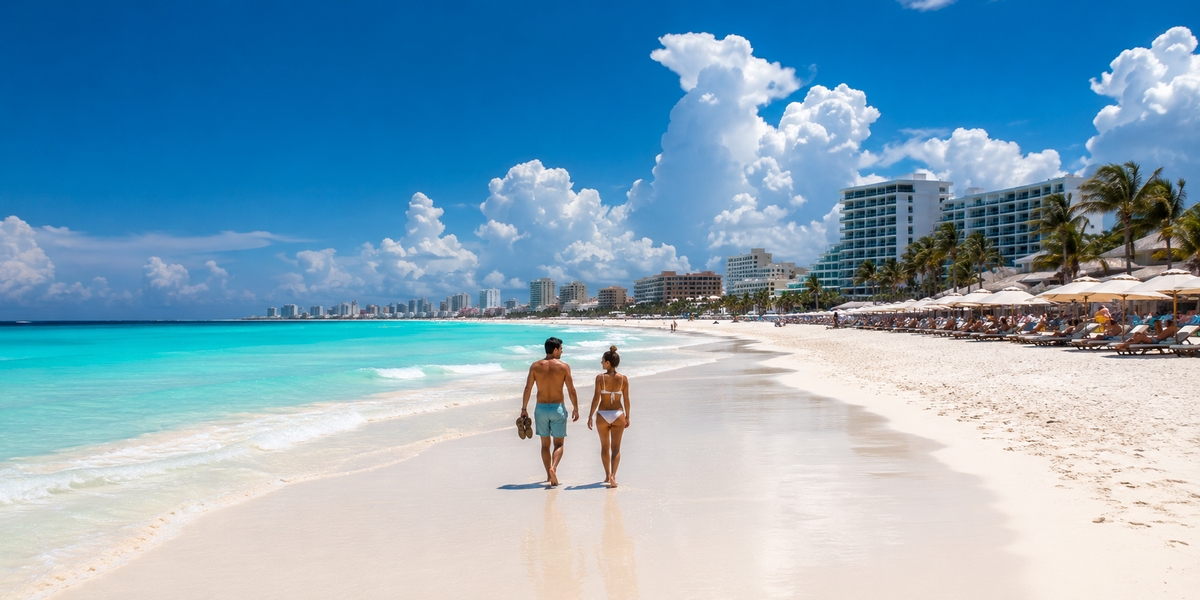
A few concrete tells: the sand on an open beach gets too hot to cross barefoot by late morning, sunscreen sweats off faster than you expect, and the breeze drops to nothing in the early afternoon, which is exactly when the air feels heaviest. None of this makes summer unbearable — but it does mean the travelers who struggle are usually the ones who booked a beachfront room and then tried to spend midday on the beach. Front-load the day, and the heat stops being the story.
The Afternoon Storm Pattern
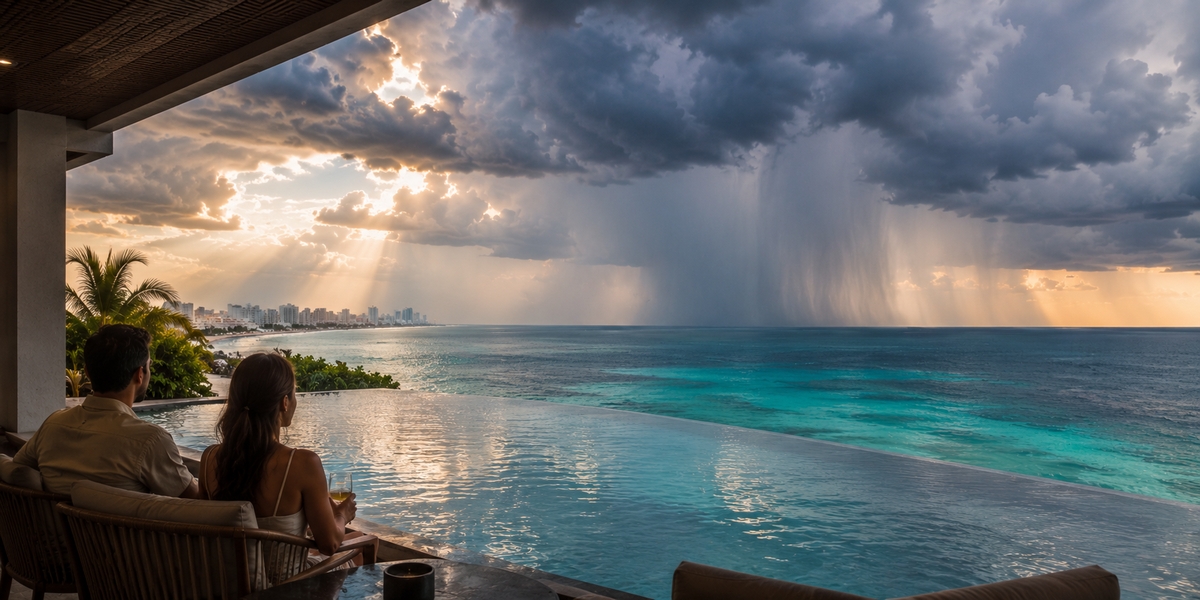
Here's the thing first-timers most often get wrong: they see "rainy season" and picture a week of grey downpours. That's not how Cancun summer usually works. The classic pattern is a sunny or partly-cloudy morning, building heat and humidity through midday, then a short, dramatic thunderstorm in the afternoon or early evening — heavy rain, thunder, sometimes a spectacular sky — that often clears within an hour or two. Mexico's national weather service, the Servicio Meteorológico Nacional, tracks this convective build-up daily through the wet season.
The practical upshot is that you usually lose an afternoon hour, not a day. Storms are also why the air feels briefly fresher afterward, and why sunset can be unexpectedly beautiful. What you can't count on is a perfectly dry week: some summers deliver multi-day rainy stretches, especially when a tropical system passes nearby, and that's a different conversation covered in the Cancun rainy season guide.
June vs July vs August, Month by Month
Summer isn't one block. The three months share the same heat-and-storm template, but they diverge on the two things travelers most want to control: seaweed risk and hurricane odds. This is how the months stack up before you pick your dates.
| Factor | June | July | August |
|---|---|---|---|
| Daytime high | ~32°C (90°F) | ~33°C (91°F) | ~33°C (92°F) |
| Humidity / "feels like" | High | Very high | Very high |
| Sea temperature | ~28°C (83°F) | ~29°C (84°F) | ~29°C (85°F) |
| Rain pattern | Afternoon storms | Afternoon storms | Storms, more humid |
| Seaweed risk | Often heaviest | Often heaviest | High, variable |
| Hurricane risk | Low | Low–moderate | Rising |
| Crowds | Moderate | Busy (holidays) | Busy early, easing |
| Prices | Low | Higher in peak weeks | Low, dropping late |
The pattern that matters: June and July tend to carry the heaviest seaweed, while August trades a little of that for a rising hurricane risk and the stickiest air. July is also when North American and European school holidays overlap, so resorts can be busier and pricier than the low-season label suggests, especially mid-month. If your dates are flexible, early June and late August often give you the quietest, cheapest version of summer — with the caveat that late August leans further into hurricane season. Figures here are seasonal averages, not forecasts; check current data close to travel.
Best summer month, by priority:
- Cheapest → early June
- Lowest hurricane risk → June
- Warmest sea → August
- Lines up with school holidays → July
- Best overall balance → late August
Summer Sargassum and the 2026 Context
If there's one summer variable worth understanding before you book, it's sargassum — the brown seaweed that drifts onto Caribbean beaches in warm months. The general calendar runs from roughly May through October, with the heaviest landings most often in June and July, which puts the core of summer squarely in the higher-risk window.
2026 raises the stakes. The University of South Florida's Optical Oceanography Lab, which tracks the Atlantic bloom by satellite, has flagged this year as potentially a record season for the region, driven by a large leftover bloom from 2025 and high Atlantic nutrient levels. The counterintuitive part is that the season started early, with seaweed reported on Quintana Roo beaches months ahead of the historical average. A record forecast doesn't mean every beach is buried every day — it means the margin for error is smaller, so where you stay matters more than usual.
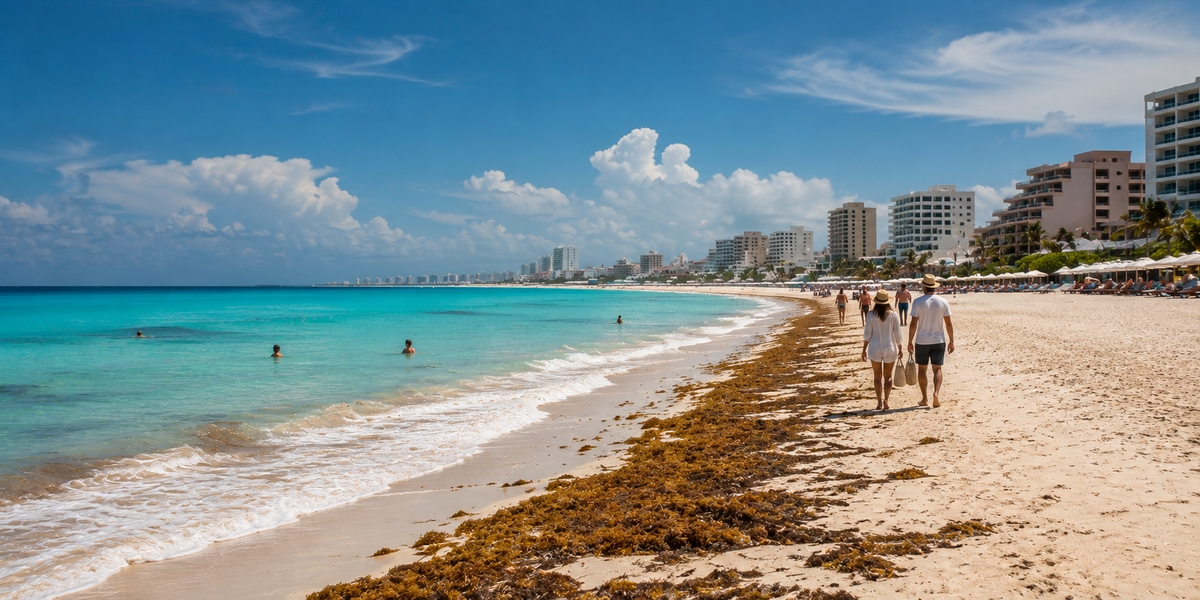
The practical move is simple: don't book a summer beach trip on the strength of old photos. A flawless March shot tells you nothing about your week in July. Check recent reviews and beach cams in the weeks before you travel, lean toward zones with better cleanup operations, and keep your expectations honest. Plenty of summer travelers still get excellent beach days — they just don't assume them.
How a Smart Summer Day Is Shaped
The single biggest difference between travelers who love Cancun in summer and those who endure it isn't luck with the weather — it's how they structure the day. The heat and the storm clock are predictable, so you build around them instead of being ambushed. Here's the shape of a day that works.
The coolest, clearest, calmest stretch of the day. Beach, ocean swim, snorkeling, or a tour all belong here, ideally wrapped up before the midday heat peaks around noon.
The brutal hours. This is when a cenote (naturally cool, shaded, often cave-like), a long lunch, a museum, or the resort pool earns its place. Don't fight the sun head-on.
The daily thunderstorm window. Keep plans loose and indoor-friendly. An hour of heavy rain is normal; it usually clears, often leaving fresher air and a dramatic sky behind.
Post-storm evenings are the best part of a summer day: cooler, calmer, often beautiful. This is prime time for the beach again, dinner, sunset, and a slow walk when the heat finally breaks.

Cenotes deserve a special mention here, because they're the closest thing summer has to a cheat code. While the coast bakes, these freshwater sinkholes inland sit at a refreshing, steady temperature year-round, with shade and often a swimmable cave. On a 35-degree July afternoon, that contrast is the difference between a miserable day and a memorable one — and it's a uniquely Yucatán option you won't find at most beach destinations.
The Upside: Prices, Crowds and Value
Everything above is the cost side of summer. The return is the price. Summer is low season on this coast — demand drops once the winter-escape and spring-break waves pass — so the rates that feel impossible in late December become genuinely accessible in July. For most travelers, that, not the weather, is the real reason to look at these months. It also shows up beyond the room rate: tours, car rentals, and beach clubs are easier to book last-minute and less likely to be sold out than in the winter peak.
To put it in concrete terms: a Hotel Zone all-inclusive that asks around $400 a night over the New Year peak can sit closer to $230–$280 for a comparable week in early June or late August — very roughly a 20–40% drop for the identical room, with flights from North America also softer than the winter and spring-break peaks. Those are illustrative figures, not quotes; the gap varies by property and exact dates, so always compare live rates. But the direction is dependable, and it can turn a trip that didn't fit the budget in winter into one that does.
Crowds are a more nuanced picture. Summer avoids the wall-to-wall winter-escape density, but it isn't empty — the July school-holiday weeks bring their own North American and Mexican domestic crowds, so "low season" doesn't mean "deserted" in mid-summer. Those weeks also load up the airport and the highway, so a pre-booked ride beats the arrivals-hall scramble — the Cancun airport transfer options guide covers the choices. Early June and the back half of August are the calmer pockets.
If summer's lower rates are what's drawing you in, an all-inclusive is where the saving is easiest to lock in — especially when the midday heat and afternoon storms mean you'll lean on the resort's pools, shade, and dining more than you would in winter.
Compare Cancun all-inclusive resorts for summer dates Compare Cancun all-inclusive resortsOne more piece of the math, and it's the one people overlook: in summer, a strong all-inclusive earns its keep precisely because you'll spend more hours on-property. When the beach is off-limits at midday and the afternoon storm rolls through, the value of good pools, indoor space, and included food and drinks climbs. The calculation that favors eating out in pleasant winter weather often flips in a hot, stormy July.
Who Summer Actually Suits
Summer is the clearest example on the Cancun calendar of a season that's genuinely right for some travelers and genuinely wrong for others. Match yourself honestly to the profile rather than the price tag.
Families on school break
→ For many, summer is the only window that works, and it works well with the right base. A resort with pools, shade, and kids' activities means heat and storms barely register. See the Cancun family vacation guide for choosing one.
Value-first travelers
→ If a warm, cheap beach week beats a perfect-but-pricey one, summer delivers. You accept heat, humidity, and seaweed odds in exchange for the lowest mainstream rates of the year.
Dry-beach perfectionists
→ If your trip lives or dies on a flawless, seaweed-free, sun-all-day beach, summer is a gamble. Winter is built for that expectation; summer can't promise it.
Late-summer & flexible bookers
→ August's deals are real, but so is the rising storm risk. If you book late summer, lean on flexible rates and insurance — the hurricane season guide explains the timing.
Mistakes Summer Travelers Make
Most summer disappointment in Cancun isn't bad luck. It's a winter mindset applied to a summer trip.
Planning beach time for the middle of the day. The 12–3pm window is the hottest and most exposed. Travelers who build their beach mornings and use midday for shade or cenotes have a completely different trip from those who bake at noon and wonder why summer felt unbearable.
Booking on the strength of old beach photos. A gorgeous winter or spring shot says nothing about summer sargassum. With 2026 forecast as a heavy year, recent beach reports and reviews beat any single image — check them close to travel.
Treating hurricane season as a non-issue or a deal-breaker. Both extremes are wrong. June–July risk is low; August starts to climb. The right response isn't panic or denial — it's a flexible rate and travel insurance, then enjoy the trip.
Underestimating the sun and the humidity. The summer sun burns fast and the humid air dehydrates quietly. Skipping high-SPF sunscreen, a hat, and steady water intake turns day two into a recovery day. The packing guide covers the essentials.
Sources Checked
Sources checked on June 24, 2026. Summer weather, sargassum landings, hurricane activity, and hotel pricing all shift year to year and by exact dates, so verify current forecasts, beach reports, and rates close to travel — especially for trips in July and August.
How this guide was checked: We compared regional climate data for Cancun's June–August temperature, humidity, rainfall, and sea conditions; the University of South Florida's 2026 sargassum outlook and monitoring; the U.S. National Hurricane Center / NOAA framing of Atlantic hurricane season; and Mexico's Servicio Meteorológico Nacional bulletins, alongside seasonal pricing and crowd patterns reported by travelers. The aim is to set realistic expectations for the season, not to forecast any single beach day.
Frequently Asked Questions
Is it too hot to enjoy Cancun in summer?
Not if you pace the day. Summer highs sit around 32 to 35 degrees Celsius (90 to 95 Fahrenheit), and high humidity makes it feel hotter, but the heat is manageable when you front-load the day. Locals and seasoned travelers hit the beach early, head somewhere shaded or underground around midday, and let the afternoon thunderstorm cool things off. People who try to lie on an exposed beach at 2pm in July are the ones who find summer brutal.
Does it rain all day in Cancun in June, July and August?
Rarely. Summer rain in Cancun usually comes as a short, heavy afternoon or early-evening thunderstorm rather than an all-day grey-out. Mornings are often sunny, the storm rolls through in the afternoon, and skies frequently clear again by evening. You should plan around a daily storm window, not around losing whole days to rain.
Will there be seaweed (sargassum) on Cancun beaches in summer?
Summer is the higher-risk window, with the heaviest landings typically in June and July. The University of South Florida has flagged 2026 as a potentially record sargassum year for the Mexican Caribbean, which raises the odds of heavy beach days, though it does not mean every beach is covered every day. Conditions vary by location and by week, so check recent beach reports and reviews close to travel rather than assuming a clean shoreline.
Is summer hurricane season in Cancun?
Atlantic hurricane season runs from June 1 to November 30, but the genuinely higher-risk months for this coast are August through October. June and July carry a low but real risk, while August is when the odds start climbing. A direct hit during a one-week trip is statistically unlikely, but it is the reason flexible bookings and travel insurance matter more in summer than in winter.
How much cheaper is Cancun in summer than in winter?
Summer is low season, so rates are meaningfully below the December to January peak, often roughly 20 to 40 percent lower at the same resort, with the steepest savings outside the U.S. summer-holiday weeks. Flights from North America also tend to be cheaper than the winter and spring-break peaks. The exact gap depends on the property and dates, so compare live rates, but the direction is consistent: summer is one of the cheapest times to visit Cancun.
Is summer a good time to take kids to Cancun?
For many families it is the only realistic window, because it lines up with school summer break, and it works well if you choose the right base. A resort with good pools, shade, and on-site activities means a hot afternoon or a rainy hour is no problem, and the warm, calm sea suits younger swimmers. The trade-offs to plan around are the heat, the afternoon storms, and summer sargassum risk rather than safety or logistics.
Plan a Cancun Summer in One Minute
The short version, if you don't want to re-read the whole thing.
If you remember one thing: Cancun summer trades the dry, glassy winter beach for heat, daily storms, and seaweed odds — and hands you low-season prices and the warmest sea in return.
Choose summer if you're tied to school break or chasing value, and you're willing to run the day on the local rhythm: beach early, escape the midday sun, ride out the afternoon storm, enjoy the cooler evening. Lean toward early June or late August for the quietest, cheapest version, and keep your beach expectations honest about sargassum.
Skip it if a perfect, seaweed-free, sun-all-day beach is the entire point of your trip — that's a winter promise, and summer can't make it. Booked smartly, though, June through August is far better than its reputation, and for a lot of travelers it's the only time the trip actually fits.