
If you live on the US East Coast and want warm water without a long-haul flight, two names come up first: Cancun and the Bahamas. They look interchangeable in a search results page — turquoise water, white sand, big resorts — and that is exactly where people go wrong.
They are not the same vacation, and the reason is structural, not scenic. The Bahamas sits a little closer to the Northeast and runs on a currency locked to the US dollar, so it feels effortless to reach. Cancun sits farther southwest but is the engine room of all-inclusive travel, which means your money usually stretches further once the wheels touch down.
So the real question is not which beach is prettier. It is whether you are buying a short, familiar, premium-feeling trip, or a better-value week where food and drinks are already paid for. This guide sorts that out for an East Coast traveler.
Quick Answer: Which One Fits Your Trip?
The short version: choose the Bahamas for the shortest flight from the East Coast, US-dollar ease, and signature beaches, and choose Cancun for better value, deep all-inclusive options, and more to do beyond the sand.
The region's all-inclusive capital: food, drinks, and tips bundled into one rate, plus cenotes, Maya ruins, and island day-trips within easy reach.
Closer from the Northeast, priced in US dollars, with clearer water and the iconic pink sand of Harbour Island.
If you only read one thing, here is the quick winner by category:
| Category | Winner |
|---|---|
| Cheapest overall trip | Cancun |
| Best beaches & water | Bahamas |
| Best all-inclusive | Cancun |
| Shortest flight (Northeast) | Bahamas |
| Best for families | Cancun |
| Best for a long weekend | Bahamas |
- Choose Cancun if — value matters, you want all-inclusive, and you like having ruins, cenotes, and islands a day-trip away.
- Choose the Bahamas if — you want the shortest flight from the East Coast, zero currency friction, and postcard water.
- Lean Cancun for families, first Caribbean trips on a budget, and anyone who wants food and drinks covered.
- Lean Bahamas for a quick premium getaway, boutique island charm, or a Florida-close weekend.
At a glance, here is how the two compare on what East Coast travelers ask about most:
| What matters | Cancun | Bahamas |
|---|---|---|
| Flight from East Coast | Slightly longer; usually cheaper fares | Shorter, especially from the Northeast |
| All-inclusive value | Deep range, every budget | Mostly room-only; few true all-inclusive |
| On-the-ground cost | Lower, easier to control | Higher across the board |
| Beaches & water | One long barrier beach; sargassum risk | Iconic water, pink sand, clearer shallows |
| Currency | Mexican peso (FX and tips to manage) | Pegged 1:1 to the US dollar |
| Best for | Value, all-inclusive, variety, families | Proximity, ease, signature beaches, boutique |
The Core Difference: Proximity vs Value
Almost every other difference traces back to one thing. The Bahamas is the easier place to reach and pay in; Cancun is where your money goes further once you have arrived. Nassau is closer to the Northeast, and because the Bahamian dollar is pegged one to one with the US dollar, you never touch a foreign currency — dollars work everywhere, tips are in dollars, and there is no exchange math at dinner. For a lot of East Coast travelers, that frictionlessness alone is worth paying for.
Cancun's advantage shows up once you have landed. It is the most developed all-inclusive market in the hemisphere, so the same money buys a more complete vacation: meals, drinks, entertainment, and often a kids' club folded into one nightly rate. It is also a far better base for doing things — cenotes, Maya ruins like Chichen Itza and Tulum, and a 20-minute ferry to Isla Mujeres all sit within day-trip range. The Bahamas keeps you close to the resort and the water; Cancun hands you a whole region to explore.
Here is the part people underestimate. The Bahamas can feel deceptively expensive once you arrive, because the headline room rate is just the start — dining, drinks, and a stack of taxes and fees pile on top. Cancun front-loads the cost into one number and then mostly leaves you alone. If you have ever been surprised by a resort bill at checkout, that distinction is the whole article.
Cancun vs Bahamas Flights & Getting There
This is where the Bahamas earns its reputation as the easy option, but the answer depends on where on the East Coast you start.
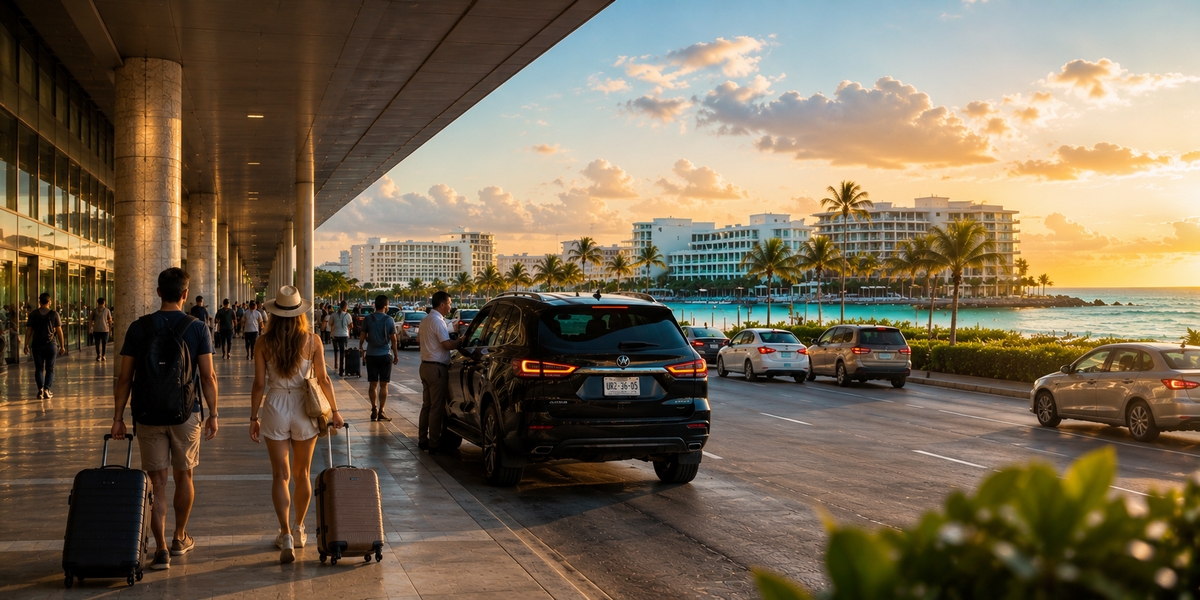
From New York, a nonstop to Nassau runs roughly three to three and a half hours, while Cancun is usually closer to four. From Boston, Philadelphia, or Washington the same pattern holds: the Bahamas is the shorter hop. Fly out of Florida and the distinction nearly vanishes — both are short, and Cancun is barely over an hour from Miami.
Airfare flips the script. Cancun is one of the most competitive leisure routes in the Americas, served by nearly every US carrier including the low-cost airlines, so fares are frequently lower and sales are common. Nassau has fewer nonstops from some Northeast cities — New York service is mostly Delta and JetBlue, with limited weekly frequency — which can keep prices firmer. The Out Islands, including Harbour Island for that pink sand, usually need a connection through Nassau, adding time and cost.
Fares move with season and demand, but the typical round-trip economy pattern from the main East Coast gateways looks like this:
| From | To Cancun | To Nassau |
|---|---|---|
| New York | ~$250–$450 | ~$300–$550 |
| Boston | ~$280–$480 | ~$350–$600 |
| Washington, D.C. | ~$250–$450 | ~$300–$550 |
| Miami | ~$200–$380 | ~$180–$350 |
Two patterns stand out. From the Northeast corridor Cancun is usually the cheaper ticket, sometimes by $50–$150 round-trip, while Miami is the one gateway where Nassau routinely undercuts it on short, competitive hops. Holidays, peak winter, and spring break push every number higher, so read these as off-peak-to-shoulder ranges, not promises.
What you are really weighing is about an hour of flight time against, for most departures, a cheaper ticket and a far bigger pool of resorts — and how good that trade looks depends entirely on your home airport. Either way, both are simple entries for US citizens: U.S. State Department guidance has Americans travel on a valid passport, so confirm current Mexico entry requirements and your passport's expiration date before you fly.

Beaches & Water Compared
Both deliver the water you came for, but they are different kinds of beautiful, and the difference is worth understanding before you pay.
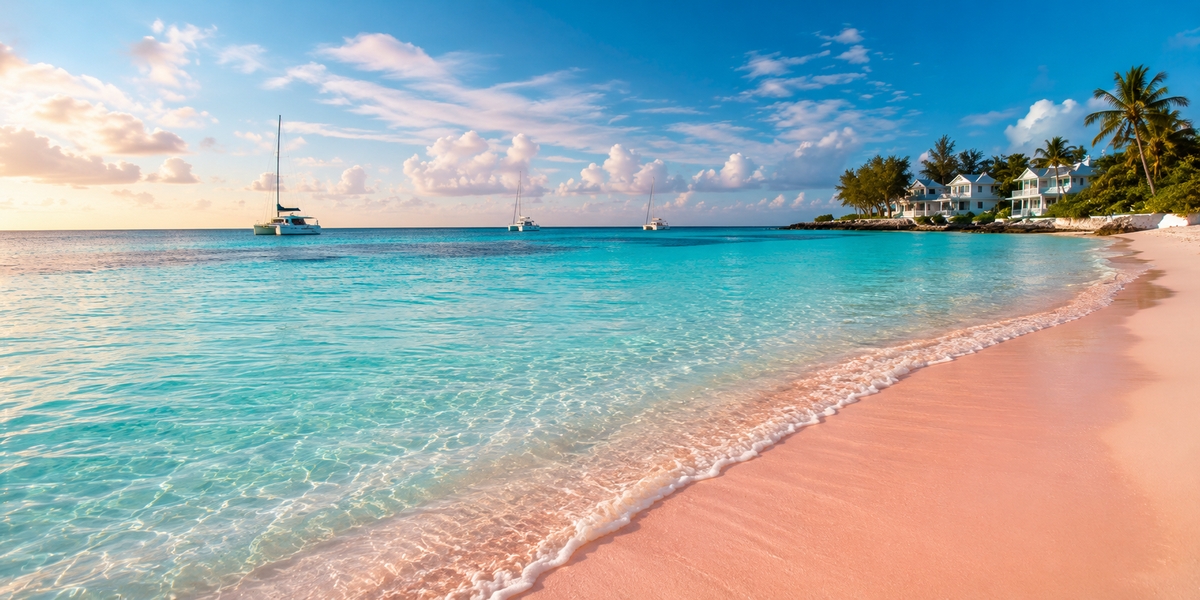
The Bahamas has the more iconic coastlines. Its calling card is variety: the surreal pink sand of Harbour Island, the long resort strip of Cable Beach in Nassau, the busy stretch of Cabbage Beach on Paradise Island, and the impossibly clear shallows of the Out Islands. Because the islands sit in the open Atlantic and the western Caribbean, they generally see less sargassum seaweed than Mexico's Caribbean coast — not immune, but usually milder.
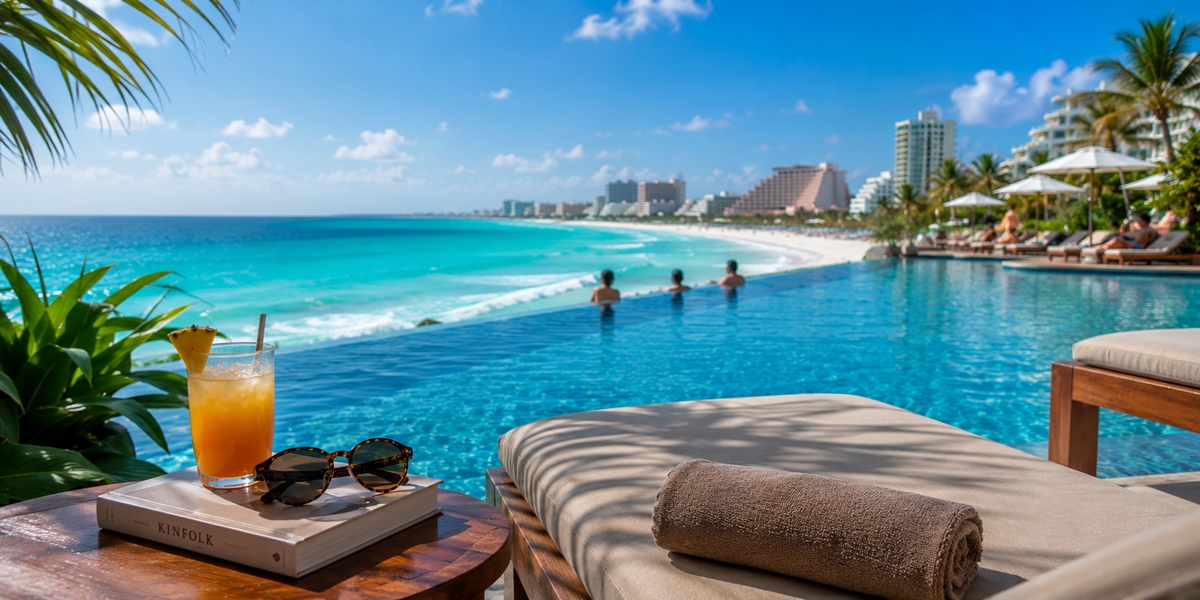
Cancun answers with scale and convenience. The Hotel Zone is one continuous ribbon of white sand fronting resort after resort along a roughly 22-kilometer barrier strip, so you walk out of your room onto the beach with no logistics at all. The catch is sargassum: from roughly spring into summer, the influx can pile seaweed on that sand for stretches at a time, and hotels vary in how well they clean it. It is the single biggest expectation-gap for first-time Cancun visitors, so check recent sargassum reports and hotel geography before locking in summer dates.
Pink Sands, Harbour Island
The famous blush-toned beach, calm and shallow, reached via a connection and a short boat ride. Boutique, quiet, and not cheap — this is a destination in itself, not a quick add-on.
Cable Beach & Paradise Island
Nassau's resort beaches, including the mega-resorts of Paradise Island. Easy water, lots of amenities, more crowds, and the highest concentration of fees and levies.
Hotel Zone barrier beach
One long, walkable white-sand beach lined with resorts. Maximum convenience and value, with a genuine sargassum risk in the warmer months.
Isla Mujeres day-trip
A short ferry from Cancun to Playa Norte's clear, calm shallows — the closest Cancun comes to that classic Bahamian water, and an easy half-day.
The summary most travelers land on: the Bahamas has the more memorable individual beaches, while Cancun gives you one excellent beach with everything attached and a seasonal seaweed asterisk.
When to Go: Season & Weather
The peak season is the same for both: roughly December through April is the dry, cooler, and busiest stretch, with the highest prices around the winter holidays and spring break. Late spring and fall bring better deals and warm water, traded against more humidity and the odd passing storm.
Both also sit in the Atlantic hurricane belt, which officially runs June 1 to November 30 and is most active from August into October. A direct hit on any single trip is unlikely, but for late-summer or early-fall dates a refundable rate and travel insurance are worth it on either side.
One thing nudges the warm-weather calendar toward the Bahamas: sargassum. Mexico's Caribbean coast, Cancun included, can get heavy seaweed from about spring into summer, while the Bahamian islands usually escape the worst of it. If a June-to-August trip is your only window and a clean beach is the priority, that single factor is a genuine point in the Bahamas' favor.
Cost & All-Inclusive Reality
If money is part of the decision, this is where the two genuinely separate — and where the Bahamas surprises people. The two destinations price a vacation in completely different ways.
Cancun bundles. An all-inclusive rate covers your room, meals, drinks, snacks, and usually tips and entertainment, so once you have paid, day-to-day spending drops close to zero unless you leave the resort. The market is enormous and competitive, which means you can find that model at a budget, mid-range, or luxury level. If the all-inclusive format is what you want, the range of Cancun all-inclusive resorts has no real equivalent in the Bahamas.
The Bahamas mostly unbundles. Even the big Paradise Island resorts typically charge for the room and bill dining, drinks, and activities on top — and restaurant prices on an island that imports most of its food are steep. A casual dinner for two with drinks can easily run $120 or more, and a beachside cocktail $15 and up. Then come the add-ons. According to the Bahamas Department of Inland Revenue, standard VAT is 10%, but the real number on a resort bill climbs higher once tourism levies are layered in.
Put it together over a week and the spread is real. Two people can do a solid Cancun all-inclusive week for roughly $1,800–$3,500 with most meals and drinks already covered, while a comparable room-only Bahamas resort plus dining out, fees, and taxes climbs to $3,500–$6,000 or more without trying. The Bahamas can absolutely be worth it — for proximity, for the water, for a boutique island — but value is not the reason you go.
Here is the same gap as a rough seven-night estimate for two people:
| 7-night trip (2 people) | Cancun | Bahamas |
|---|---|---|
| Hotel / resort | ~$1,400–$2,800 | ~$2,500–$4,500 |
| Food & drinks | Included (all-inclusive) | ~$700–$1,400 |
| Taxes & resort fees | Mostly included | ~$300–$600 |
| Rough total | ~$1,800–$3,500 | ~$3,500–$6,000+ |
These are indicative mid-range ranges, not quotes — luxury on either side runs far higher, and a Bahamas all-inclusive narrows the food gap but rarely the total. The pattern holds regardless: in Cancun more of the cost is prepaid and predictable, while in the Bahamas the extras are where the budget quietly slips.
Excursions widen the gap again, because Cancun's are cheaper and far more plentiful. Rough per-person ranges to budget for:
- Chichen Itza day tour (Cancun) — ~$70–$150
- Isla Mujeres ferry (Cancun) — ~$25–$40 round trip
- Cenote and ruins combo (Cancun) — ~$80–$130
- Nassau snorkeling or reef trip (Bahamas) — ~$80–$150
- Exuma swimming pigs day trip (Bahamas) — ~$200–$400
- Harbour Island day trip (Bahamas) — ~$100–$200+
One genuine plus for US travelers in the Bahamas: with the currency pegged one to one and dollars accepted everywhere, there is no exchange math, no foreign-transaction surprises, and no peso mental conversion at dinner. In Cancun you will want to sort out cards and cash for Mexico and watch for dynamic currency conversion at the terminal. Connectivity evens things out: a cheap Mexico eSIM keeps you online for a few dollars, much as your existing US plan often works in the dollar-priced Bahamas.
Which One Are You?
The fastest way to decide is to name your single biggest priority and follow it. Tap what matters most and see which destination fits.
Best Choice by Traveler Type
Priorities are personal, but a few common profiles point clearly one way. Find the closest match to your trip:
Families with kids
→ Cancun. All-inclusive resorts with kids' clubs, a shallow beach, and meals already covered keep costs predictable, and the destination reads reassuringly on family safety.
Long-weekend couple trip
→ Bahamas. The shorter flight and zero currency friction make three or four nights feel effortless, especially leaving from the Northeast.
First Caribbean trip
→ Cancun. Easy logistics, English widely spoken inside resorts, strong value, and plenty to do when the beach alone is not enough.
Luxury boutique escape
→ Bahamas. Harbour Island's pink sand and small high-end properties deliver a quieter, more design-led stay than Cancun's resort strip.
Best value for a full week
→ Cancun. A bundled all-inclusive rate, plus cheaper dining and excursions, stretches a seven-night budget noticeably further.
Florida quick getaway
→ Bahamas. From Miami the hop is short and often cheaper than Cancun, which flips the usual fare advantage.
Knowing when to rule one out is just as useful as knowing what fits:
Avoid Cancun if...
- you dislike big resort strips and crowds and want quiet, low-key islands;
- you are set on late spring or summer dates and cannot risk sargassum on the beach;
- the shortest possible flight and a no-conversion, US-dollar trip are non-negotiable.
Avoid the Bahamas if...
- you want a true all-inclusive where meals and drinks are prepaid;
- you are watching the budget and dislike surprise resort fees, levies, and gratuities;
- you want ruins, cenotes, and a region of day-trips rather than a resort-and-water week.
And skip both if your dream trip is about mountains, hiking, or deep cultural immersion. These are flat, warm-water beach-and-resort destinations — Cancun has the edge on heritage thanks to the nearby Maya ruins, but neither replaces a city break, a road trip, or an active adventure holiday. If the beach is not the centerpiece, you are choosing from the wrong shortlist.
Mistakes to Avoid in This Choice
Most regret here is not about picking the wrong country. It is about booking with the wrong expectation of what each one costs and includes.
Reading a Bahamas room rate as the total. Dining, drinks, VAT, tourism levies, resort fees, and gratuities stack on top fast. Budget for the full picture, not the nightly headline, or checkout will sting.
Expecting Bahamas-style all-inclusive everywhere. True all-inclusive resorts are the exception there. If you want food and drinks bundled in, Cancun is the natural fit; in the Bahamas you must seek out the few that offer it.
Booking Cancun for peak summer without checking seaweed. Sargassum can blanket the Hotel Zone beach from spring into summer. Check recent reports and hotel location before committing to warm-month dates.
Assuming Harbour Island is a quick add-on. That pink sand needs a connection through Nassau plus a boat. It is worth it, but plan it as a destination, not a casual afternoon from your Nassau resort.
Before You Book
Run through these before you lock in either destination:
Choose Cancun if value and what is included drive the trip: all-inclusive at any budget, lower day-to-day costs, and a region full of ruins, cenotes, and islands to explore. It is the stronger pick for families and most first Caribbean trips from the East Coast. If you are leaning that way, line up where to stay and the best time to visit before you book.
Choose the Bahamas if you want the shortest, simplest trip from the Northeast, the comfort of US dollars, and that specific Bahamian water — and you are comfortable paying a premium for it.
One clean way to split it: a long weekend or a Florida departure tilts toward the Bahamas; a full week, a tighter budget, or a craving for variety tilts toward Cancun. Decide by the trip you actually want, not by whose beach photo looks bluer.
Sources Checked
Sources checked on June 29, 2026. Flight times, airfares, resort rates, taxes, and seaweed levels change constantly, so treat figures as ranges and verify current conditions before booking. Key references include the U.S. State Department for entry requirements, the Bahamas Department of Inland Revenue for VAT and levy details, the Bahamas Ministry of Tourism, and regional sargassum monitoring for Mexico's Caribbean coast.
- U.S. State Department: passport and entry guidance for US citizens traveling to Mexico and the Bahamas.
- Bahamas Department of Inland Revenue: standard 10% VAT, with tourism levies, resort fees, and gratuities layered on resort bills.
- Regional sargassum monitoring: typical seaweed timing on Mexico's Caribbean coast versus the generally milder Bahamian islands.
- Live flight and rate spot-checks (June 2026): indicative nonstop times and price ranges compared across major booking and fare-comparison tools rather than a single source.
Frequently Asked Questions
Is Cancun or the Bahamas better for East Coast US travelers?
Neither is better overall; they suit different priorities. The Bahamas, especially Nassau, is the shorter flight from the East Coast and uses a currency pegged one to one with the US dollar, so it is the easiest, most familiar trip. Cancun is usually cheaper to fly to from most US cities and is the all-inclusive capital of the region, so it delivers far better value once you are there. Choose the Bahamas for proximity and ease, Cancun for value and variety.
Is Cancun or the Bahamas cheaper?
Cancun usually wins on total cost, and the gap is widest once you are on the ground. A bundled all-inclusive week for two often lands around $1,800 to $3,500 with meals and drinks covered, while a comparable Bahamas trip, billed room-only with dining, VAT, levies, resort fees, and gratuities added, can reach $3,500 to $6,000 or more. The clearest exception is airfare from Florida, where short Nassau hops can beat Cancun. For most East Coast travelers, though, Cancun stretches the budget further.
Which is closer to the US East Coast, Cancun or the Bahamas?
The Bahamas is closer. A nonstop flight from New York to Nassau runs about three to three and a half hours, while New York to Cancun is usually closer to four hours or a little more. The gap matters most from the Northeast; from Florida both are short hops. If a shorter flight and an easier travel day are priorities, the Bahamas has the edge.
Does the Bahamas have all-inclusive resorts like Cancun?
Only a handful, and they are the exception. Cancun is designed around all-inclusive, with packages spanning budget to luxury. The Bahamas leans heavily on room-only pricing, even at the large Paradise Island resorts, with dining, drinks, VAT, levies, resort fees, and gratuities billed on top. A few genuine all-inclusive properties do exist, often adults-only or out on the smaller islands, but they run pricier and book up early. Treat all-inclusive as the default in Cancun and as something you have to hunt for in the Bahamas.
Which has better beaches, Cancun or the Bahamas?
Both are excellent in different ways. The Bahamas is famous for its water and its sand, including the pink-tinged beach of Harbour Island, whose color comes from crushed red shell fragments mixed into the white sand. Cancun counters with a single long barrier beach lined with resorts, supremely convenient but carrying a real sargassum seaweed risk from spring into summer, exactly when the Bahamian islands tend to stay clearer. Choose the Bahamas for variety and that signature water, Cancun for one easy, resort-backed beach.
Do I need a passport for Cancun and the Bahamas?
Yes. US citizens need a valid passport to fly to either Cancun or the Bahamas and to return home by air. Both are straightforward entries for American visitors, but rules and any forms can change, so confirm current requirements with the U.S. State Department before you book. Check passport expiration dates early, since renewals can take time during busy periods.