
Many of the most striking Cancun photos — flat turquoise water, hard sun, pale sand — were taken in December or January. This is the season Cancun is best known for, and the reputation is earned: these are the warmest, driest, calmest beach months of the year.
The catch is that everyone else knows it too. December and January are not just the most reliable months on this coast; they are the most expensive and the most crowded, and the gap between a well-timed booking and a badly-timed one is wider here than at any other time of year. Two trips in the same season, two weeks apart, can cost very different amounts and feel like different trips.
This guide is about booking the high season deliberately. What the weather and the sea actually do, the one winter pattern that surprises first-timers, where the price and crowd peaks really sit on the calendar, and how to get the best weather of the year without paying the steepest prices of the year.
Quick Answer: What December and January Are Really Like
The short version: this is the best beach weather of the year — warm, dry, low humidity — with the trade-off that prices and crowds peak hard from roughly December 22 to January 4. Want the same weather for less? Aim for early December or the second half of January.
The holiday weather without the holiday prices. Beaches are calm, resorts are relaxed, and rates haven't hit the Christmas ceiling yet.
Peak energy, fireworks, packed beaches, the full holiday atmosphere. The single most in-demand window on the coast.
Crowds thin out, prices ease, weather stays excellent. Arguably the smartest week of the whole high season.
If you're still deciding between seasons rather than weeks, the broader best time to visit Cancun and the Riviera Maya guide zooms out to the full year. This article stays inside the winter peak, where the real decision is timing within the season.
The Weather: Why People Book This Season in the First Place
December and January sit in the heart of Cancun's dry season, and the daily pattern is about as dependable as Caribbean weather gets. Expect daytime highs in the low 80s Fahrenheit, comfortable evenings that occasionally call for a light layer, humidity well down from the summer mugginess, and rain that, when it shows up at all, tends to be a passing shower rather than a washed-out afternoon.
This is the inverse of the summer experience. Where June through October trade lower prices for heat, heavy afternoon storms, and the region's peak seaweed risk, winter generally hands you clear mornings, long usable beach days, and a sea that mostly stays calm and swimmable. Sargassum is at its lowest historical risk in these months too, which is a big part of why first-timers are steered here.
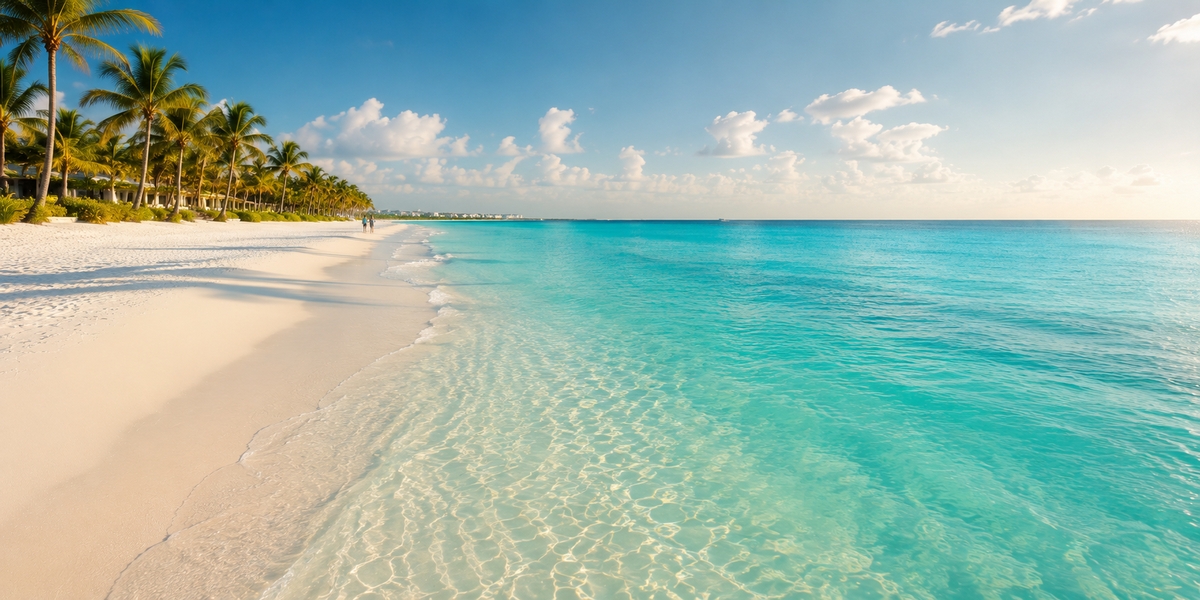
None of this is a guarantee of seven flawless days — nowhere is — but the odds are stacked in your favor more than at any other point in the year. If your single priority is "warm, dry, swimmable beach with the lowest chance of a washed-out day," winter is the correct answer, and December and January are its strongest stretch.
The Catch Nobody Mentions: el Norte
Here is the part the brochures skip. Cancun's winter has one genuine wildcard, and it isn't rain — it's wind. Every so often between November and February, a cold front sweeps down from the United States, crosses the Gulf of Mexico, and arrives on the Yucatan coast as what locals call el norte: a day or two of grey skies, strong north winds, and a cooler, rougher sea. Mexico's national weather service, the Servicio Meteorológico Nacional, tracks dozens of these frentes fríos each season, and a handful reach the Caribbean coast.
What surprises people most is that a norte changes the water more than the air. The temperature might only dip a few degrees, but the wind churns the normally glassy Caribbean into chop, stirs up seaweed and cloudiness near the shore, and turns a postcard beach into something closer to a blustery autumn coastline for 24 to 72 hours. Boats stay in, snorkeling tours get cancelled, and the swim-up bar suddenly feels optional.
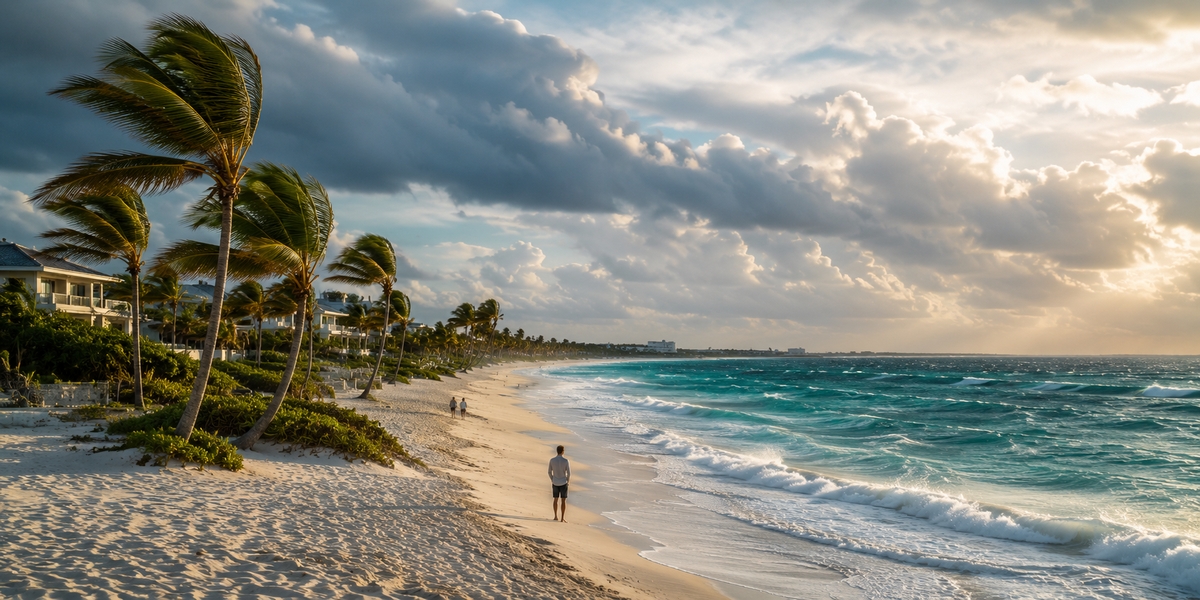
This is also why the calm-water reputation isn't universal across the coast. The sheltered, west-facing beaches of Isla Mujeres and the northern Hotel Zone handle a norte better than fully exposed stretches. It's a small thing to know, but it's the difference between "the weather was perfect" and "we got two weird days," and almost no one warns first-timers it exists.
December vs January, Side by Side
On the numbers, the two months are near-twins: January runs a touch cooler and drier, December a touch warmer. The real separation is crowds and price. Here are the seasonal averages alongside the booking factors that actually differ.
| Factor | December | January |
|---|---|---|
| Daytime high | ~82°F (28°C) | ~81°F (27°C) |
| Nighttime low | ~71°F (21°C) | ~69°F (20°C) |
| Sea temperature | ~80°F (27°C) | ~79°F (26°C) |
| Rainy days (avg) | ~7 | ~5 |
| Humidity | Moderate | Slightly lower |
| Daylight | ~10.8 hrs | ~11 hrs |
| Crowds | Very high around the holidays | High, then easing after Jan 4 |
| Prices | Highest of the year | Lower once the holidays end |
| Norte risk | Moderate | Slightly higher |
Read it straight across and the takeaway is simple: for weather, December and January are effectively interchangeable. What changes is the price tag and the crowd, both of which fall once the New Year holiday clears. If climate is your only concern, pick on price; if you want the festive atmosphere, the calendar makes the call for you. Figures here are seasonal averages, not forecasts — check current data close to travel.
Crowds and Prices: The Real Cost of Perfect
Good weather is the draw, but it isn't the thing you actually negotiate over. Crowds and prices are. December and January are when North American winter-escape demand, holiday travel, and the dry-season reputation all collide on the same narrow strip of coast, and the result is the busiest, most expensive period Cancun has.
The intensity isn't even across the two months, though, and this is the single most useful thing to understand before you book. There is a sharp spike — not a gentle slope — around the holidays. The window from roughly December 22 through January 4 is the absolute peak: resort beaches fill by mid-morning, loungers vanish early, restaurants want reservations, airport transfers and tours run at capacity, and rates hit their annual ceiling. Step a couple of weeks to either side and the same destination feels noticeably calmer and costs meaningfully less.
To put the booking math in concrete terms: reserve a Hotel Zone resort three to six months out for early December and you lock in solid high-season pricing. Wait until November to grab a room for the week of New Year and you're often looking at close to double the rate for the same property — assuming the good rooms haven't already sold out. The premium isn't for better weather; the weather is identical. It's purely for the calendar dates.

That gap is the core decision in peak season. If your dates are fixed to the holidays, accept the premium and book early. If they're flexible by even ten days, the savings are real and the experience is arguably better, because you trade festive density for more space.
Week-by-Week: The Peak-Season Calendar
Because the weather barely moves across these two months but the crowds and prices swing hard, the useful way to read December and January is week by week, not month by month. This is how we'd weigh each window before booking a winter trip to Cancun ourselves.
| Window | Weather | Crowds & vibe | Prices | Verdict |
|---|---|---|---|---|
| Early December (approx 1–18) |
Excellent Warm, dry, calm sea on most days. |
Still calm Relaxed resorts, easy beach space. |
Moderate High season, but pre-holiday rates. |
Best value in the season |
| Christmas week (approx 19–26) |
Excellent Peak dry-season conditions. |
Very busy Festive, packed, book restaurants ahead. |
Very high Climbing toward the annual ceiling. |
Festive — reserve far ahead |
| New Year week (Dec 27–Jan 4) |
Excellent Reliable sun, occasional norte. |
Peak of the year The busiest week on the coast. |
Highest The most expensive dates, full stop. |
Most crowded, most expensive |
| Early–mid January (approx 5–20) |
Excellent Great days, a norte risk here and there. |
Easing Noticeably quieter after the holidays. |
High, dropping Off the holiday peak, still firm. |
Quiet sweet spot |
| Late January (approx 21–31) |
Very good Still warm; a few more windy days. |
Calm Among the quietest winter weeks. |
Softer The best high-season rates you'll find. |
Best value, slight weather gamble |
Read across and the pattern is hard to miss: the weather row stays green the whole way through, while crowds and prices spike violently in the middle and settle on either side. The holidays buy you atmosphere and energy. The shoulder weeks inside the season give you more space and lower rates for the same weather. Neither is "right" — they're different trips.
How to Book High Season Without Overpaying
You can't make peak season cheap, but you can avoid the overpaying that catches a lot of first-timers. A few moves do most of the work.
The all-inclusive question is the one most people get wrong in peak season, because the math flips. When the restaurants around you are slammed and charging holiday prices, a resort that has already absorbed your meals and drinks can genuinely come out ahead — the opposite of the quieter months, when eating out is cheap and easy. It's worth comparing properly before you assume room-only is the saving.
If a peak-season all-inclusive is the direction you're leaning, the popular Cancun resorts sell their holiday weeks out first — comparing early is the practical move.
Compare Cancun all-inclusive resorts before peak dates sell out Compare Cancun all-inclusive resortsWhich Window Fits Your Trip Specifically
There's no single "best" date in peak season — only the window that matches what you actually want out of the week. Match the trip to the priority, not to a generic "winter is best" line.
The full festive atmosphere
→ Christmas or New Year week. The fireworks, the buzz, the packed beach energy are the point. Book early and accept the premium — you're paying for the occasion, not the weather.
Winter sun for the best price
→ Early December or late January. Same warm, dry days, far smaller crowds, and the softest rates the high season offers. The traveler's choice.
Young kids on school break
→ If you're locked to the holiday dates, prioritize a resort with strong on-site amenities so a crowded beach or a norte day still works. The pool carries the trip when the sea doesn't.
Calm, quiet, and flexible
→ The second half of January. Among the most peaceful weeks of the season, with the best chance of a near-empty beach — just keep a backup plan for the odd windy day.
Mistakes Peak-Season Travelers Make
Most peak-season regret isn't about the weather. It's about booking the right destination on the wrong terms.
Booking the holidays at the last minute. Waiting until late autumn for Christmas or New Year dates means paying the top of the market for whatever is left. This is the single most expensive timing error on the calendar.
Assuming every day will be glassy and calm. The norte pattern is real. Expecting seven flawless beach days with zero backup plan is how a normal windy front turns into a "ruined" trip in your memory.
Paying holiday prices for a non-holiday experience. If you don't actually care about the festive crowd, booking the exact Christmas–New Year window means buying density you didn't want. Shift the dates and keep the cash.
Forgetting to pack a light layer. Winter evenings and norte days can feel genuinely cool by Caribbean standards. People who pack only beachwear spend a windy night underdressed. The packing guide covers the easy fixes.
Sources Checked
Sources checked on June 24, 2026. Seasonal weather, cold-front frequency, holiday demand, and hotel pricing all shift year to year and by exact dates, so verify current forecasts and rates close to travel, especially if your trip lands in the holiday window.
How this guide was checked: We compared regional climate data for Cancun's December–January temperature, rainfall, and sea conditions, NOAA's reference material on cold fronts crossing the Gulf of Mexico, and Mexico's Servicio Meteorológico Nacional bulletins on winter frentes fríos, alongside seasonal booking and crowd patterns reported by travelers. The aim is to set realistic expectations for the season, not to forecast one specific beach day.
Frequently Asked Questions
Is December or January better for visiting Cancun?
Both deliver the best beach weather of the year, so the deciding factor is crowds and price, not climate. Early December and the second half of January are the smart picks: the same warm, dry days as the holidays, but noticeably lower prices and fewer people. The stretch from roughly December 22 to January 4 is the most expensive and most crowded window of the entire year. If your dates are flexible, lean toward early December or mid-to-late January and you keep the weather while dropping the price.
What is a "norte" and will it ruin my beach week?
A "norte" is a cold front that pushes down from the United States across the Gulf of Mexico, most common from November through February. It usually brings one to three days of grey skies, gusty north winds, and a cooler, choppier, often seaweed-stirred sea. It rarely cancels a whole trip, but it can knock out a beach day or two and make the water less inviting. Build a little flexibility into the week and a norte becomes an annoyance, not a disaster.
How far in advance should I book Cancun for Christmas or New Year?
For the December 22 to January 4 window, book three to six months ahead. The best-value rooms and the most popular all-inclusive resorts sell out first for the holidays, and what is left tends to be the priciest inventory. Booking late for the holiday weeks often means paying close to double the early-December rate for the same resort, if it is even available. Outside those exact holiday dates, a month or two of lead time is usually enough.
Is the sea warm enough to swim in Cancun in December and January?
Yes. The Caribbean off Cancun stays around the high 70s Fahrenheit through winter, which is comfortable for most swimmers, especially in the afternoon. The exception is during and just after a norte, when wind churns the water, drops the temperature a touch, and can make the sea feel cool and rough for a day or two. On a calm, sunny day the water is one of the warmest in the region for the season.
Are the beaches crowded in Cancun in peak season?
Around Christmas and New Year, yes. Resort beaches fill up, sun loungers disappear early in the morning, restaurants need reservations, and tours and transfers run at capacity. Early December and late January are far calmer while still warm and dry. If you want winter sun without the holiday density, those shoulder weeks inside the high season are the answer.
Does it rain much in Cancun in December and January?
Not much. These are among the driest months of the year, with rain usually limited to brief showers rather than the long afternoon downpours of summer. The bigger winter weather variable is wind from a passing cold front, not rain. You should plan around the occasional grey, breezy norte day, not around getting rained out.
Book Peak Season in One Minute
The short version, if you don't want to re-read the whole thing.
If you remember one thing: December and January give you the best beach weather of the year, and your only real decision is how much holiday crowd and price you're willing to absorb for it.
For most travelers, the smart pick is early December or the second half of January — identical sunshine, far smaller crowds, and noticeably softer rates than the Christmas-to-New-Year spike. If the festive atmosphere itself is the reason you're going, book the holiday weeks, but book them months in advance.
Whatever dates you land on, plan for the chance of a norte. The travelers who keep a flexible day or two in their week are the ones who come home saying the weather was perfect.