
There is one kind of Cancun disappointment that photos never warn you about: you paid for a beach week, and the beach is buried under a knee-deep, brown, sulphur-smelling mat of sargassum. It is the fastest way to feel you booked the wrong trip, and in a heavy year it can hit famous, expensive resorts just as hard as budget ones.
So this guide answers a narrower question than "which resort is best." It answers: where is the beach most likely to actually be usable? That comes down to two things you can check before you pay — the geography of the coastline, and how much a resort spends keeping its sand clear. Neither is visible in a glossy listing photo, and both matter more than the star rating.
The honest headline first, because everything else follows from it: no one can sell you a guaranteed clean beach. Sargassum arrives in ocean-scale rafts pushed by wind and current, and 2026 has been an unusually heavy year, with early arrivals reported months ahead of the usual season. What you can do is stack the odds, and some zones stack them far better than others. For the wider picture of how the seaweed moves, our 2026 sargassum report and the Cancun seaweed season guide sit alongside this one.
Hotel names below are examples to compare by fit and location, not a fixed ranking.
Best protected areas at a glance — seaweed risk, lowest to highest:
- Playa Mujeres & Costa Mujeres — lowest risk (sheltered, northwest-facing bay)
- North Cancun Hotel Zone — low–moderate (bay-side corner)
- Puerto Morelos / Riviera Cancun — moderate (reef buffer plus big-resort cleanup)
- Central & South Hotel Zone — higher (open, east and south-facing)
No resort can promise clear sand on your exact dates — geography and cleanup only lower the odds.
Quick Answer: Where the Beach Is Most Likely to Be Clean
If a clean, swimmable beach is the non-negotiable part of your trip, base in Playa Mujeres or Costa Mujeres, just north of Cancun, where the coast faces the sheltered Bahia de Mujeres instead of the open Caribbean. If you want classic Cancun with better odds than the open strip, choose the northern end of the Hotel Zone, near the same bay. If you want calm, reef-protected water and strong all-inclusive cleanup, look at Puerto Morelos and the Riviera Cancun corridor. If price matters more than a guaranteed beach, the central Hotel Zone is cheaper — just book flexibly and check recent beach cams first.
Playa Mujeres and Costa Mujeres face the calmer bay and are lined with large resorts that clean the sand daily. Best structural protection on the coast.
The northern hook of the Hotel Zone sits by the same sheltered bay, so it usually sees less seaweed than Playa Delfines and the open southern beaches.
Puerto Morelos and Riviera Cancun sit behind the reef, so the water is shallow and swimmable and the big resorts run serious cleanup operations.
The central and southern Hotel Zone is cheaper and more dramatic to look at. Book flexible rates and rely on recent beach cams and reviews rather than the brochure.
Best Protected-Beach Resort by Traveler Type
If you would rather not read every card, here is the fast shortlist. These are fit-based picks from the resorts featured below — the “best” changes the moment your priority shifts from privacy to price, or from snorkeling to nightlife. Every pick sits in one of the three protected zones, so the beach odds start in your favor whichever row you land on.
| Best for | Our pick | Why it wins this slot |
|---|---|---|
| Couples | Excellence Playa Mujeres | Adults-only calm on the best-sheltered bay beach, with the scale to keep its sand managed. The safe romantic default when the beach has to be right. |
| Families | Finest Playa Mujeres | Same protected bay and low seaweed odds, but built for kids: shallow, calm water and a large resort's cleanup behind the beach. |
| Luxury | Grand Fiesta Americana Coral Beach | Premium service on the sheltered Punta Cancun corner — higher-end polish without leaving Cancun or its calmer north-facing sand. |
| Value | Dreams Sands Cancun Resort & Spa | The most convenient, better-priced pick: a family all-inclusive on the calmer north beaches, close to shops and the airport. |
| Snorkeling & calm water | Grand Residences Riviera Cancun | Right by the Puerto Morelos reef, where the same barrier that buffers seaweed gives you flat, clear, snorkel-friendly water. |
| Avoiding seaweed above all | Grand Palladium Costa Mujeres | A long bay-side sandfront on the most protected stretch, backed by a big resort's daily cleanup across its whole beach. |
Why Some Beaches Get Far Less Seaweed Than Others
Sargassum does not land evenly. It rides the prevailing currents and easterly winds across the Atlantic and slams hardest into coastlines that face straight into that flow. That single fact explains almost every "protected beach" claim on this coast — and separates the ones that hold up from the ones that are just marketing.
Two forms of protection actually work. The first is orientation: a beach that faces north or northwest, or that sits behind a headland or island, is shielded from the direct push of seaweed. The second is a reef close to shore, which acts as a physical strainer offshore. A third factor is not natural at all — it is money: the resorts that spend the most on barriers and crews keep their own sand clear even when the coast around them turns brown.
When a beach is genuinely protected
- It faces north or northwest, away from the prevailing easterly push (Playa Mujeres, Isla Mujeres' Playa Norte);
- A headland or island breaks the current before it reaches the sand;
- A reef runs close to shore and intercepts rafts offshore (Puerto Morelos);
- A large resort backs it with offshore barriers and a daily cleanup crew.
When "protected" is mostly marketing
A listing calls the beach "pristine" using photos from a calm month or a clean year. The coast still faces open water east or south, there is no reef buffer, and the property is too small to fund real cleanup. It can be genuinely lovely in a light week and unusable in a heavy one — the word "protected" is doing no work. Read dated reviews from your travel month, not the gallery.
This is also why the calm, swimmable water at reef-side spots exists in the first place: the reef that strains the seaweed is the same reef that blocks the wave energy. You get flat, shallow water and a buffer in one feature — a genuinely underrated reason to prefer these zones if you also want easy swimming. For how the water itself changes zone to zone, the Cancun beach guide goes deeper on waves, width and seaweed patterns.
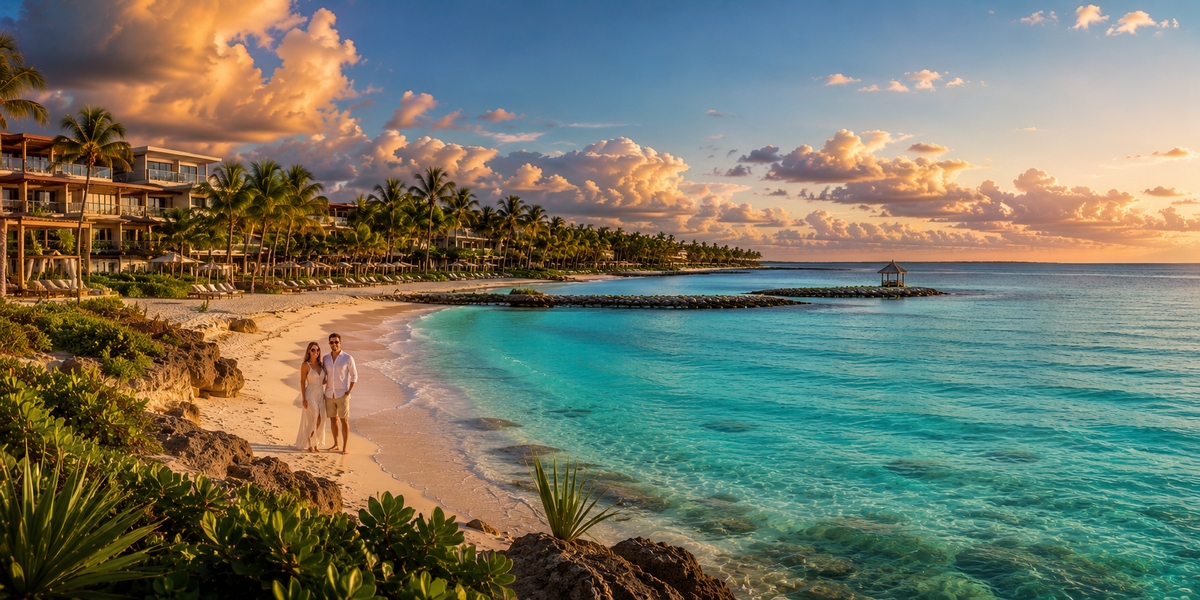
When Sargassum Risk Peaks — and How Bad 2026 Has Been
Even the most sheltered zone has a calendar. Sargassum on this coast is seasonal, and picking the right window does as much for your odds as picking the right beach. The University of South Florida's Optical Oceanography Lab, which publishes the closely watched monthly Sargassum outlook, has tracked 2026 as a record or near-record year for the tropical Atlantic, with early arrivals confirmed along Quintana Roo months before the usual start.
The broad pattern most years: risk builds from around April, runs heaviest between May and August, eases through autumn, and clears into a calmer stretch from roughly November to February. That winter window overlaps with peak travel prices, which is the honest catch — the cleanest beach months are also the busiest and most expensive. If your dates are flexible, the trade-off between crowds and clean sand is worth weighing before you book; the best time to visit guide lays out that calendar in full.
What surprises tourists most is how local it gets. On the same day in a bad week, the Mexican Navy (SEMAR), which coordinates sargassum collection across Quintana Roo, can be hauling tonnes off one beach while a sheltered bay a few kilometres away stays swimmable. Averages lie here. Always check monitoring and live beach cams for your specific stretch close to departure.
Protected Zones Compared: Risk, Beach and Cleanup
Here is the decision in one view. Read it by the column that matters most to you — seaweed risk if the beach is everything, resort scale if you are relying on cleanup, price if the budget is tight. The two bottom rows are the popular zones people often book by default; they are here as an honest contrast, not as a warning to avoid them.
Location sets the baseline risk. Resort scale decides how well what does land gets managed.
| Zone | Seaweed risk | Beach & water | Resort scale / cleanup | Price band | Best for |
|---|---|---|---|---|---|
| Playa Mujeres & Costa Mujeres | Lower | Wide, calm, bay-facing | Large resorts, strong daily cleanup | $$$–$$$$ | Clean-beach priority, calm water |
| North Cancun Hotel Zone (bay side) | Low–moderate | Classic Cancun, calmer north corner | Large resorts, daily cleanup | $$–$$$ | Cancun energy with better odds |
| Puerto Morelos / Riviera Cancun | Moderate | Reef-protected, shallow, swimmable | Large all-inclusive, serious cleanup | $$$ | Calm water, snorkeling, resort-first |
| Central & South Hotel Zone (Delfines, Nizuc) | Higher | Dramatic, open, east/south-facing | Varies by property | $$–$$$$ | Views and value; check beach cams |
| Tulum beach zone | Higher | Narrow, boutique, exposed | Small hotels, weaker cleanup | $$$–$$$$ | Aesthetics over guaranteed clean sand |
The pattern is hard to miss. The three protected zones win on risk and cleanup but ask for either a bigger budget or a longer transfer; the two default zones are easier to reach and often cheaper or more dramatic, but they carry the exposure. If you booked Tulum for the look and the beach photos, go in with eyes open about seaweed — it is the most exposed of the lot.
Compressed to a single decision, it comes down to what you are optimizing for:
| If you want… | Choose… |
|---|---|
| Lowest seaweed risk | Playa Mujeres / Costa Mujeres |
| Cancun energy and nightlife nearby | North Hotel Zone (bay side) |
| Calm, reef-protected water and snorkeling | Puerto Morelos / Riviera Cancun |
| Lower prices, with the beach as a bonus | Central Hotel Zone (check beach cams) |
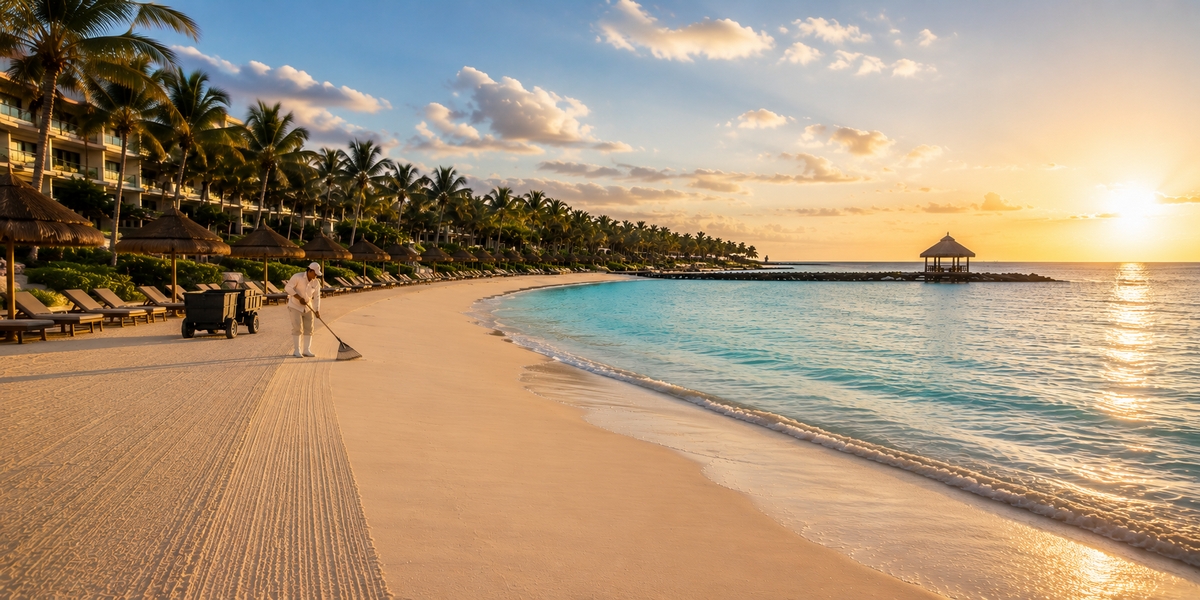
Playa Mujeres and Costa Mujeres: The Strongest Structural Protection
If you rank a clean beach above everything, this is the zone to start with. Sitting just north of the Cancun Hotel Zone, Playa Mujeres and Costa Mujeres face slightly northwest into the Bahia de Mujeres, tucked away from the direct easterly push of sargassum that hammers the open coast. In practice they run noticeably clearer than the Hotel Zone or the Riviera Maya, even in peak months — and the beaches here are wide and calm to begin with.
The area is also almost entirely large, newer resorts, which matters for the second layer of protection: these are properties with the budget to run offshore barriers and rake the sand from dawn. The trade-off is real, though. You are further from the airport, there is nothing to walk to outside the resort, and prices skew high. This is a resort-first zone — the sort of place you settle into, not a base for nightly trips into town.
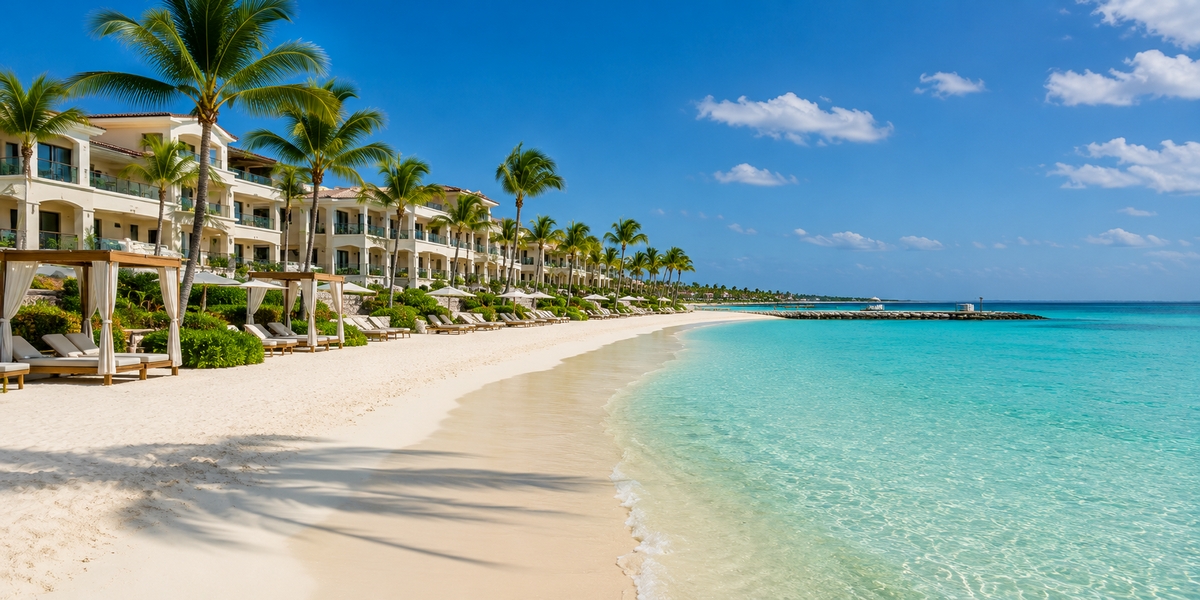
Excellence Playa Mujeres
Fits well if you want an adults-only, resort-first week on one of the calmer, better-protected beaches on the coast, with the scale to keep its sand managed.
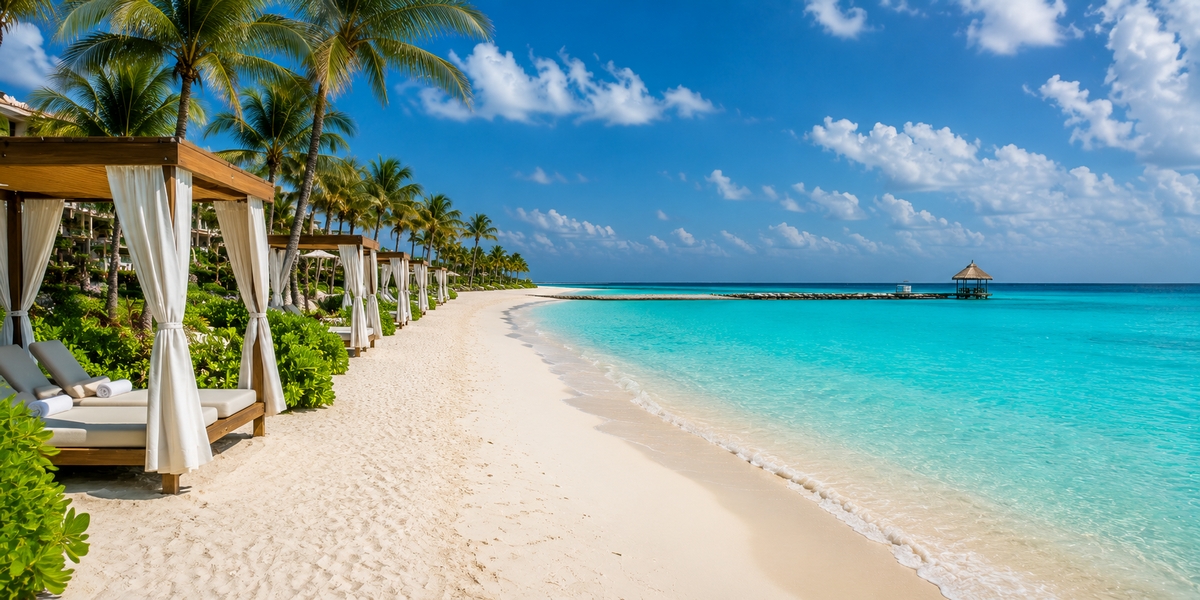
Finest Playa Mujeres
Fits well if you want the same protected bay for a family, with shallow, calm water and a large resort's cleanup operation behind the beach.
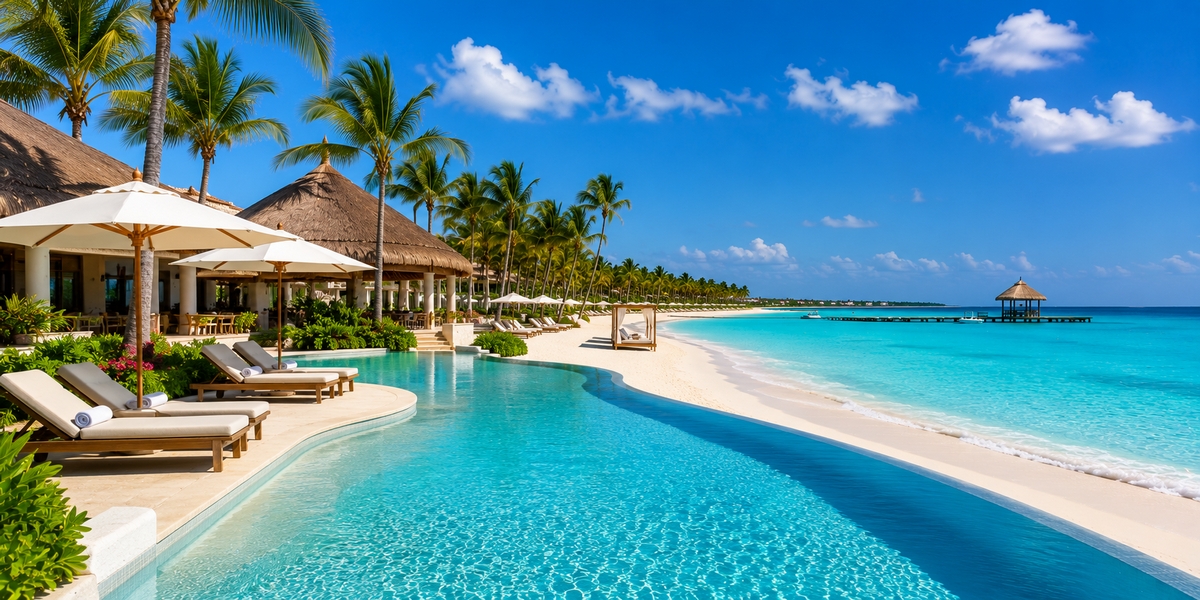
Grand Palladium Costa Mujeres
Fits well if you want a big-resort ecosystem on the quieter Costa Mujeres stretch, where scale funds serious beach maintenance across a long sandfront.
Use this search when a clean, calm beach is the priority and you will trade a longer transfer and higher rate for the best structural protection on the coast.
Compare Playa Mujeres and Costa Mujeres resorts on Expedia Compare protected-beach resortsIf this zone is your front-runner, the dedicated best resorts in Playa Mujeres guide breaks the properties down by traveler type in more detail.
North Cancun Hotel Zone: Better Odds Without Leaving Cancun
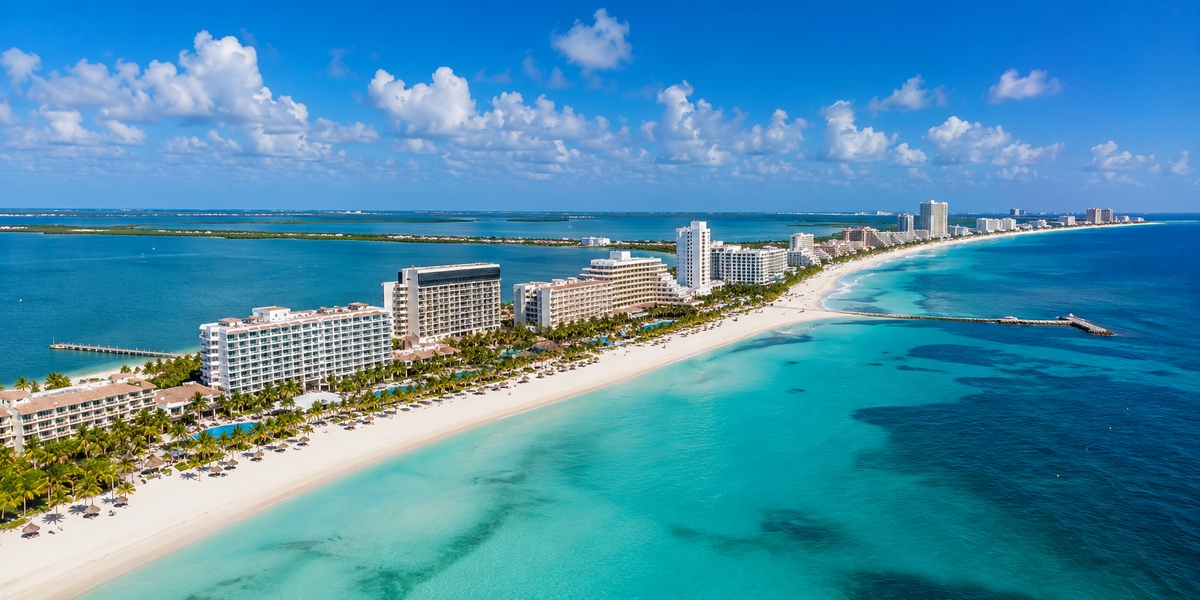
Not everyone wants to trade Cancun for a remote resort bubble. If you want the shops, the nightlife and the short transfer, the northern end of the Hotel Zone is the smart compromise. The zone bends around a hook of land near the Bahia de Mujeres, and the beaches on that northern corner — the Playa Las Perlas to Playa Tortugas stretch and the Punta Cancun tip — face the sheltered bay rather than the open Caribbean. They typically see less seaweed than Playa Delfines and the long east and south beaches further down the strip.
This is not immunity. It is a meaningfully better baseline while keeping everything Cancun is good at within reach. The catch is that the Hotel Zone is long and its beaches vary a lot, so the exact property and the exact beach section in front of it matter more here than anywhere else on this list. Book the north end deliberately, not just "the Hotel Zone."
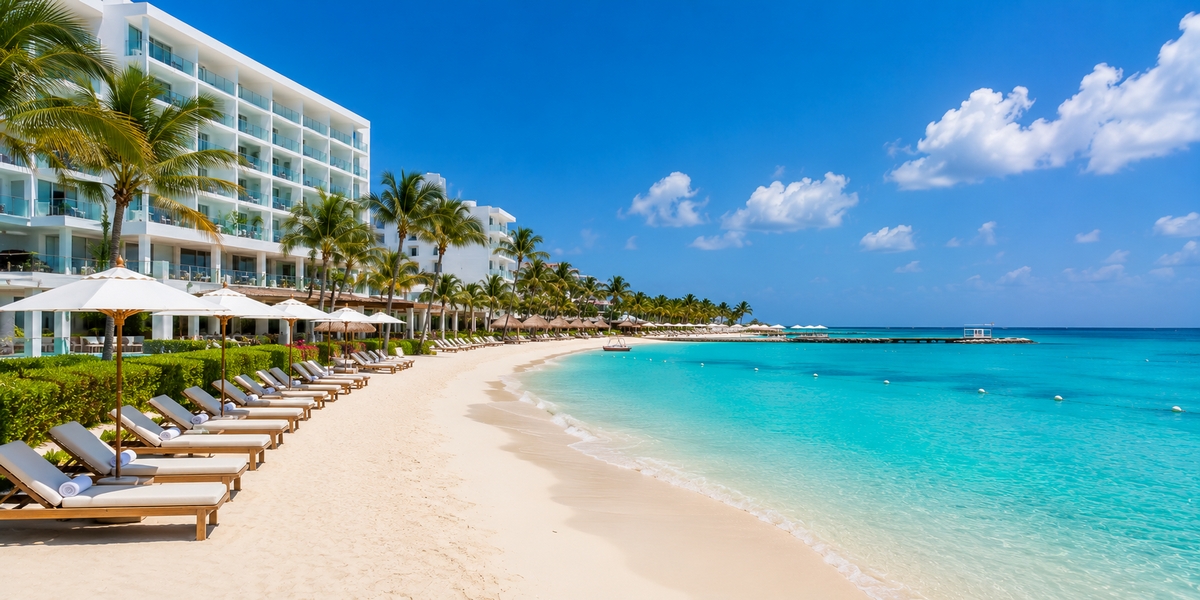
Dreams Sands Cancun Resort & Spa
Fits well if you want a family all-inclusive on the calmer northern beaches, close to the bay, with easy access to shops and the airport.
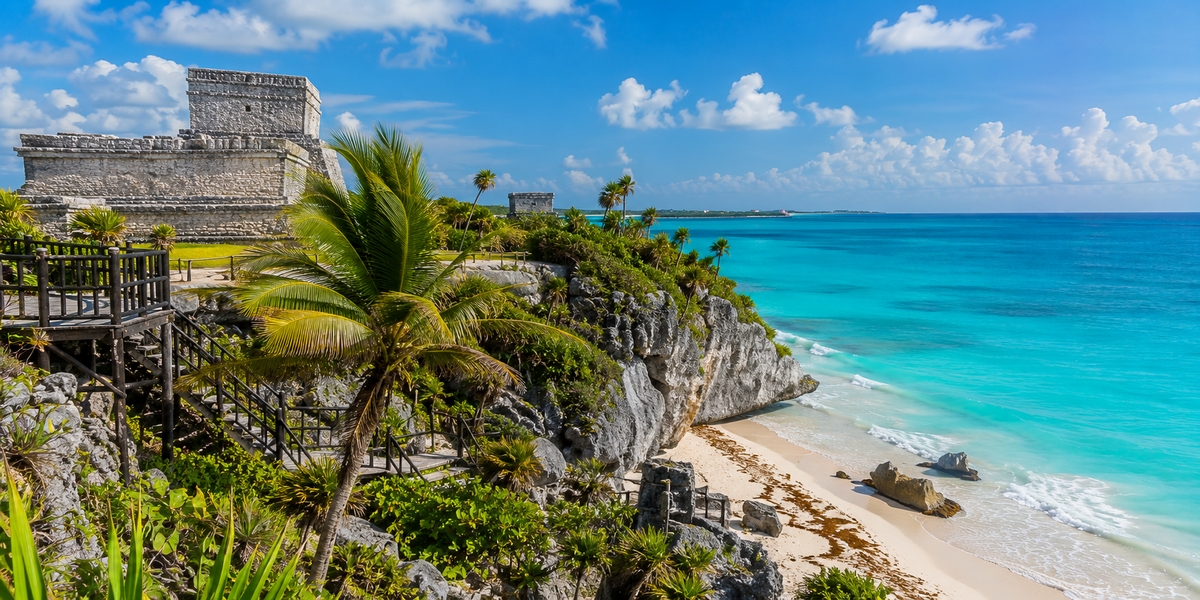
Grand Fiesta Americana Coral Beach
Fits well if you want a polished, higher-end stay on the Punta Cancun corner, where the peninsula gives the beach a naturally more sheltered aspect.
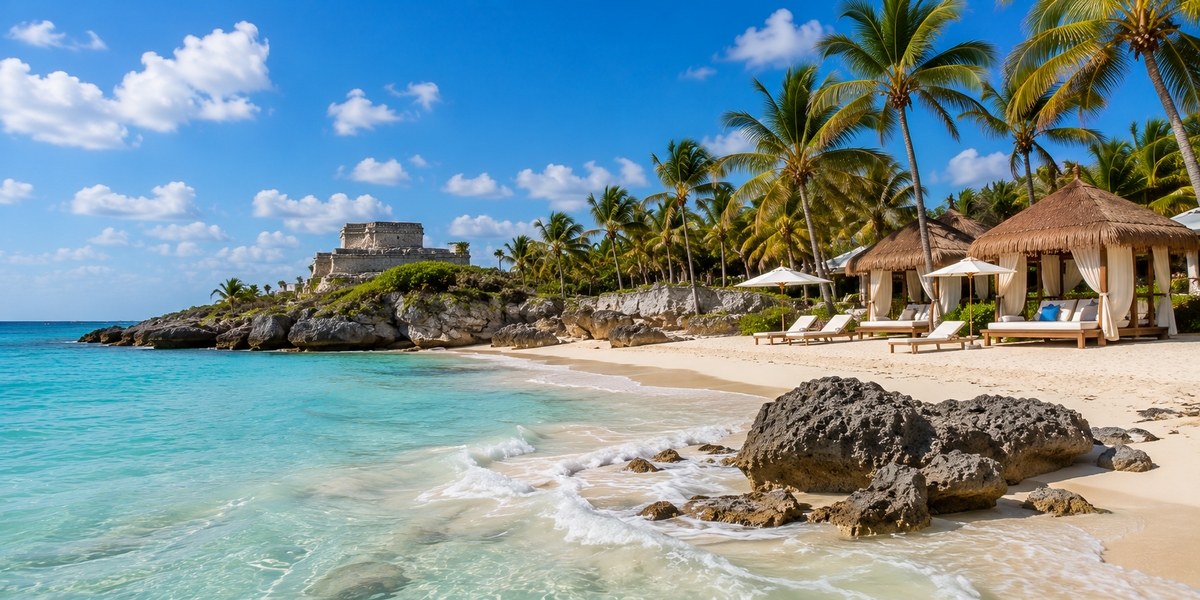
Hyatt Ziva Cancun
Fits well if you want a big, well-run all-inclusive on the peninsula tip, with the scale to keep its beach maintained and a mix of calmer and open exposures to choose from.
Use this search when you want Cancun's location and energy but better seaweed odds than the open southern strip, and you will screen properties by their exact beach section.
Compare north Cancun Hotel Zone all-inclusive resorts on Expedia Compare north Cancun resortsPuerto Morelos and Riviera Cancun: The Reef Buffer
Between Cancun and Playa del Carmen, Puerto Morelos and the Riviera Cancun corridor have a different kind of protection: the Mesoamerican Barrier Reef runs unusually close to shore here. That reef strains a real share of the sargassum offshore, which is why this stretch often holds lighter conditions while beaches to the south turn red. It also keeps the water shallow, flat and clear — the calm you feel swimming here is the same reef doing both jobs at once.
Be honest about the ceiling, though. The reef is a buffer, not a barrier: in a heavy week, rafts still push over and through it, so risk here is moderate rather than low. What saves the experience is that this corridor is dominated by large all-inclusive resorts with genuine cleanup budgets. The reef lowers what arrives; the resorts manage what lands. Together that is a strong combination for calm-water lovers and snorkelers.
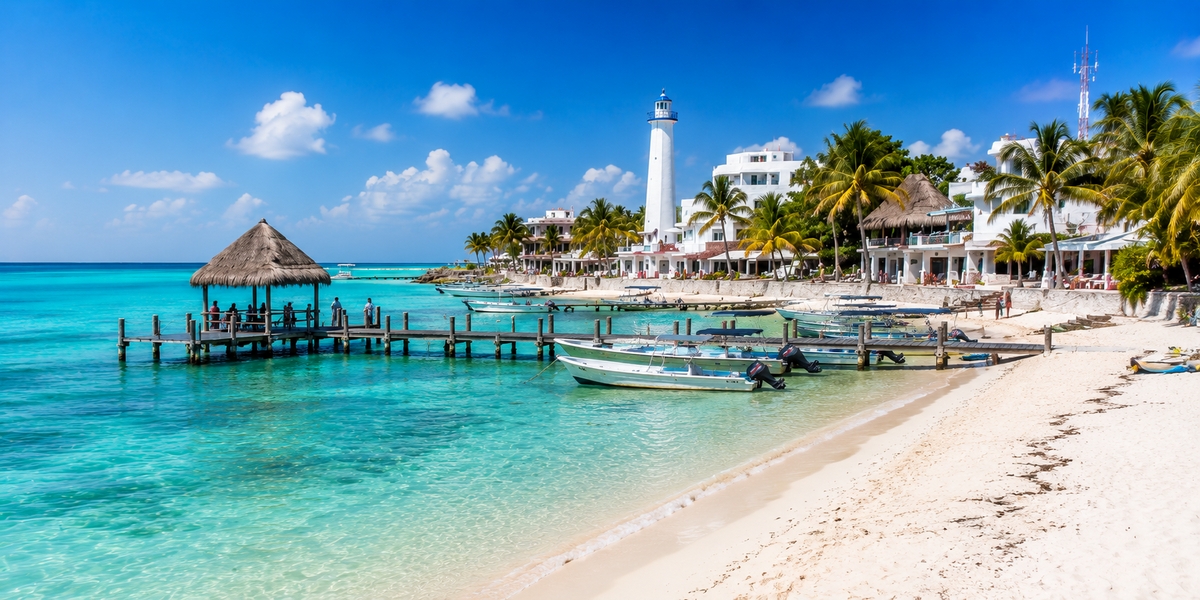
Dreams Riviera Cancun Resort & Spa
Fits well if you want a large family all-inclusive on the reef-side corridor, with calm water for kids and the scale to run daily beach cleanup.
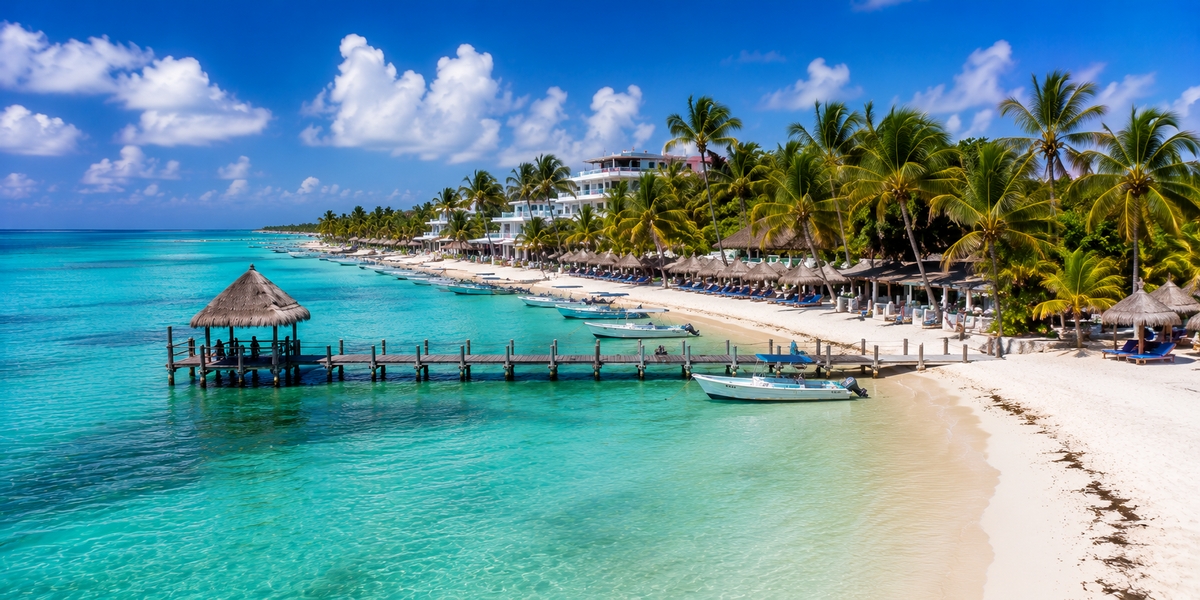
Hyatt Zilara Riviera Cancun
Fits well if you want an adults-only, reef-side stay with calm swimming and a large resort's cleanup behind the beach, away from the Hotel Zone crowds.
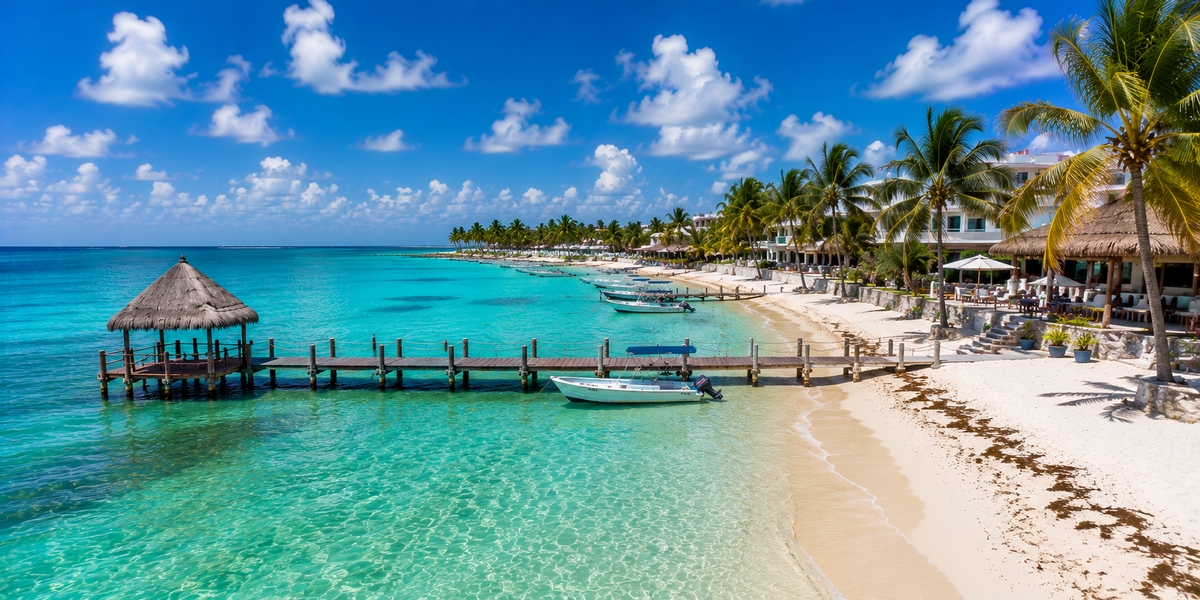
Grand Residences Riviera Cancun
Fits well if you want a quieter, upscale base right by Puerto Morelos with reef access and a calm marina-side setting, plus serious beach maintenance.
Use this search when you want calm, reef-protected water and a large all-inclusive that actively manages its beach, and you accept moderate rather than zero seaweed risk.
Compare Riviera Cancun all-inclusive resorts on Expedia Compare reef-side resorts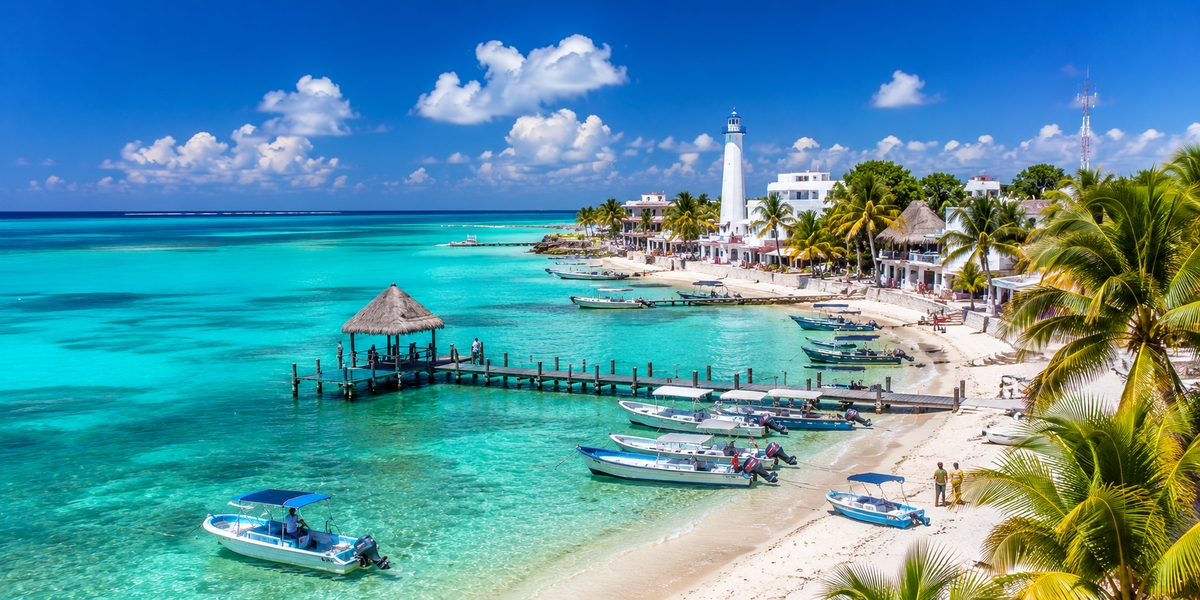
What to Check Before You Book a Protected-Beach Resort
Geography gives you the baseline. These checks tell you whether a specific resort will actually protect your week, and they take about ten minutes to run before you pay.
Before You Reserve
Open the resort page, a live beach cam and recent dated reviews. Then run these in order.
Protected-Beach Booking Mistakes to Avoid
Most seaweed disappointment is not bad luck. It is a booking decision made from the gallery instead of the map.
Booking by star rating instead of beach aspect. A five-star resort on the open east coast can still hand you a brown beach. Orientation and cleanup beat the rating for this specific problem.
Trusting gallery photos. Listing images are shot in the calmest month of the best year. Dated reviews from your travel window are the only honest preview.
Assuming "reef-protected" means seaweed-free. Puerto Morelos' reef buffers a lot, but rafts still push through in heavy weeks. Reef equals calm water, not a guarantee.
Booking "the Hotel Zone" without picking the end. North-corner beaches face the sheltered bay; open southern beaches take the direct hit. Same zone, different seaweed week.
Locking in a non-refundable peak-season rate. In the May–August window especially, a rigid booking turns a bad forecast into a loss. Pay a little more for flexibility.
Choosing a tiny boutique on an exposed beach. Small properties rarely fund real cleanup, so on an exposed coast the sand is whatever the sea delivers that morning.
If a clean, swimmable beach is the reason you are booking, choose the coastline before the hotel: Playa Mujeres or Costa Mujeres for the strongest structural protection, the northern Hotel Zone if you want Cancun's energy with better odds, or Puerto Morelos and Riviera Cancun for calm, reef-buffered water with serious resort cleanup.
What you are actually buying is not a promise — it is a stacked deck. A sheltered aspect, a close reef and a resort that rakes its sand at dawn will not guarantee a perfect beach, but together they turn "hope for the best" into a genuinely good bet, even in a heavy year like 2026.
The travelers who end up furious about seaweed almost always booked the photos and skipped the map. Do it the other way round. Pick the protected zone, screen the exact resort by its beach aspect and recent reviews, keep your rate flexible, and let the pool and the day trips cover the rare bad morning. Get that right and the brown-beach horror story is very unlikely to be yours.
Sources Checked for Beach Protection and Sargassum Risk
Sources were checked on July 3, 2026. Sargassum conditions, seasonal timing, resort cleanup practices and beach exposure can change quickly, so verify current monitoring and the exact resort page before you pay.
How this guide was checked: this is an editorial fit-and-geography analysis, not a first-hand beach report for every property. Each recommendation was built by triangulating several independent sources:
- Sargassum monitoring — the University of South Florida's Optical Oceanography Lab outlook for tropical Atlantic sargassum trends and the record scale of the 2026 season.
- Coastal geography — beach orientation, the Bahia de Mujeres shelter and the position of the Mesoamerican Barrier Reef at Puerto Morelos, which set each zone's baseline risk.
- Local cleanup context — the Mexican Navy (SEMAR) sargassum-collection program and resort-level cleanup patterns reported in recent, dated traveler reviews.
- Official hotel and tourism pages — for resort positioning, beach sections and inclusions, cross-checked against the Cancun and Quintana Roo tourism boards.
Where sources disagreed, we leaned toward the more cautious read and flagged it as something to verify on live monitoring for your dates. Hotel names are examples to compare by beach fit, not a universal ranking.
Frequently Asked Questions
Which Cancun or Riviera Maya area has the least seaweed?
In most years the sheltered zones run clearer than the open coast. Playa Mujeres and Costa Mujeres, north of Cancun, face slightly northwest into the Bahia de Mujeres rather than straight into the Caribbean, so they tend to catch less sargassum. The northern hook of the Cancun Hotel Zone, near the same bay, is calmer than the open east and south beaches like Playa Delfines. Puerto Morelos sits behind the Mesoamerican reef, which buffers a lot of seaweed before it reaches shore. None of these are seaweed-free, but they lower the odds.
Can a resort guarantee a seaweed-free beach?
No. Sargassum arrives in ocean-scale rafts driven by wind and current, and even the best-protected beach can get a bad week. What a resort can do is lower the risk and manage what lands: a sheltered location, offshore barriers and a daily cleanup crew make a real difference, but no honest hotel or guide can promise clear sand on your exact dates. Treat any "seaweed-free" guarantee as marketing.
Is Puerto Morelos really protected from sargassum by the reef?
Partly. The Mesoamerican Barrier Reef runs unusually close to shore at Puerto Morelos and intercepts a share of the sargassum, which is why the town often holds lighter conditions while nearby beaches turn red. But the reef is a buffer, not a wall: heavy rafts still push through in peak weeks. The reef's main gift is calm, shallow water for swimming and snorkeling, with seaweed risk that is moderate and usually well managed by the larger resorts.
Do bigger all-inclusive resorts really keep beaches cleaner?
Usually, yes, within their own beach section. Large all-inclusive resorts have the budget and staff to rake sand from dawn, deploy offshore sargassum barriers and haul away tonnage that a small boutique or a public beach simply cannot match. That is why the same stretch of coast can look clean in front of a mega-resort and neglected a few hundred meters away. It is one of the few cases where resort scale is a genuine practical advantage.
Is it worth paying more for a protected-beach resort?
If a clean, swimmable beach is the main reason for the trip, then yes: the premium for a sheltered zone like Playa Mujeres or a well-run reef-side resort in Puerto Morelos buys you better odds and active cleanup, which is exactly what you cannot add later. If you mostly want pool time, nightlife or Cancun energy and the beach is a bonus, you can save money in the central Hotel Zone and simply check recent beach cams and reviews before you book.
When is sargassum worst in Cancun and the Riviera Maya?
The season generally runs from around April to October, with the heaviest weeks most often between May and August. The most reliably clear window is roughly November to February. Recent years, including 2026, have seen unusually early and heavy arrivals, so the calendar is a guide, not a promise. Whatever your dates, check current monitoring and beach cams close to departure rather than trusting last year's pattern.