
Almost no one tells you this before a Cancún trip: the city is barely fifty years old, planned from sand and swamp in the 1970s, and it has almost no native food culture of its own. What you'll actually eat — the cochinita pibil, the panuchos, the al pastor — was carried in from Yucatán and central Mexico. So "where to eat in Cancún" is really a question about where those traditions landed, and the answer is: mostly not on the Hotel Zone strip.
That strip is engineered for convenience. You can walk out of your resort, cross the boulevard, and have dinner without thinking. You pay for that in two ways: a bill three to five times higher than downtown, and food that's usually competent rather than memorable. None of it is a scam. It's just a different product than the one most people picture when they imagine eating in Mexico.
This guide splits the city the way a returning traveler would: the resort-side convenience of the Hotel Zone against the value and depth of downtown (El Centro), the dishes worth crossing town for, what each level costs in real numbers, and the handful of mistakes that turn a good food city into an expensive disappointment.
Quick Answer: Where Should You Eat in Cancún?
Match the meal to the trip, not to the nearest sign. The short version, by what you care about most:
- Convenience first: eat in the Hotel Zone — easy, polished, pricey, and fine if you rarely want to leave the strip.
- Value and real local food: head to downtown (El Centro) — half the price or less, and where the city actually eats.
- One trip, the best of both: resort breakfasts and a couple of strip dinners, plus two or three downtown meals built around the dishes below.
Beachfront restaurants, lagoon-side fine dining, and quick taquerías between the resorts. Zero logistics: you eat where you sleep.
Taquerías, marisquerías, market loncherías, and the restaurants along Avenida Nader. Lower prices, deeper flavor, real city life.
Breakfast and the odd convenient dinner near the beach, then plan a few downtown meals around what you actually want to taste.
The Two Cancúns of Eating
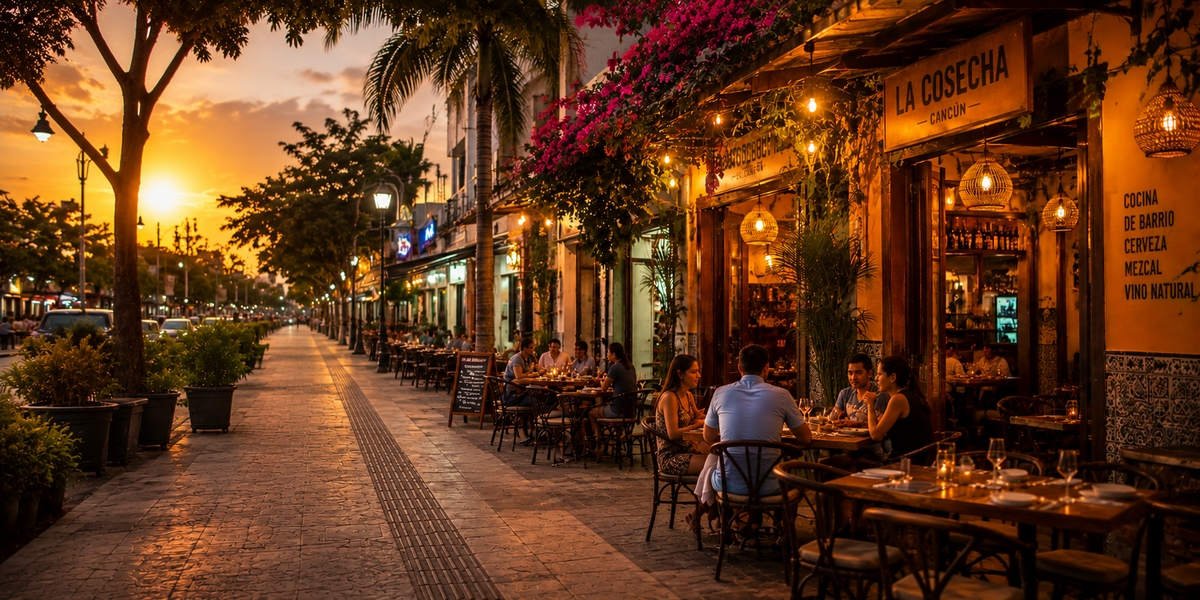
Cancún is two cities stitched together by one long boulevard. The Hotel Zone (Zona Hotelera) is the 22-kilometre strip of resorts, malls, and beach clubs curling along the Caribbean. Downtown — El Centro — is the inland working city where roughly 90 percent of the population actually lives, shops, and eats. They feel like different countries at dinnertime.
On the strip, restaurants compete for a captive audience: tired travelers who don't want to organize transport after a beach day. That produces glossy menus, English everywhere, mariachi on a timer, and guacamole made tableside for the price of a downtown feast. Some of it is genuinely excellent, especially the higher-end places overlooking the Nichupté lagoon. A lot of it is ordinary food wearing a resort markup.
Downtown plays by normal Mexican rules. Prices are set by locals who eat out constantly, competition is fierce, and a place that overcharges or undercooks simply doesn't survive. This is where you find the taquería that's been perfecting one thing for thirty years, the marisquería packed at 3pm, the market stall whose cochinita sells out by noon. Where you sleep is a separate decision — our guide to staying in the Hotel Zone vs downtown covers that — but even if you never consider sleeping downtown, it's worth the trip for a meal.
Hotel Zone vs Downtown, Side by Side
If you only read one part of this guide, make it this. The two areas don't differ by a little; they differ on almost every axis that matters at mealtime. Here is the comparison, the way we weigh it before deciding where to book a table.
| What matters | Hotel Zone | Downtown (El Centro) |
|---|---|---|
| Price (similar meal) | Highest Tourist pricing; 3–5× downtown for a comparable dish. |
Best value Local pricing; the same plate for a fraction of the cost. |
| Authenticity | Mixed Polished, international, some real gems among the tourist spots. |
High Regional Yucatecan and Mexican food made for locals. |
| Convenience | Effortless Walk from your room; no transport, English menus everywhere. |
A short trip 20–30 min by bus or taxi; more Spanish on the menu. |
| Atmosphere | Resort polish Beach views, lagoon-side dining, designed for visitors. |
Real city Parks, plazas, market bustle, everyday local life. |
| Best for | Short trips, families set on the beach, anyone avoiding logistics. | Food-curious travelers, budget-minded eaters, longer stays. |
Where the Food Actually Lives
"Downtown" isn't one thing either. The good eating clusters in a few specific kinds of places, and knowing the categories saves you from wandering Avenida Tulum hoping for the best. These are the formats worth seeking out.
Best Areas for Food in Cancún
- Avenida Nader: Sit-down restaurants, mid-range local dinners.
- Parque de las Palapas: Evening street food, marquesitas, antojitos.
- Mercado 23: Morning and midday market stalls, home-style Yucatecan dishes.
- Puerto Juárez: Fresh seafood and marisquerías right on the water.
- Hotel Zone Lagoon Side: Fine dining, upscale atmosphere, sunset views.
Taquerías & al pastor stands
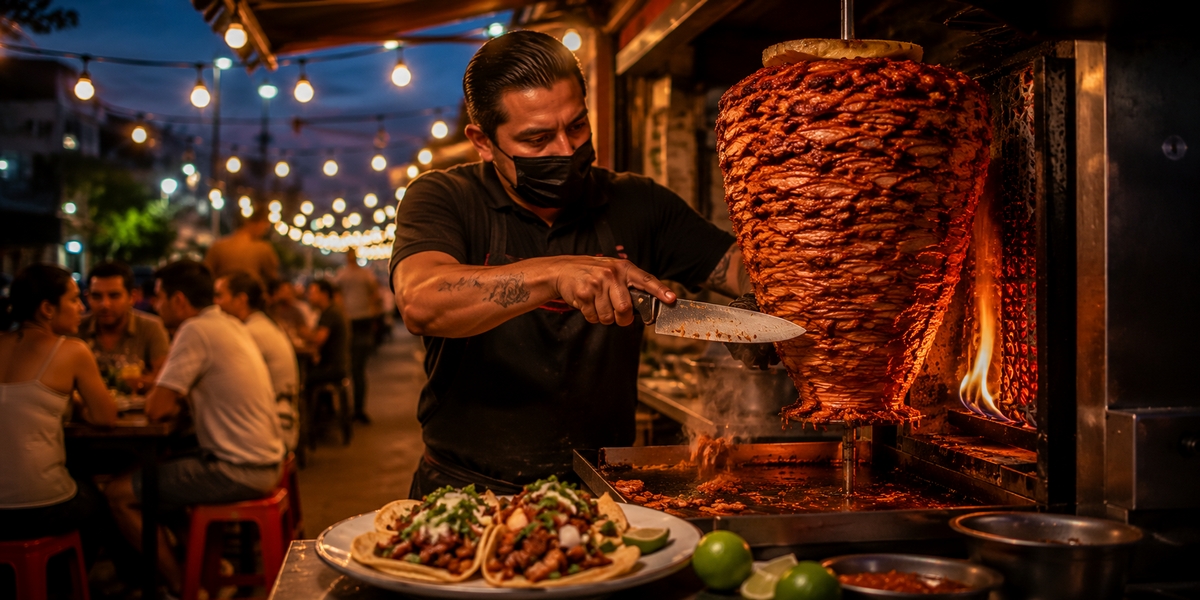
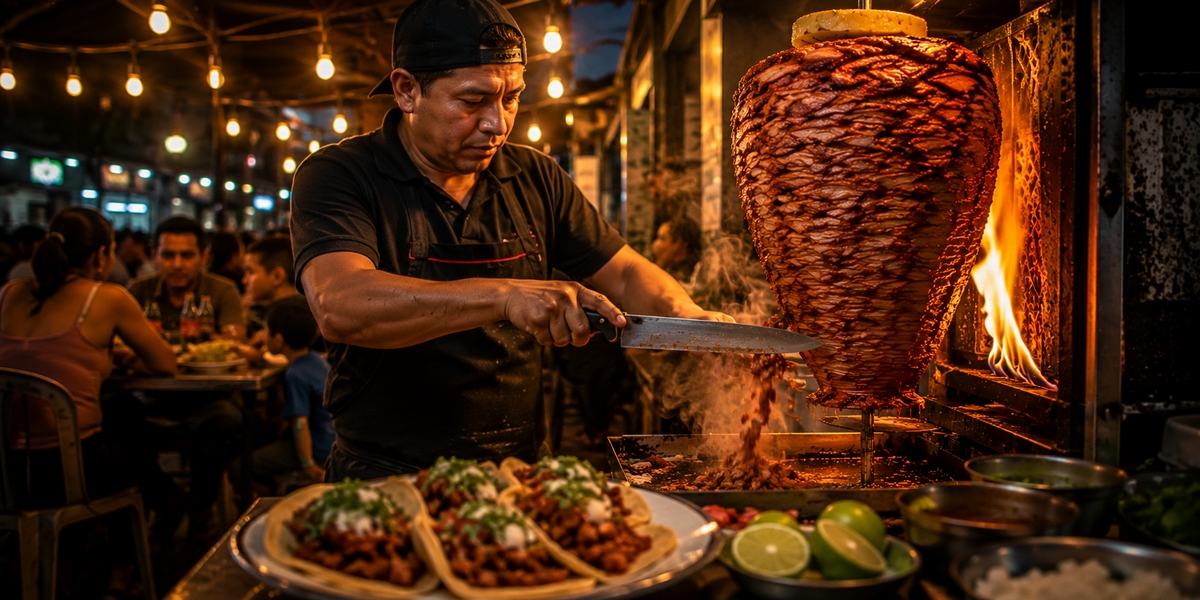
The backbone of Mexican eating. Look for a busy spot with a vertical trompo of al pastor turning by the door and a line of locals. Tacos are cheap, fast, and often the best thing you'll eat all week.
Anchor spots: Tacos Rigo, Taquería Coapexpan, Los Tarascos.
Marisquerías
Caribbean coast, so the ceviche, aguachile, and pescadillas are the point. These peak at lunch and into the afternoon, not late at night. A busy marisquería at 2–3pm is exactly where you want to be.
Anchor spots: El Oasis, Los de Pescado, Kiosco Verde.
Markets & loncherías
Mercado 23 (still mostly a real local market) and small loncherías serve home-style Yucatecan food — cochinita, relleno negro, panuchos — at the lowest prices in the city. Go early; the best dishes sell out by midday.
Anchor spots: Lonchería El Pocito, Emara Antojitos, and stalls inside Mercado 23.
Avenida Nader & Parque de las Palapas
For a proper downtown dinner with atmosphere, Avenida Nader has the city's better mid-range restaurants, while the food stalls around Parque de las Palapas serve marquesitas, esquites, and antojitos to a mostly local evening crowd.
One honest warning about a name you'll see everywhere: Mercado 28. It's marketed hard as the place to eat downtown, but it has drifted into a souvenir bazaar with restaurants that aggressively wave tourists in and price accordingly. It isn't terrible, but it's the most overrated "local" food stop in Cancún — the genuinely good downtown places rarely have someone outside trying to pull you through the door.
What Not to Miss on the Plate
Mexico's traditional cuisine is on UNESCO's list of Intangible Cultural Heritage of Humanity — one of the few cuisines in the world to earn that — and the Yucatán has its own distinct branch of it. Skip the generic "Mexican combo plate" on the strip and chase these instead.
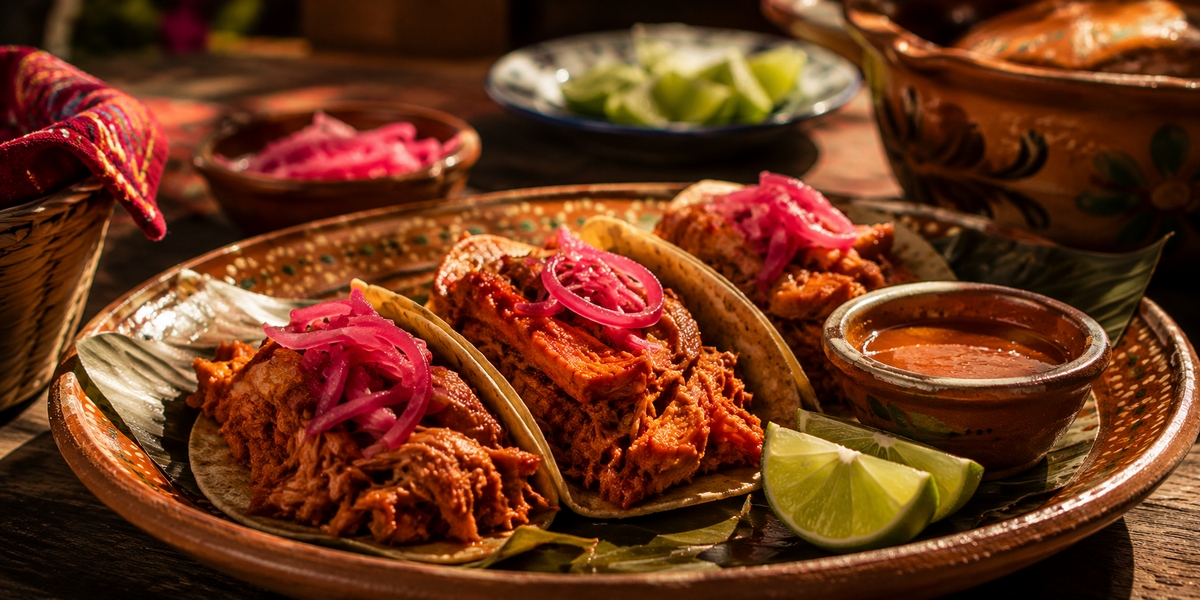
Start with cochinita pibil, the regional signature: pork marinated in achiote and bitter orange, wrapped in banana leaf, and slow-roasted until it falls apart. It's traditionally a morning-into-lunch dish, often served in tacos or tortas with pickled red onion, so a place that runs out by afternoon is usually a good sign, not a bad one. Around it sit panuchos and salbutes — fried tortillas topped with turkey or chicken, the difference being whether the tortilla is stuffed with refried beans.
Then the everyday greats. Tacos al pastor (spit-roasted pork with pineapple, a Mexican adaptation of Lebanese shawarma, and not actually Yucatecan) are the late-night staple. On the coast, lean into marisco: bright lime-cured ceviche and fiery aguachile. To drink, order an agua de jamaica (tart hibiscus) or horchata (cinnamon rice) rather than a soda. And leave room for a marquesita — a Yucatán street dessert that folds a crispy crepe around, of all things, shredded Edam cheese and cajeta. The sweet-and-cheese combination sounds wrong and tastes like the best decision of the night.
| If you only try one... | Order |
|---|---|
| Breakfast | Cochinita pibil (tacos or torta) |
| Lunch | Ceviche or aguachile |
| Dinner | Tacos al pastor |
| Dessert | Marquesita (street crepe) |
What Eating Costs at Each Level
Food in Cancún spans an enormous range, and where you eat matters far more than what you order. These are realistic 2026 numbers for two people, drinks aside. Match the tier to the meal rather than eating at one level all week.
- Best value and often the best flavor
- Cash in small peso notes
- Safe at busy, high-turnover stands
- Air conditioning, full menus, table service
- The downtown sweet spot for dinner
- Add ~10–15% tip
- Convenience, views, polished service
- Watch for service charges on the bill
- Best reserved for a special night
Consider the gap in one concrete example. A casual dinner for two — a round of tacos or a seafood plate each, plus a couple of aguas frescas — runs about $20–30 at a busy downtown taquería or marisquería. The same idea on the Hotel Zone strip, in a beach-view restaurant with an English menu, lands closer to $70–90 once you add drinks and the near-automatic service charge. Same hunger, same satisfaction, two to three times the bill. For how this fits the full trip, our Cancún budget guide breaks down food alongside hotels and transport.
How to Eat Well Without Getting Burned
While having a few anchor addresses helps, eating brilliantly in Cancún is really about a few habits that consistently lead you to the right table and away from the wrong one.
On the safety question travelers worry about most: street food here is not dangerous by default. A busy stand serving food hot off the grill is often safer than a half-empty restaurant with trays sitting under a warmer. The real culprits are lukewarm food, raw salsas, pre-cut fruit, and tap-water ice — our food and water safety in Mexico guide walks through exactly what to eat freely and what to approach with care.
Getting Downtown for Dinner
The thing that stops most visitors from eating well in Cancún isn't money — it's the assumption that leaving the Hotel Zone is complicated. It isn't. The R-1 and R-2 city buses run the length of the Hotel Zone boulevard and straight into downtown all day and late into the evening, for a flat fare of about a dollar paid in pesos to the driver. You flag them down anywhere along Boulevard Kukulcán.
If you'd rather not wait, a taxi covers the same trip in roughly 20–30 minutes and usually runs around $10–15. Two cautions: Cancún taxis don't use meters, so agree the fare before you get in, and the published Hotel Zone rates are higher than downtown ones. For a group of three or four, a single taxi split is genuinely cheap. The trip back after dinner works the same way; buses thin out late, so a taxi home from downtown is the normal move after about 10pm.
Mistakes That Ruin a Cancún Meal
Most food disappointment in Cancún isn't bad luck. It's a handful of avoidable habits that quietly steer travelers toward the wrong tables.
Eating every meal on the strip. Convenience is real, but a full week of Hotel Zone restaurants means paying triple for food that's a notch above average. Even two downtown meals change the whole trip's memory of the food.
Trusting the host who waves you in. In tourist zones, the harder a place works to pull you off the street, the less it relies on the food. The spots locals love almost never need to.
Paying the tip twice. A service charge already on the bill plus a full tip on top is a common, quiet overpay. Read the total before you add anything.
Saving seafood and cochinita for dinner. These are lunchtime dishes. Order them at night and you're often getting the reheated remainder of the day, not the reason the place has a reputation.
Sources Checked
Sources checked on June 24, 2026. Restaurant prices, bus fares, and the exact line-up of good downtown spots shift over time, so treat the numbers here as realistic ranges and verify current prices and recent reviews close to your trip.
How this guide was checked: We cross-referenced regional Yucatecan cuisine references, Mexico's consumer-protection guidance on restaurant bills and tipping (Profeco), UNESCO's recognition of traditional Mexican cuisine, current Cancún city-bus fare and taxi norms, and recent traveler-facing food reports for the Hotel Zone and El Centro. Specific anchor venues are provided as starting points, but we focus on habits and areas because the broader restaurant scene changes frequently.
Frequently Asked Questions
Is it cheaper to eat in downtown Cancún than in the Hotel Zone?
Yes, and the gap is large. A similar meal often costs three to five times more in the Hotel Zone than in downtown Cancún (El Centro). A casual dinner for two runs roughly $20–35 at a downtown taquería or marisquería and closer to $45–80 at a Hotel Zone tourist restaurant, before drinks. You pay for location, air conditioning, and atmosphere, not necessarily for better food. The downtown places are where most locals actually eat.
What food should I not miss in Cancún?
Focus on Yucatecan and Mexican classics rather than generic resort food: cochinita pibil (slow-roasted pork with achiote and sour orange), tacos al pastor, fresh ceviche and other marisco, panuchos and salbutes, and a cold agua de jamaica (hibiscus) or horchata to drink. For dessert, try a marquesita, a crispy street crepe usually filled with Edam cheese and cajeta. Cancún itself is a young resort city, so the dishes worth seeking out are really regional foods brought in from Yucatán and central Mexico.
Is street food safe to eat in Cancún?
Often, yes. A busy taco stand with a line of locals and high turnover, serving food that comes off the grill steaming hot, is usually a safe bet. The real risks are lukewarm food sitting out, raw salsas and pre-cut fruit washed in tap water, and homemade ice or aguas frescas made with tap water. Eat what is cooked hot in front of you, stick to sealed bottled or canned drinks where you cannot vouch for the ice, and follow the crowd. See our food and water safety guide for the full version.
How do I get from the Hotel Zone to downtown Cancún for dinner?
The R-1 and R-2 city buses run along the Hotel Zone boulevard and into downtown for a flat fare of about a dollar, paid in pesos to the driver. They run frequently into the late evening. A taxi covers the same trip in roughly 20–30 minutes depending on traffic and usually costs around $10–15, but agree the price before getting in, since Cancún taxis do not use meters. For a group, a taxi split several ways can beat the bus on convenience.
Do I tip at restaurants in Cancún, and how much?
Yes. A propina of about 10–15 percent is standard at sit-down restaurants, a little more for genuinely good service. Check the bill first: some tourist-area restaurants add a suggested tip or a service charge (propina sugerida) directly to the total. Under Profeco (Mexico's consumer-protection authority) rules, a tip cannot be forced on you, so if it is already included you do not need to add more. Carry small peso notes, since tips left in cash are simplest and most appreciated.
Is the food in the Hotel Zone actually bad?
No, but it is overpriced and uneven. The Hotel Zone has genuinely good restaurants, especially higher-end ones around the Nichupté lagoon, alongside a lot of mediocre tourist spots charging premium prices for ordinary food. You are paying for convenience and setting. If you never want to leave the strip, you can eat well there; if value and authenticity matter, a short trip downtown changes both the price and the food.
Eat Well in Cancún: The Short Version
If you remember nothing else, remember these.
The best food in Cancún is cheaper, more local, and a short bus ride away from where most visitors eat it.
For most travelers, the move is simple: use the Hotel Zone for convenience — breakfast, a beach lunch, the odd easy dinner — and go downtown for the meals that matter, built around cochinita pibil, fresh marisco, and a market stall or two. You'll spend less and eat far better.
Stay on the strip every night and you won't go hungry — you'll just pay resort prices for the least interesting version of one of Mexico's great food regions, and never know what you missed.