
Every summer a strange thing happens in the open water off the northern tip of the Yucatan: hundreds of whale sharks, the largest fish on the planet, drift in to feed on plankton blooms and tuna spawn. You can put on a mask, slide off the side of a small boat, and find yourself a few feet from a spotted animal the length of a bus, moving slowly enough to swim beside it. It is one of the few wildlife encounters in the region that genuinely earns the word unforgettable.
It is also one of the easiest to romanticize into disappointment. The window is narrow, the crossing is rough enough to flatten people who never get seasick, and the actual time in the water is measured in minutes, not hours. Strict rules cap how many swimmers can be near a shark, so a busy day is partly spent waiting your turn while boats jockey for position.
None of that should talk you out of it. It should change how you book. The travelers who come back glowing are almost always the ones who picked the right month, the right departure point, and an operator that wasn't the cheapest line on the page. This guide is about getting those three decisions right before you pay.
Quick Answer: Whale Sharks Near Cancun and Holbox
The short version: go between mid-May and mid-September, with July and August as the safe bet; depart from Isla Mujeres or Cancun if that is where you are based and from Holbox if you want the slower island; and budget for a small-group tour rather than the cheapest seat.
- Season: May 15–September 17, the dates Mexico's CONANP regulates; peak July–August. No tours run outside it.
- Two departure points: Isla Mujeres / Cancun (quicker, pairs with clear-water snorkeling) vs Holbox (closer in shoulder season, more laid-back, far from Cancun).
- Cost: shared group tours run about $150–$250 per person; private boats start near $1,200.
- Real water time: about 30–40 minutes total, in short rotations — rules allow only two swimmers plus a guide per shark.
- Biggest risk: seasickness and open-water nerves, not the animals. Skip it if either is a real problem for you.
Reach the aggregation in about an hour, then snorkel clearer Caribbean water on the way back. The simplest day if your hotel is in the Hotel Zone or Playa.
Closer to the sharks in early and late season, with a calmer, car-free island as your base. Often a shorter boat ride once you are actually there.
The largest aggregations and the highest odds of a calm-enough sea. If you only get one shot, this is the window to aim for.
Deep water, a moving boat, chop and a big animal are a lot at once. Reef snorkeling or a cenote may be the better marine day.
If you are still assembling the wider trip, this slots neatly next to the region's other water days — see the best day trips from Cancun for how a shark day competes with Isla Mujeres, cenotes and the ruins for your limited mornings.
The Season, Honestly
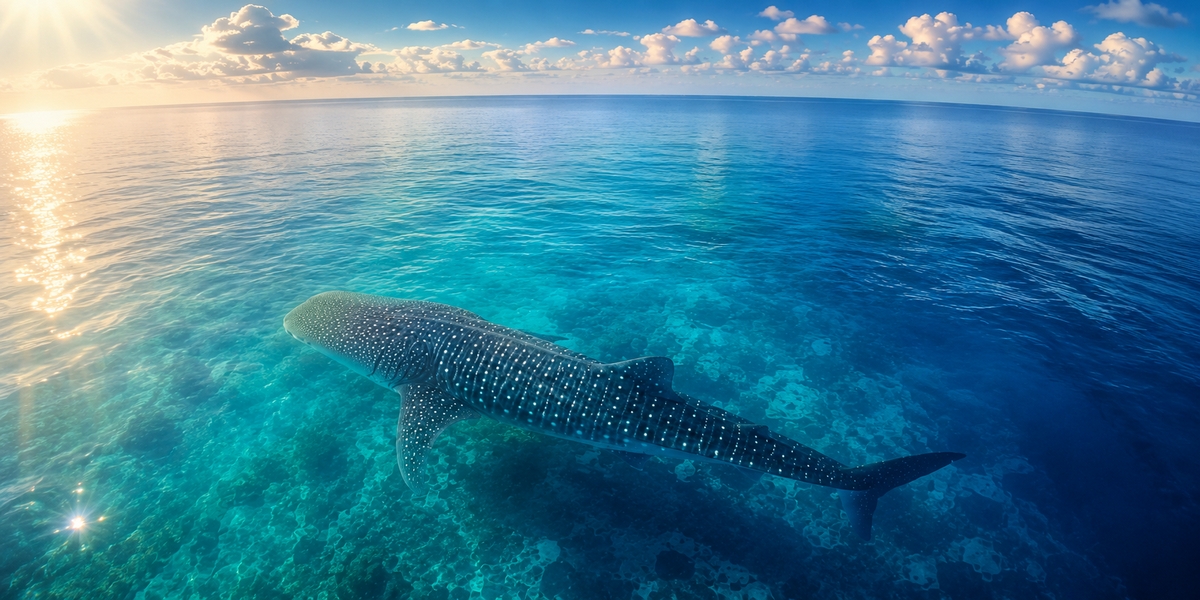
Whale sharks off the Yucatan are not a year-round attraction that marketing photos quietly imply. They follow food. From late spring into early autumn, plankton blooms and a massive little-tunny (tuna) spawning event draw the animals into the waters north of Isla Mujeres, Isla Contoy and Holbox, and that is the only time you can swim with them here. Mexico's CONANP, the national protected-areas commission, regulates the encounter inside the Reserva de la Biosfera Tiburón Ballena — a roughly 145,988-hectare marine reserve decreed in 2009 — and sets the season (May 15 to September 17), the daily swimming window (7 a.m. to 2 p.m.), the boat permits, and the in-water rules.
Scale is the part that doesn't translate to a screen. The whale shark is the largest fish on Earth: NOAA Fisheries puts the commonly accepted maximum near 46 feet (about 14 meters) and 24,000 pounds, though most animals you'll meet on the Yucatan aggregation are sub-adults in the 20-to-39-foot range. They are filter feeders with more than 3,000 tiny teeth they never use for eating — they strain plankton and fish eggs through their gills — which is exactly why a five-meter animal will glide past a snorkeler without the slightest interest.
And the gathering is genuinely world-class, not marketing. The sharks congregate at two nearby sites off the northeastern tip of the peninsula: the green inshore water north of Cabo Catoche, and the deep blue "Afuera" zone offshore between Isla Mujeres and Isla Contoy, roughly 15 to 25 miles out. In a single 2009 aerial survey at the Afuera, researchers publishing in PLOS ONE counted about 420 whale sharks feeding in an area of just 18 square kilometers — the largest aggregation of the species ever documented.
Within the season the experience is not flat. May and early June are real but streaky: the animals are arriving, numbers are lower, and a windy morning can scrub the trip entirely. Most certified operators don't start daily trips until around June 1, and several rate shoulder-month sightings near a 75 percent chance rather than the near-certainty of high summer. July and August are when the aggregation peaks — the stretch that produces the drone footage of dozens of sharks feeding at the surface at once. By September the season is tapering, and the back half overlaps the wetter, less predictable part of the calendar described in the Cancun and Riviera Maya timing guide.
Isla Mujeres or Holbox: Which Departure Point
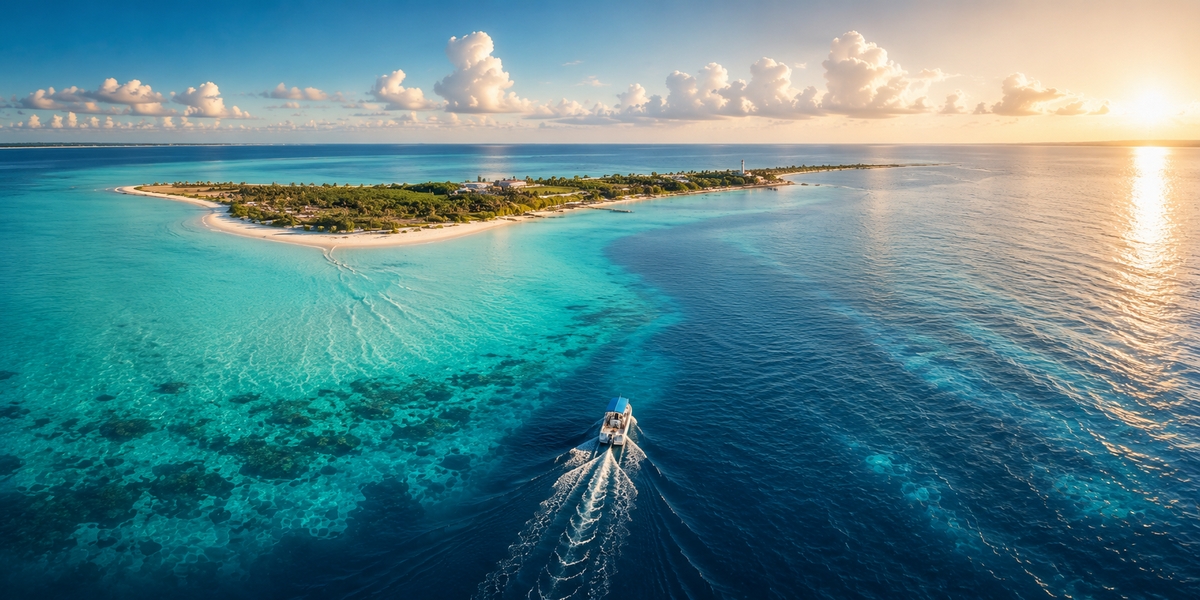
The sharks gather in roughly the same offshore zone, but you can reach them from two very different worlds. Tours leave from Cancun and Isla Mujeres on the Caribbean side, and from Holbox on the Gulf side. The animals don't care which dock you used; your day, your boat ride, and the rest of your week change a lot depending on the answer.
The honest split is this. If you are already staying in or around Cancun, the Isla Mujeres departure is the path of least resistance: a transfer to the marina, then about a 30-to-45-minute crossing from Isla Mujeres (closer to an hour from the Hotel Zone docks) out to the aggregation, and a stop on the way back to snorkel the clear water and reefs that the Caribbean side does better. Holbox is its own destination — a car-free, sand-street island that many travelers love — but reaching it means a bus or drive to Chiquila plus a ferry, three hours or more from Cancun before you've seen a single fin. Go from Holbox because you want to be on Holbox, not as a quick add-on.
| Criteria | Isla Mujeres / Cancun | Holbox |
|---|---|---|
| Getting there | Easy Marina is a short transfer from the Hotel Zone or Playa. |
A trip in itself 3+ hours from Cancun via Chiquila ferry. |
| Boat ride to sharks | ~30–60 min 15–25 mi out; choppy open-water crossing. |
Often shorter Closer to the grounds in early/late season. |
| Water for snorkeling | Clearer Caribbean blue; pairs with reef stops. |
Greener Gulf water is richer, less postcard-clear. |
| Crowds at the site | Higher The popular, most-booked departure. |
Calmer feel Fewer boats, more laid-back pace. |
| Best paired with | A Cancun or Isla Mujeres beach trip. | Two or more nights on Holbox itself. |
| Best for | Most first-timers based near Cancun. | Slow travelers already on the island. |
One nuance worth knowing: early and late in the season the aggregation often sits nearer Holbox and Isla Contoy, which is why Holbox operators sometimes report shorter rides in May and September. In the July–August peak the difference narrows and the Cancun-side convenience usually wins. If the island appeals on its own merits, the Holbox island guide covers whether it's worth the journey and how many nights it really needs — a separate Holbox hotels comparison is coming, but the guide is the place to start.
What the Day Is Really Like
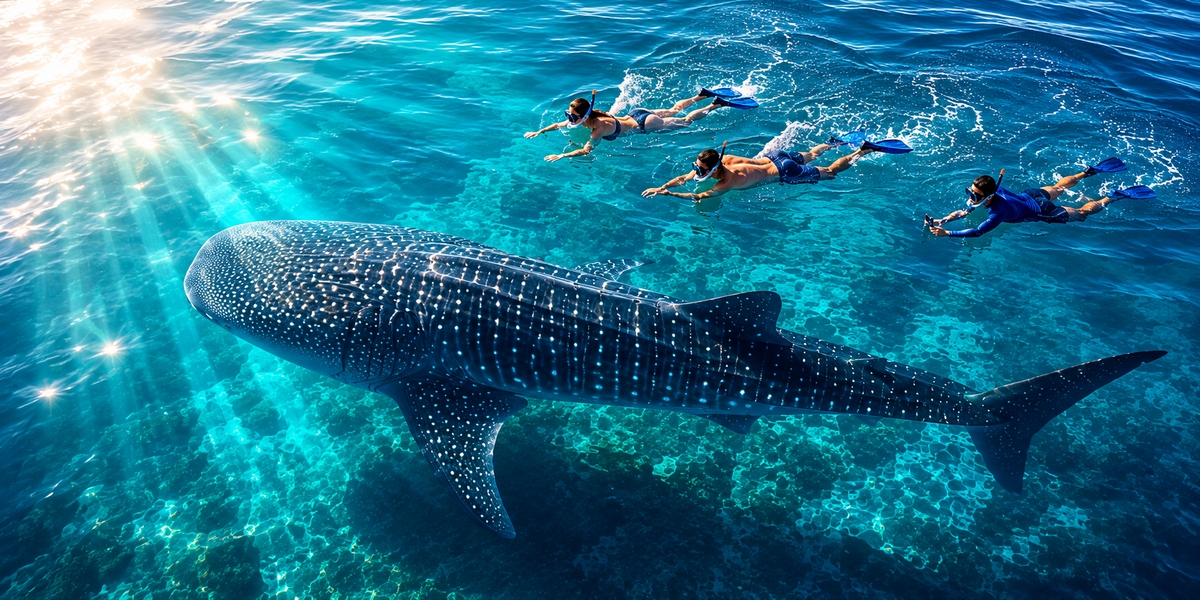
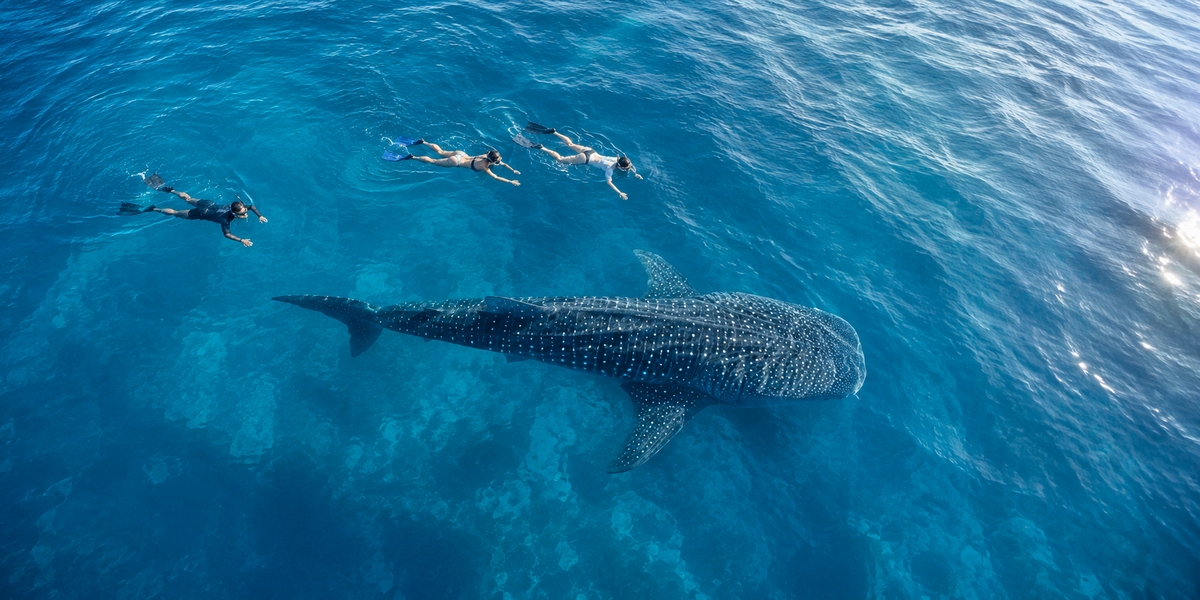
Here is the part the brochures skip. You will spend most of the day not in the water. Boats are capped at around ten guests, and a typical trip is an early start, a transfer, a safety and rules briefing, the crossing out, and then a stretch of motoring around while the captain and guide spot dorsal fins. When a shark is found, the boat positions, and swimmers go in two at a time with the guide — because that's the legal limit — for a short rotation before climbing back aboard so the next pair can go.
Add it up and most guests get two to four brief entries of a few minutes each — commonly quoted as somewhere around 30 to 40 minutes of cumulative water time, and sometimes less on a busy boat. That sounds thin written down. In the water it doesn't feel thin at all: a five-meter animal sliding past at arm's length rearranges your sense of scale in a way that a longer, duller encounter never would. But travelers who picture an hour of serene solo swimming come back vaguely let down, and that's an expectations problem, not a tour problem.
The rules are strict and enforced, and they're the reason the encounter still exists. No touching or riding the animals, no sunscreen that isn't reef-safe, no free-diving down to them, no drones, stay with your guide, and keep clear of the tail. Every visitor also pays a small reserve fee (around 225 pesos per person per day) that funds the protected area, and each boat carries a numbered CONANP permit. On a peak day you'll see other boats holding the same line nearby; it can feel busy on the surface. Under it, with a shark in frame, the crowd disappears.
Choosing a Tour (and Not Getting Seasick)
Two things separate a great shark day from a miserable one: the operator you pick and how your stomach handles an hour on open water. Both are manageable if you plan for them instead of hoping.
On price, a concrete example helps. Picture two listings for the same morning: a $150 large-boat tour picking up across the Hotel Zone, and a $230 small-group departure from Isla Mujeres. The gap isn't the operator gouging you — it's fewer swimmers per shark, a guide who isn't rushing a full boat through rotations, and a calmer ride home. On a once-in-a-trip wildlife day, that $80 buys the part you'll actually remember. (Private boats exist too, starting around $1,200, which only makes sense for a family or group splitting the cost.)
One non-negotiable before you pay: confirm the operator is permitted. Every legal boat carries a SEMARNAT authorization and a numbered CONANP flag, and enforcement is real — in 2024 Mexico's environmental inspector PROFEPA shut down 5 of 53 boats it checked for expired or missing permits. Ask for the permit number; an operator who can't show one is a hard pass. The same logic that applies to picking a snorkeling operator applies here, and the snorkeling guide for Cancun, Isla Mujeres and Cozumel walks through reading an operator before you book.
Who Should Go, and Who Should Skip It
This is a sharper filter than most tours need, because the day asks something of you physically. Match yourself honestly — the encounter is extraordinary for the right traveler and genuinely unpleasant for the wrong one.
Confident swimmer, bucket-list mindset
→ You'll handle the jump, the chop and the deep water, and the short rotations won't bother you. This is exactly the trip you came for.
Prone to seasickness
→ Worth it if you medicate properly and pick a calm peak-season morning. Go in unprepared and the crossing can define your day instead of the shark.
Anxious in open, deep water
→ Entering open ocean from a moving boat with a large animal nearby is a lot at once. Reef snorkeling in shallower water is the better marine day.
Families with young children
→ Strong-swimming teens usually love it; under-tens and nervous kids often don't. A cenote or calm beach day fits the whole family better.
Mistakes Travelers Make
Most whale shark regret traces back to one of a handful of avoidable booking errors, not bad luck on the water.
Booking outside the season. There are no whale sharks here in winter or spring, no matter what a generic "things to do in Cancun" list implies. Confirm your dates fall mid-May to mid-September before you build the trip around it.
Pinning it to your only free morning. Weather cancellations are common at the edges of the season. With one shot and no buffer, a windy day ends the dream entirely. Leave yourself a backup slot.
Chasing the lowest price. The cheapest boats are the most crowded, which means less water time and more pressure on the animals. Operator quality, not price, decides how the day feels.
Skipping the seasickness plan. "I never get seasick" fails a lot of people on a still boat in open swell. Medicate in advance and eat a light breakfast; don't gamble your one shot on your stomach.
If a weather day does cancel your swim, the region has strong fallbacks that don't depend on the open sea — an Isla Mujeres day trip keeps you near the water with far calmer logistics, and the cenotes inland stay clear and swimmable whatever the wind is doing.
Sources Checked
Sources checked on June 18, 2026. The biological facts (size, feeding, the reserve decree) are stable; the moving parts — exact season enforcement, boat permits, reserve fees, and tour prices — shift year to year and by operator, so confirm the current season and cancellation terms close to travel.
How this guide was checked: Season dates, the protected-area boundaries, the daily 7 a.m.–2 p.m. swimming window, and the in-water rules come from CONANP's reserve listing and the federal management program (Programa de Manejo) published in the Diario Oficial de la Federación. Whale shark size and feeding biology come from NOAA Fisheries. The aggregation count (about 420 sharks in 18 km², 2009) comes from the peer-reviewed PLOS ONE survey. Tour prices, boat caps, and sighting odds are drawn from current licensed operators and kept as ranges, not guarantees, because no operator may promise a sighting under federal rules.
Frequently Asked Questions
When is whale shark season near Cancun and Holbox?
The season runs roughly from mid-May to mid-September, the window Mexico's CONANP regulates for the whale shark reserve off the Yucatan coast. July and August are the reliable peak, when the largest aggregations gather and most boats see animals. May and September are real but more of a gamble, with fewer sharks and weather that can cancel a day. Outside that window there are no tours, because the animals simply are not there.
Should I take the whale shark tour from Isla Mujeres or Holbox?
From Isla Mujeres or Cancun you reach the aggregation in roughly an hour and pair the day with clearer Caribbean water for snorkeling, which suits travelers already based in Cancun. Holbox sits closer to the feeding grounds in early and late season and feels more laid-back, but it is a three-hour-plus trip from Cancun to get there. If you are staying in or near Cancun, the Isla Mujeres departure is the simpler call. If you are already on Holbox or want the slower island, depart from there.
How long do you actually spend in the water with whale sharks?
Far less than people expect. Mexican rules allow only two swimmers plus a guide in the water with a shark at a time, so you take turns from the boat in short rotations. Across the whole trip you usually get around 30 to 40 minutes of actual water time, split into several brief jumps of a minute or two each. The rest of the day is the boat ride, waiting your turn, and the return. Going in expecting a few intense minutes rather than an hour of swimming alongside one keeps the day from feeling like a letdown.
Is swimming with whale sharks dangerous?
Whale sharks are filter feeders that eat plankton, not people, and there is no record of one harming a snorkeler. The real risks are seasickness on the open-water crossing and your own swimming confidence in deep water with chop and several boats nearby. A life jacket or wetsuit is mandatory and helps, but if open water makes you anxious, the experience can feel overwhelming. Touching the animals is strictly forbidden under reserve rules.
Should I book the cheapest whale shark tour?
No. The cheapest tours fill larger boats with more swimmers, which means longer waits for your turn, more rushing, and more pressure on the animals. A slightly more expensive small-group tour buys fewer people per boat, a guide who manages rotations properly, and often a marine biologist on board. On a trip this weather-dependent and this regulated, the operator matters more than the headline price.
How much does it cost to swim with whale sharks near Cancun?
Shared group tours from Cancun, Isla Mujeres or Holbox typically run about $150 to $250 per person, usually including hotel pickup, breakfast, snorkel gear, a certified bilingual guide, and lunch. The cheapest end packs more swimmers onto a bigger boat, so paying toward the top of the range buys a smaller group and more water time. Private boats start around $1,200 and make sense mainly for families or groups splitting the cost. Everyone also pays a small reserve fee of around 225 pesos per day, and no operator may legally guarantee a sighting.
Can children or non-swimmers do the whale shark tour?
It is not a good fit for young children or nervous non-swimmers. The entry is a jump into open ocean from a moving boat, the water is deep, and you need to keep pace with a guide while a large animal passes. Strong-swimming older kids and teens usually manage well; very young children, anyone prone to seasickness, and people uneasy in deep water are better off choosing calmer marine experiences like reef snorkeling or a cenote instead.
Before You Book the Shark Swim
The five decisions that separate a great day from a wasted one.
If you remember one thing: swimming with whale sharks is worth it for confident swimmers who book the right month and the right operator — and a poor fit for anyone uneasy in open water.
For most travelers based near Cancun, the move is a small-group Isla Mujeres departure in July or August, with a backup morning held and seasickness handled before you board. That combination turns a gamble into a near-sure thing.
Go from Holbox only if the island is part of the plan in its own right. And if open water or a queasy stomach is a genuine worry, there's no shame in trading the shark for clearer, calmer snorkeling — you'll enjoy the day you're actually in.