
The number that sells you the trip is the nightly room rate. The number you actually pay is something else, and in Quintana Roo — the state that holds Cancun, Playa del Carmen, Tulum, and Cozumel — the gap between the two is wider than almost anywhere else in Mexico. None of the extra charges are scams. Most are taxes, a couple are local fees, and one or two are choices you make at a card terminal without realizing you made them.
The frustrating part is how the surprise usually arrives. People brace for some giant "resort fee" in the US hotel style and then get nicked instead by a fifteen-dollar tax they could have paid online, a small cash fee at the front desk, and a currency toggle that skims ten percent off every purchase. Small things, stacked, in places you weren't watching.
This guide lays out the whole stack: the taxes you can't avoid, the ones you pay yourself, the fees that appear at check-in, and the upsells waiting inside an all-inclusive. The goal isn't to scare you off — the total is rarely dramatic — it's to make sure the final bill matches the trip you thought you booked.
Quick Answer: What Lands on Top of the Rate
If you only read one section, read this. Beyond the nightly room rate, a Cancun or Riviera Maya trip in 2026 typically adds:
- Room taxes — 16% IVA plus roughly a 6% state lodging tax, sometimes already inside your quote, sometimes added at checkout;
- Visitax — a one-time state tourist tax of about $15 per person, paid online, never on the hotel bill;
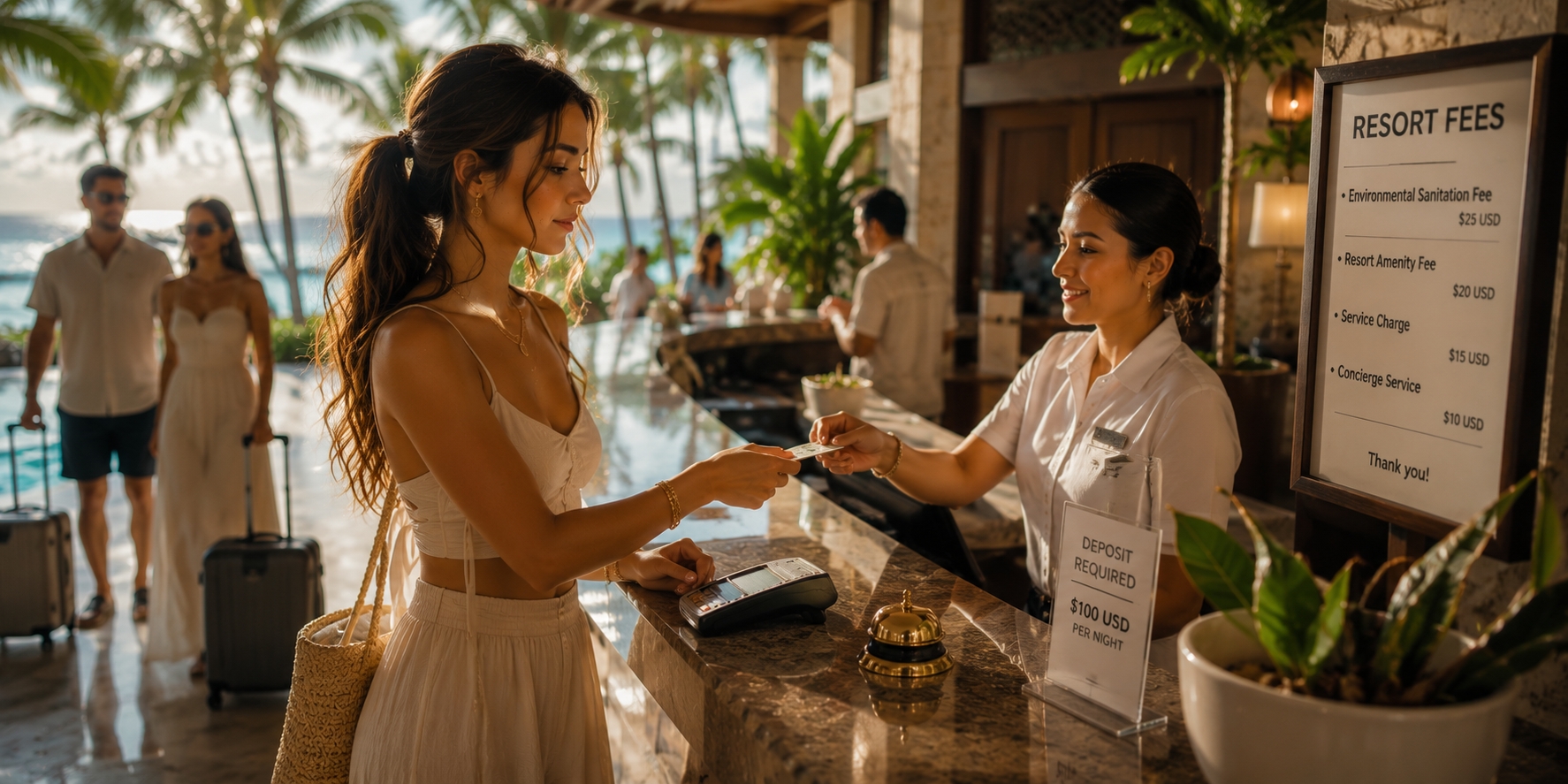
- An environmental fee — roughly $1–$4 per night, collected in cash at the front desk;
- A refundable deposit hold placed on your card at check-in;
- "All-inclusive" extras — premium restaurants, motorized water sports, and top-shelf liquor that frequently cost more.
Budget an extra 5–15% on top of the room rate and almost none of it has to be a surprise. Here is where each charge actually hides.
The 16% IVA and the roughly 6% Quintana Roo lodging tax ride on the room price — about 22% combined.
A small nightly sanitation fee, usually in cash, plus a refundable hold on your card for incidentals.
A one-time state tourist tax, about $15 per person, that hotels deliberately do not collect for you.
Premium dining, motorized water sports, spa, and top-shelf liquor sit outside most "all-inclusive" packages.
The Taxes Built Into Your Bill
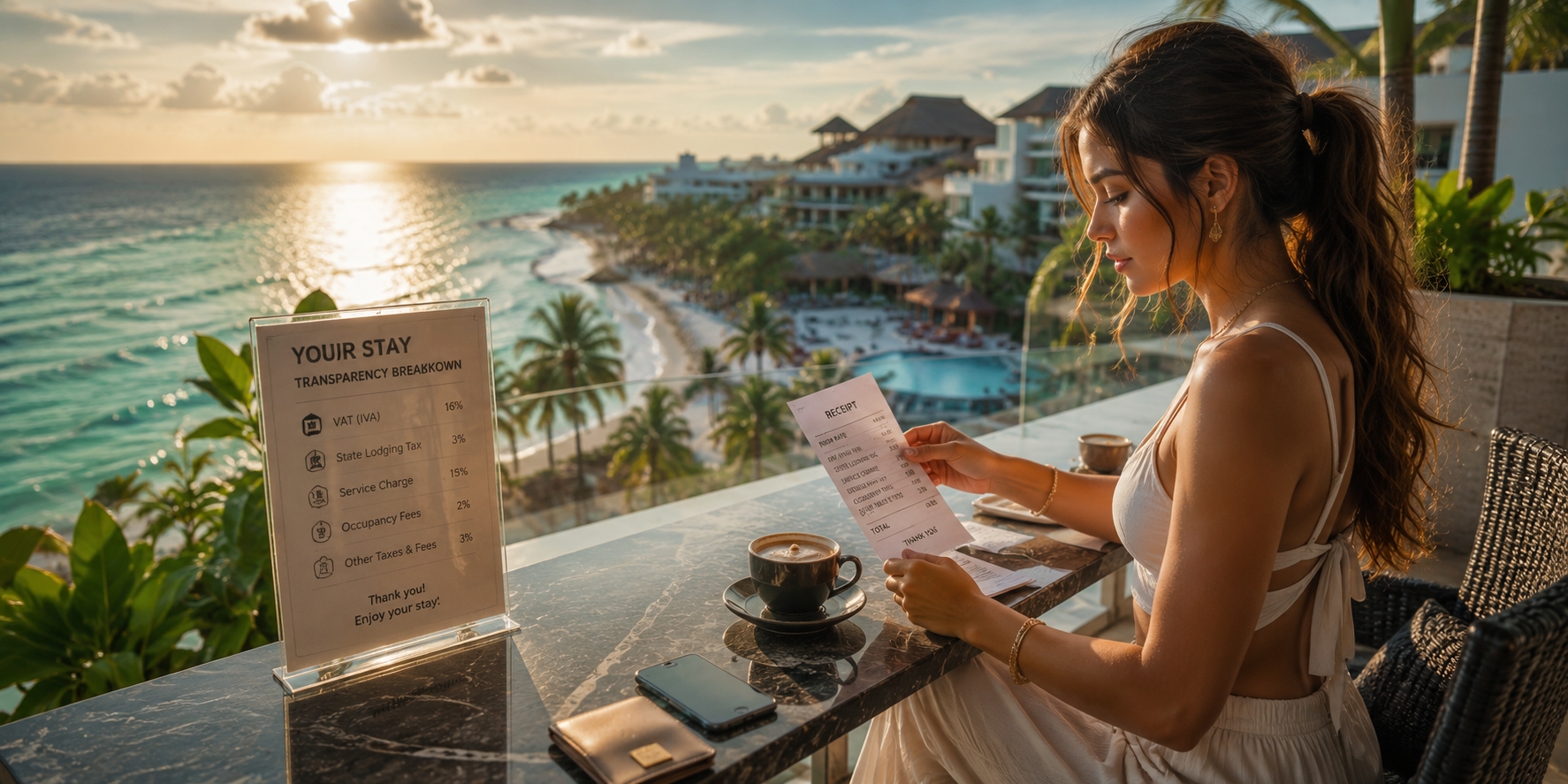
Two taxes ride on almost everything you buy in Mexico. The federal IVA (value-added tax) is 16%, and a separate state lodging tax applies to your room — nationally it runs a few percent, but in Quintana Roo it sits around 6%. Together they add roughly 22% to a room rate, which is why a "plus tax" quote and an "all-in" quote for the same hotel can be very different prices. The same logic runs through the wider Cancun budget breakdown, where taxes quietly reshape every line.
Layered on top in Quintana Roo are two travel-specific charges: a small per-night environmental fee collected by the hotel, and Visitax, the state tourist tax you handle yourself. There's also the federal tourism tax (the Derecho de No Residente), but if you arrived by air it's almost always bundled into your plane ticket, so it's already paid by the time you land. Here's the full map of what hits a typical Riviera Maya bill.
| Charge | Typical 2026 amount | Where it hits | What to check |
|---|---|---|---|
| IVA (VAT) | 16% | Room rate, meals, tours | Whether your rate is quoted "plus tax" |
| State lodging tax (ISH) | ~6% in Q. Roo | Room rate | Included in the quote, or added at checkout |
| Environmental / sanitation fee | ~$1–$4 / night | Front desk, often cash | Per room, but per person in Tulum |
| Visitax | ~$15 / person | Paid online, not on the hotel bill | Use the official portal only |
| Tourism tax (DNR) | In your airfare | Your flight | Usually already paid if you flew in |
| Resort deposit hold | Refundable | Card, at check-in | When the hold is released after checkout |
It helps to watch it stack. Take a $1,000 room rate for a mid-range week and add the layers one at a time:
A mid-range week, quoted before tax.
The federal value-added tax, applied to the room.
Quintana Roo's ISH stacked on top of IVA.
Two travelers at about $15 each, paid online.
A few dollars a night, cash at the front desk.
About 27% over the headline — the full "plus tax" case. If those room taxes were already inside your quoted rate, only the ~$50 of Visitax and fees stacks on top, which is the lighter end of the range.
The honest takeaway from that table is that the percentages matter more than the flat fees. A $15 Visitax and a couple of dollars a night are easy to absorb; the 22% on a two-week room rate is the line that actually moves your total. So the single most useful habit is comparing hotels on their all-in price, never the headline. One striking contrast: book the Pacific coast instead — Puerto Vallarta, say — and the bill is cleaner, with the 16% IVA and a 5% Jalisco lodging tax but no separate municipal entry fee on top. Quintana Roo simply stacks more layers.
Visitax: The Tax You Pay Yourself
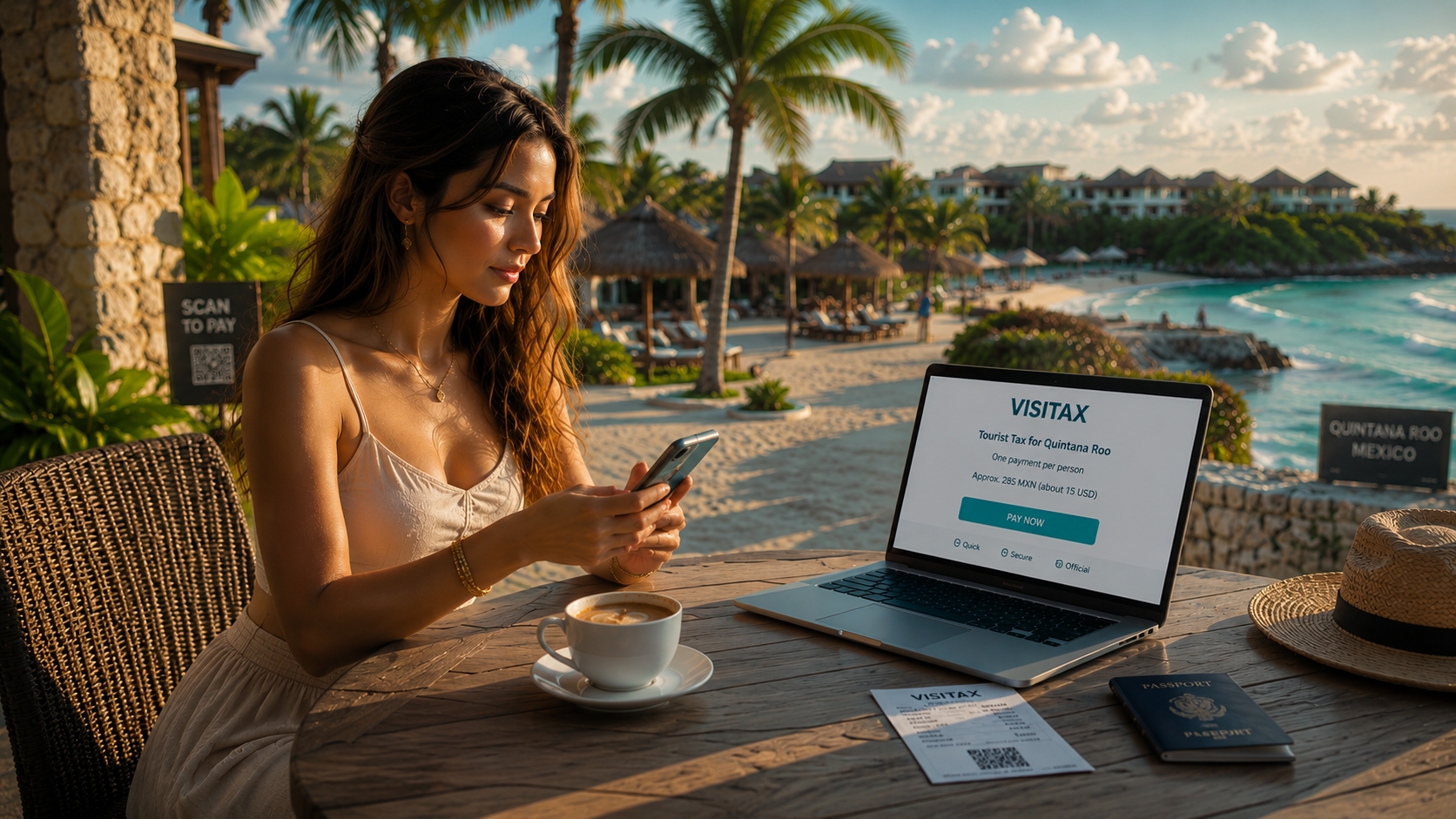
Visitax is the charge that trips up the most travelers, and it's almost backwards why. It's tiny — a one-time state tourist tax of about 285 pesos, roughly $15, per person aged four and up, held flat for 2026. The trap isn't the amount. It's that the Government of Quintana Roo and the state's hotels formally agreed it will not be added to your hotel bill, so there's no line item to catch it. If you don't go pay it yourself, nobody does it for you.
You pay it online at the official state portal, visitax.gob.mx, ideally before you fly, then keep the QR code on your phone. For years enforcement was loose, but in 2026 Cancun and the new Tulum airport are checking for it more actively on departure, so it's no longer a tax you can quietly skip. The money funds beach cleaning and the region's ongoing fight with sargassum, which is its own reason the state is keen to collect it.
So the cheapest tax on the whole trip is also the one travelers most often overpay — not because Mexico charges too much, but because a fake website does. Pay the real $15, screenshot the code, and move on.
How Much Buffer to Actually Add
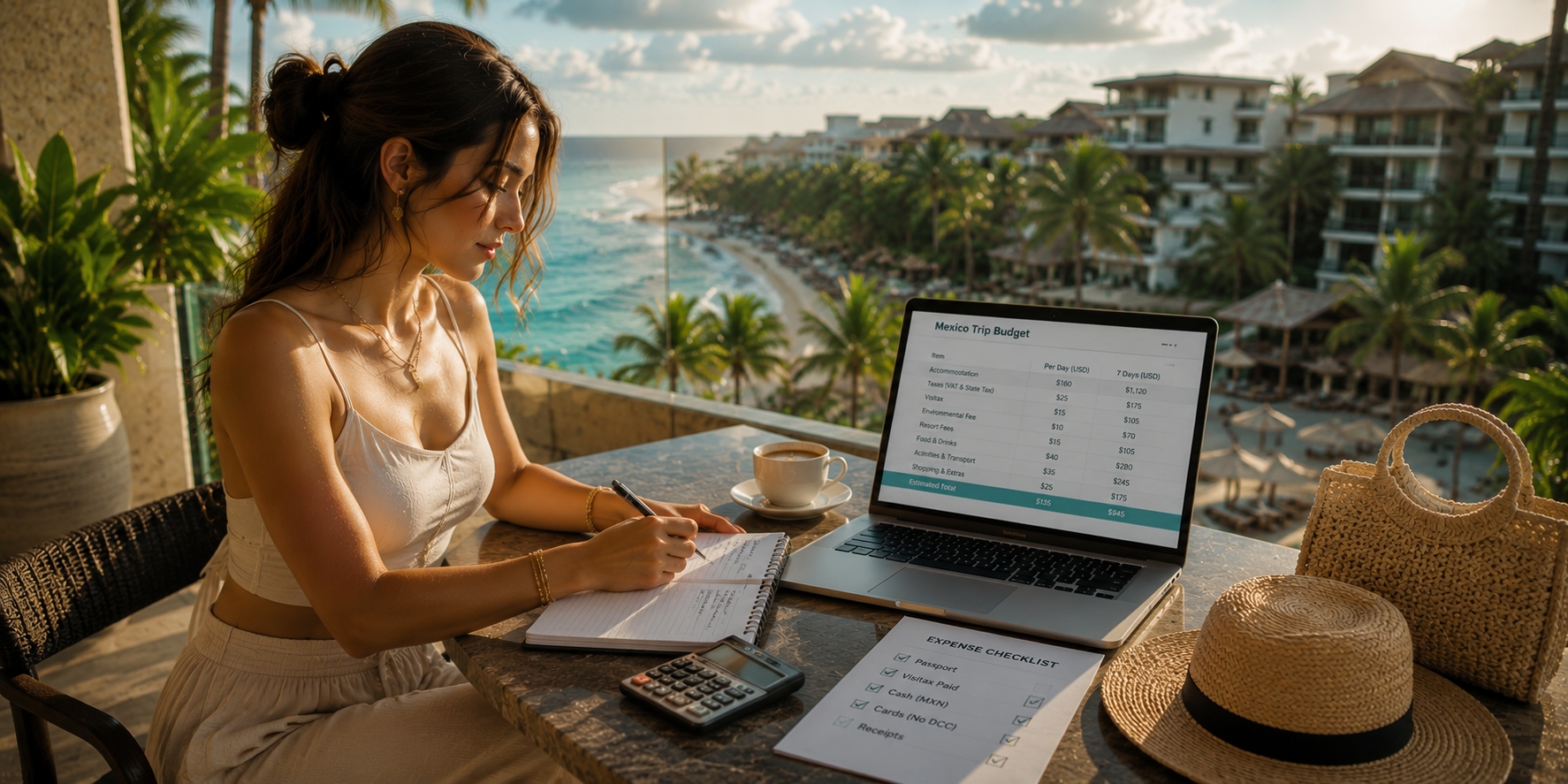
The right buffer isn't a single number — it depends on how you travel, because the fees land differently on an independent trip than on an all-inclusive one. Here's a realistic read by style. Treat the percentages as planning ranges, not guarantees, and stack them on top of your room rate.
- Visitax per person
- Environmental fee if you're in a hotel
- Pesos for taxis, tips, small vendors
- Less "plus tax" surprise on informal stays
- 16% IVA + ~6% lodging on the room
- Nightly environmental fee at the desk
- Refundable deposit hold
- Most meals and drinks paid as you go
- Taxes usually baked into the package
- Premium dining and top-shelf liquor
- Motorized water sports and spa
- Still owe Visitax per person
The pattern that runs through all three: on an independent trip the taxes are smaller but you pay everything in the open, while on an all-inclusive the taxes vanish into the package and the risk moves to the upsells. The mid-range hotel is the one place where the full 22% lands visibly on the room, which is why a "plus tax" rate there deserves the most scrutiny.
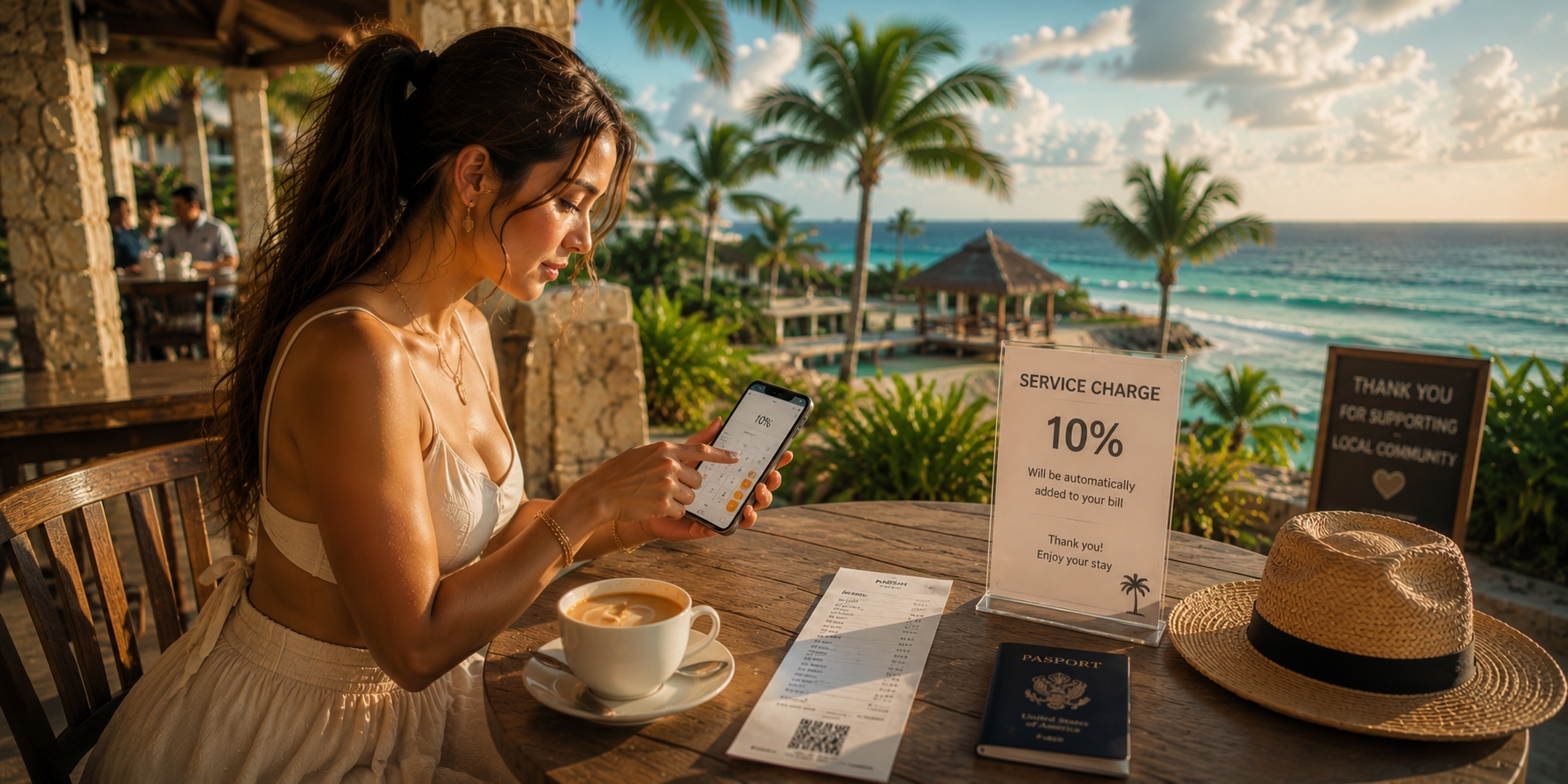
The 10% You Pay by Accident
This one isn't a tax or a fee. It's a choice the card machine hands you and hopes you'll get wrong. When a terminal — at a restaurant, a shop, or an ATM — asks whether you'd like to be charged in US dollars instead of pesos "for your convenience," that's dynamic currency conversion, and the convenience runs entirely in the vendor's favor.
Work a real number. Say a beach-club afternoon comes to 5,000 pesos. The terminal offers to settle it as about $300 in dollars; decline that and let your own bank convert the same 5,000 pesos and it lands closer to $270. That roughly $30 gap is a currency markup you were never told about out loud — and it repeats on every tap, dinner, and cash withdrawal for the whole trip. Mexico's consumer-protection agency, Profeco, requires the displayed peso price to be the price you're charged, and your card network gives you the right to pay in local currency, so declining dollars is both cheaper and entirely within your rights.
How to Keep the Bill Honest
Almost every charge in this guide is avoidable, reducible, or at least predictable — if you handle it before you're standing at a desk or staring at a card machine. Five moves cover most of it.
Mistakes That Cost the Most
None of these are exotic. They're the ordinary slips that turn a known cost into an unwelcome one.
Reading "all-inclusive" as "everything." Premium restaurants, motorized water sports, top-shelf liquor, and the spa are routinely extra. The package is generous, not total.
Overpaying Visitax on a fake site. The real fee is about $15 per person at the official portal. Lookalike sites charge up to roughly $48 for the identical QR code.
Letting the terminal charge you in dollars. Dynamic currency conversion quietly adds around 10% versus paying in pesos — on every purchase, all trip long.
Arriving with no small pesos. The environmental fee and tips are cash at the desk. Travelers who bring only cards end up scrambling or paying bad airport exchange rates.
Sources Checked
Sources checked on June 13, 2026. Tax rates, the Visitax amount, and local environmental fees are set by Mexican federal and Quintana Roo state authorities and can change between budgets and seasons, so confirm current figures close to travel if an exact total matters to you.
How this guide was checked: We compared the official Quintana Roo Visitax portal, Mexico's consumer-protection agency (Profeco) guidance on pricing and currency, and current reporting on Quintana Roo lodging taxes and municipal environmental fees, then framed amounts as ranges rather than fixed prices where they vary by city or exchange rate.
Frequently Asked Questions
Do hotels in Cancun add Visitax to my bill?
No. For 2026, the Quintana Roo government and the state's hotel associations agreed that Visitax will not be added to hotel bills, so paying it is entirely on you. It is a one-time state tourist tax of roughly 285 pesos, about 15 US dollars, per person aged four and up, and you pay it online through the official portal at visitax.gob.mx, ideally before you fly. Enforcement at Cancun and Tulum airports is increasing, so keep the QR code on your phone, and ignore lookalike sites that charge far more than the real amount.
What is the environmental or sanitation fee at Mexican resorts?
It is a small local fee set city by city in Quintana Roo and collected by the property, usually at check-in or check-out and often in cash. It typically runs around one to four US dollars a night. Cancun and Playa del Carmen charge it per room, while Tulum calculates it per person over twelve, so a family pays noticeably more in Tulum. It is rarely included in the room rate, which is why it surprises people at the desk.
Is an all-inclusive resort really everything included?
Not entirely. The base package covers buffets, standard drinks, and most on-site activities, but premium a la carte restaurants, motorized water sports, top-shelf liquor, spa treatments, and some in-room or minibar items are routinely extra. The taxes are usually baked into the package price, which is the upside, but the upsells inside the resort are where an all-inclusive trip quietly drifts over budget. Read the property's what is not included page before you go.
Should I pay in pesos or dollars when the card machine asks?
Always choose pesos. When a terminal offers to charge your card in your home currency, that is dynamic currency conversion, and it usually bakes in a worse exchange rate that costs you roughly ten percent more than letting your own bank convert the peso amount. On a 5,000-peso tab, paying in dollars can land near 300 US dollars when your own bank would have charged closer to 270. Decline the dollar option on every tap, restaurant, ATM, and shop.
How much extra should I budget on top of the room rate?
Plan for roughly five to fifteen percent over the headline room rate, depending on your travel style. If a hotel quotes its rate plus tax, that alone adds about 22 percent in Quintana Roo, from the 16 percent IVA and the roughly 6 percent state lodging tax. On top of that come Visitax per person, the nightly environmental fee, a refundable deposit hold, and any extras inside the resort. None of it is huge on its own, but together it is enough to notice if you did not plan for it.
Are taxes already included in the room rate I see online?
Sometimes, but not always, and that is exactly the trap. Mexican hotels apply a 16 percent IVA and a state lodging tax that runs about 6 percent in Quintana Roo, and booking platforms sometimes show these inside the rate and sometimes add them at checkout. Before you compare two prices, confirm whether each one is all-in or plus tax, because a rate that looks cheaper can end up higher once the same 22 percent is applied.
Before You Pay
The short version, if you skipped to the bottom.
The real cost of a Cancun or Riviera Maya trip is the room rate plus about 5–15% — and the only thing that turns that into a bad surprise is not planning for it.
For most travelers, three habits cover almost all of it: book on the all-in rate, pay Visitax yourself on the official site, and always choose pesos. Do those and the rest is small change.
The bigger lesson is the one the bill keeps teaching: in Mexico it's never the giant fee that gets you. It's the fifteen-dollar tax, the cash fee at the desk, and the currency toggle — small things you can defuse before you ever arrive.